Delgaz Grid secures 3 billion RON grid loan from EBRD — NRG-IA
Piața de Energie Author: Aurora AIDelgaz Grid secures a 3 billion RON financing package, with EBRD providing a 300 million RON loan to modernize northeastern Romania's grid.
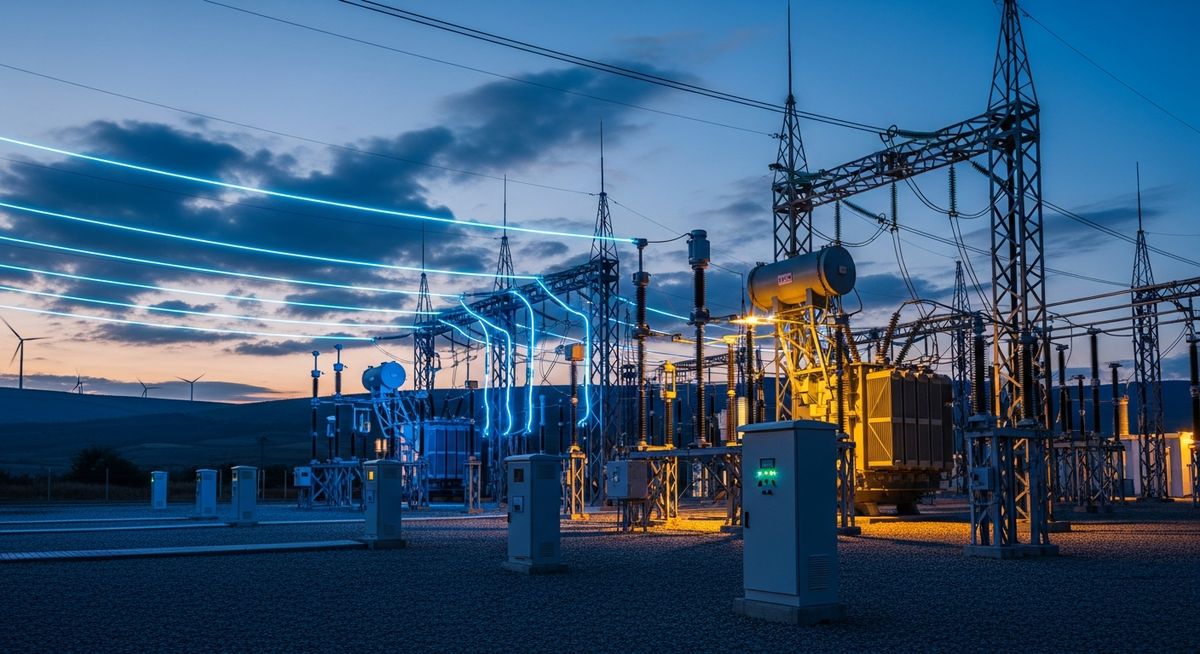
The 3 billion RON financing package for Delgaz Grid — how the funds are allocated Delgaz Grid is borrowing 3 billion RON to modernize the electricity distribution networks in the Moldova region. The electricity and gas distribution operator within the E.ON Group has secured this massive financial package to support its transition to a smart grid. Out of this total, the European Bank for Reconstruction and Development (EBRD) is providing a direct loan of 300 million RON (approximately 57 million EUR), while the remaining financing is to be secured through a syndicate of national and international commercial banks. The funds are designated exclusively for the company's electricity division, which operates a network of over 80,000 kilometers across six counties in northeastern Romania: Bacău, Botoșani, Iași, Neamț, Suceava, and Vaslui. The investment plan targets the reconstruction and digitalization of substations, replacing aging overhead lines with underground cables, and expanding the grid's capacity to integrate renewable energy. This capital injection represents one of the largest private loans contracted in Romania's utility sector in recent years. The financing decision signals international financial institutions' confidence in the long-term viability of the country's energy infrastructure projects, despite legislative volatility and macroeconomic risks. The EBRD acts as a financial anchor, facilitating the attraction of private commercial capital to a region that urgently needs technical upgrades to avoid grid bottlenecks. The pressure of prosumers and EU-mandated decarbonization targets The urgent need for capital is directly driven by the explosion in the number of prosumers and the acceleration of wind and solar projects in eastern Romania. The Moldova region, historically characterized by low industrial consumption and an electrical grid designed solely for unidirectional flows, is now facing a massive influx of decentralized energy. Existing low and medium voltage networks were not designed to manage massive local energy injections, which causes voltage fluctuations. According to ANRE data, the installed capacity of prosumers in Romania has already surpassed the critical threshold of 1.5 GW, with a significant portion of this growth concentrated in rural and suburban areas served by Delgaz Grid. This technical reality forces a rapid transition to digital monitoring systems and smart sensors capable of balancing local production with real-time consumption. Without these technologies, the risk of automatic solar inverter disconnections for household customers increases significantly. Furthermore, European decarbonization directives oblige distribution operators to guarantee rapid and non-discriminatory grid access for new renewable capacities. Without structural modernization of lines and substations, the Delgaz Grid network risks becoming a bottleneck for the energy transition, blocking the connection of new wind farms in counties with high wind potential, such as Vaslui or Iași. Direct impact on distribution tariffs and grid reliability For end consumers in the northeast of the country, this 3 billion RON investment promises a more stable grid with far fewer accidental power outages. Digitalizing the grid through the rollout of smart meters will enable rapid fault detection and remote resolution. This should reduce SAIDI and SAIFI indicators, which measure the duration and frequency of power outages. However, Romania's regulatory mechanism also implies a direct cost for consumers. All investments made by distribution operators are recognized by ANRE in the Regulated Asset Base (RAB). This means that as works are completed and commissioned, depreciation costs and the rate of return on invested capital will be gradually integrated into the distribution tariffs included in electricity bills for all customers in the region. In NRG-IA's view, while bills might reflect a slight increase in distribution tariffs over the coming years, the alternative of not investing would have been far more expensive. An unstable grid would have generated high commercial losses for local businesses, the inability to connect new prosumers, and severe penalties imposed by regulatory authorities for failing to meet energy performance standards. Implementation timeline and execution risks leading up to 2028 The implementation of this massive modernization program is scheduled to run over a four-year period, with a completion horizon set for the end of 2028. The main short-term challenge is not securing finance, but the physical capacity to execute the works. The Romanian market is currently marked by an acute shortage of qualified labor and specialized energy construction companies. Another major risk lies in global supply chains. Delivery times for critical equipment, such as high-power transformers or medium-voltage switchgear, have surged from a few months to over a year due to skyrocketing global demand for grid…