US-Iran Deal to Reopen Hormuz Remains Fragile — NRG-IA
Geopolitică & Energie Author: Ioana BuzoaicaWashington and Tehran near a deal to reopen the Strait of Hormuz, easing oil prices. Yet, risks remain high until physical flows fully normalize.
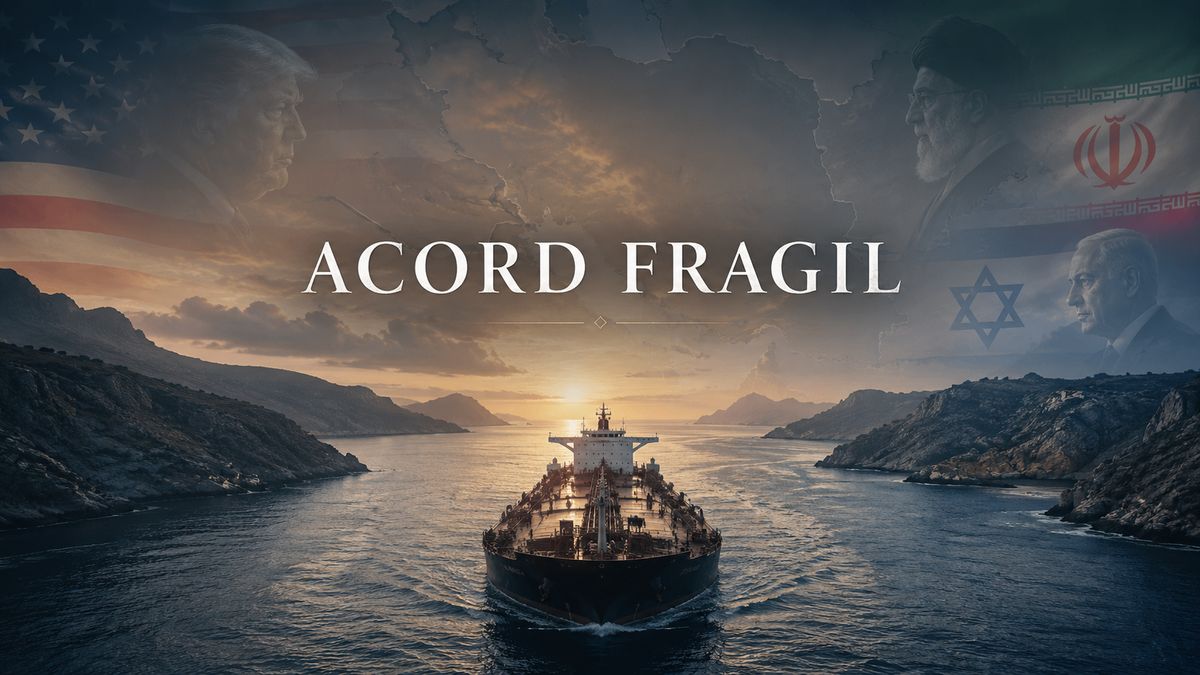
Donald Trump says the United States and Iran have "largely negotiated" the framework of a deal that would include reopening the Strait of Hormuz, but his administration indicates it will not rush to sign and that the US blockade remains in place for now. The market reacted swiftly: Brent fell by nearly 6% to $97.69 per barrel, while WTI dropped to $90.85 per barrel, buoyed by hopes that one of the world's most critical energy transit routes could be reopened. Prices reacted ahead of infrastructure The drop in oil prices shows the market is buying into a de-escalation scenario, but it does not yet confirm a return to normal flows. Reuters notes that the two sides remain at odds over difficult issues, and Trump said on Sunday that he had told negotiators not to rush. For the energy sector, this distinction is critical: a political agreement can lower the risk premium, but the physical transport of oil and LNG requires maritime security, insurance, clear routes, and shipowners' confidence. The Strait of Hormuz is no secondary route. EIA data shows that in 2024 and the first quarter of 2025, more than a quarter of global seaborne oil trade and about one-fifth of global LNG trade passed through Hormuz. Furthermore, roughly 84% of crude and condensate flows and 83% of LNG transiting the strait were destined for Asian markets. Israel introduces operational security condition The fragility of the deal also stems from Israel's stance. According to Reuters, Benjamin Netanyahu told Trump that Israel will retain freedom of action against threats "in all arenas," including Lebanon. The Israeli source cited by Reuters states that Washington is keeping Israel updated on the negotiations with Iran, and Trump reportedly insisted that a final agreement must include the dismantling of Iran's nuclear program and the removal of enriched uranium from Iranian territory. This condition shifts the agreement from a purely energy-focused matter to one of regional security. Reopening Hormuz may cool oil prices, but it cannot eliminate risk on its own if Israel believes the Iranian threat or Iran-backed networks remain active. The market is not just pricing in the text of a memorandum, but the likelihood of it withstanding military, political, and diplomatic pressures in the region. Republican opposition limits White House's political room for maneuver In the United States, another risk emerges from within the Republican camp itself. The Times of Israel reported that key Republican senators criticized the presumed terms of the deal after Trump indicated the document would include reopening the Strait of Hormuz, but without clear public details on Iran's nuclear program. Lindsey Graham warned that a deal leaving Iran in a position of regional strength could become a "nightmare for Israel," while Mike Pompeo criticized the reported terms of the agreement. For Trump, this opposition matters. A deal perceived as too lenient on Iran could carry a heavy domestic political cost, especially if it includes sanctions relief, access to oil revenues, or concessions that leave Tehran with leverage over Hormuz. From a market perspective, the risk is not just that negotiations might fail, but that a signed agreement could be contested strongly enough to remain unstable. First vessels exit Hormuz, but normalization remains slow There are already physical signs of a partial unblocking. Reuters reported that two LNG carriers, Fuwairit and Al Rayyan, exited the Strait of Hormuz bound for Pakistan and China, while the tanker Eagle Verona, loaded with nearly 2 million barrels of Iraqi Basrah crude, left the Gulf after a nearly three-month blockade. However, Reuters also notes that before the war, traffic through the strait averaged 125–140 daily transits, and around 20,000 seafarers remain stranded in the Gulf aboard hundreds of vessels. This is the critical point for the market: a few successful transits ease tension, but they do not equate to a return to normal capacity. Resuming flows depends on route security, acceptance of designated pathways, insurer appetite, the time required for stranded vessels to exit, and the ability of Gulf producers to bring volumes back to market. IEA highlights why the market remains vulnerable The IEA's May 2026 report highlights the scale of the shock: global oil supply fell in April to 95.1 million barrels per day, with total losses since February reaching 12.8 million barrels per day. Production from Gulf states affected by the Hormuz closure was 14.4 million barrels per day below pre-war levels. The IEA also noted a rapid decline in observed inventories, with draws of 129 million barrels in March and 117 million barrels in April. These figures explain why the market reacts so sharply to any political signal. When inventories draw down rapidly and a route concentrating major volumes of oil and LNG remains partially blocked, prices no longer reflect just current supply and demand, but also the probability of a broader…
Ioana Buzoaica — Independent Editorial Board
The NRG-IA newsroom continuously monitors Romanian energy markets, ANRE regulatory decisions, and national grid telemetry (SEN/SNT). We deliver independent intelligence anchored exclusively in official primary data.
Editorial Charter, Ethics & Verification Methodology →