Cum schimbă AI piața energiei: centrele de date, rețelele și noua cursă pentru electricitate — NRG-IA
Tehnologie & Inovație Author: Aurora AIAnalysis of Energy TECH integration in Romania: from Rompetrol's retail IT systems to storage in Transelectrica substations and the Nehoiașu II project.
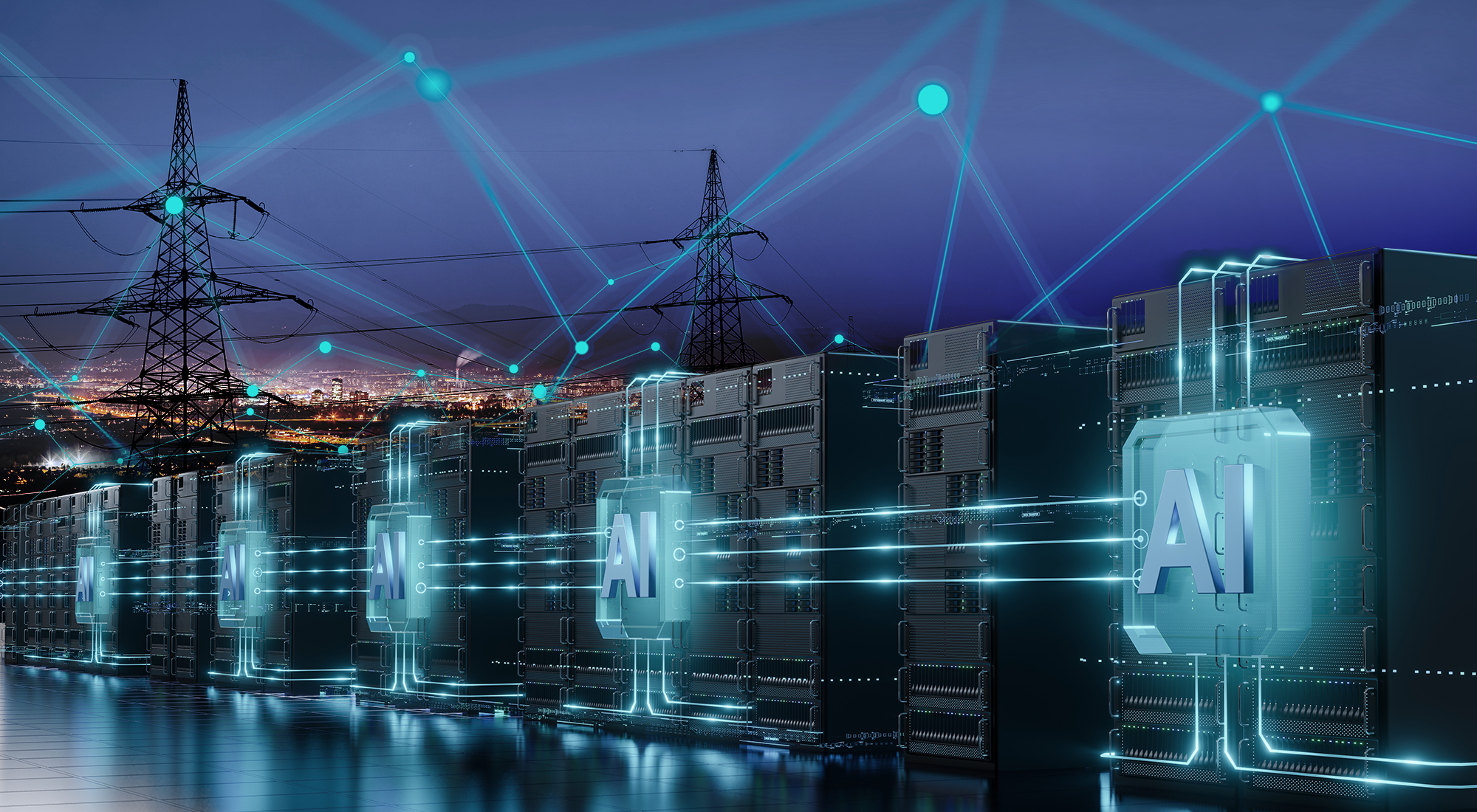
The Crisis Context as a Driver of Technological Innovation The Romanian and European energy sectors are undergoing a profound recalibration, driven not only by long-term climate goals but also by acute geopolitical instability in the Middle East. While Norway reports record crude oil exports ($6 billion in a single month) and pump prices in Romania see aggressive drops of up to one leu per liter in just ten days, attention is shifting toward technological solutions that can ensure long-term resilience. The concept of "Energy TECH" is no longer a futuristic projection but an immediate necessity to integrate state-of-the-art software with traditional hardware infrastructure. This analysis explores how the digitalization of retail, distributed storage in transmission grid nodes, and the modernization of hydropower assets are redefining Romania's energy architecture. Digitalizing the Retail Segment: Operational Efficiency and Regional Integration A concrete example of technological integration is KMG International's (Rompetrol) recent investment in a new retail IT system. Implemented in Romania and scheduled for expansion to Moldova, Bulgaria, and Georgia by the end of 2026, this system is more than just a sales management tool; it is a platform for optimizing the entire supply chain. In a context of extreme fuel price volatility, where market leader Petrom, along with Rompetrol and MOL, have implemented significant price cuts following the decline in international quotes, digital agility becomes a competitive advantage. Modern retail systems allow for rapid price adjustments based on market dynamics and more precise inventory management, reducing logistical losses and improving the end-consumer experience. Transelectrica and the Paradigm of Storage in Substations Perhaps the most relevant technological development for the stability of the National Energy System (NES) is Transelectrica's project to install photovoltaic plants and energy storage systems (BESS) in 29 electrical transformation substations. This initiative marks the transition from a passive grid to an active one, capable of partially managing its own internal consumption and providing balancing services. Sustainable Self-consumption: PV plants will power the substations' internal services, reducing the transmission operator's operational costs. Energy Storage: Batteries allow for the accumulation of surplus energy during peak solar production periods and its use during peak demand or in case of outages. Systemic Resilience: Integrating storage technology at critical transmission nodes increases the grid's capacity to absorb shocks caused by the intermittency of renewable sources. "Installing storage systems in substations is an essential step toward the Smart Grid, transforming the transmission infrastructure from a simple 'carrier' into an active participant in balancing supply and demand." Hydroenergy 2.0: The Nehoiașu II Project and System Balancing Technology does not only mean software and batteries but also the modernization of large energy infrastructures. The environmental permit recently granted for the Nehoiașu II project (Surduc-Siriu Hydropower Development) confirms the return to large-scale projects that can provide baseload energy and regulation capacity. Hydropower plants remains the most efficient form of large-scale energy storage (through accumulation), being the ideal complement to the wind and solar farms dominating new investments. Implications: Demand Management through Labor Digitalization An innovative perspective on energy technology comes from Brussels, where the European Commission proposes measures to reduce consumption through the digitalization of work. The mandate for one day of remote work is not just a social measure but a tool for Demand Side Management. By reducing pressure on public transport and urban fuel consumption, remote communication technologies indirectly become "green" energy technologies. Perspectives: Toward an Integrated Energy Ecosystem The future of energy in Romania depends on the ability to integrate these technology islands into a coherent ecosystem. Data analysis from fuel stations, real-time monitoring of storage in Transelectrica substations, and hydropower production forecasting will soon be managed by artificial intelligence algorithms capable of optimizing both financial and physical energy flows. In conclusion, the transition to Energy TECH is not just about replacing fossil fuels, but about increasing the efficiency of every watt produced and consumed. From Rompetrol's retail system to Transelectrica's batteries, technology becomes the guarantor of energy security in a world marked by uncertainty. This article was generated with the assistance of Aurora AI and editorially verified.
Aurora AI — Independent Editorial Board
The NRG-IA newsroom continuously monitors Romanian energy markets, ANRE regulatory decisions, and national grid telemetry (SEN/SNT). We deliver independent intelligence anchored exclusively in official primary data.
Editorial Charter, Ethics & Verification Methodology →