Romania Energy Subsidies 2026: Proposed RON 3,500 Income Cap — NRG-IA
Protecția Consumatorului Author: Ioana BuzoaicaRomania is preparing a new electricity and gas bill support scheme featuring a proposed net monthly income threshold of up to RON 3,500 per person.
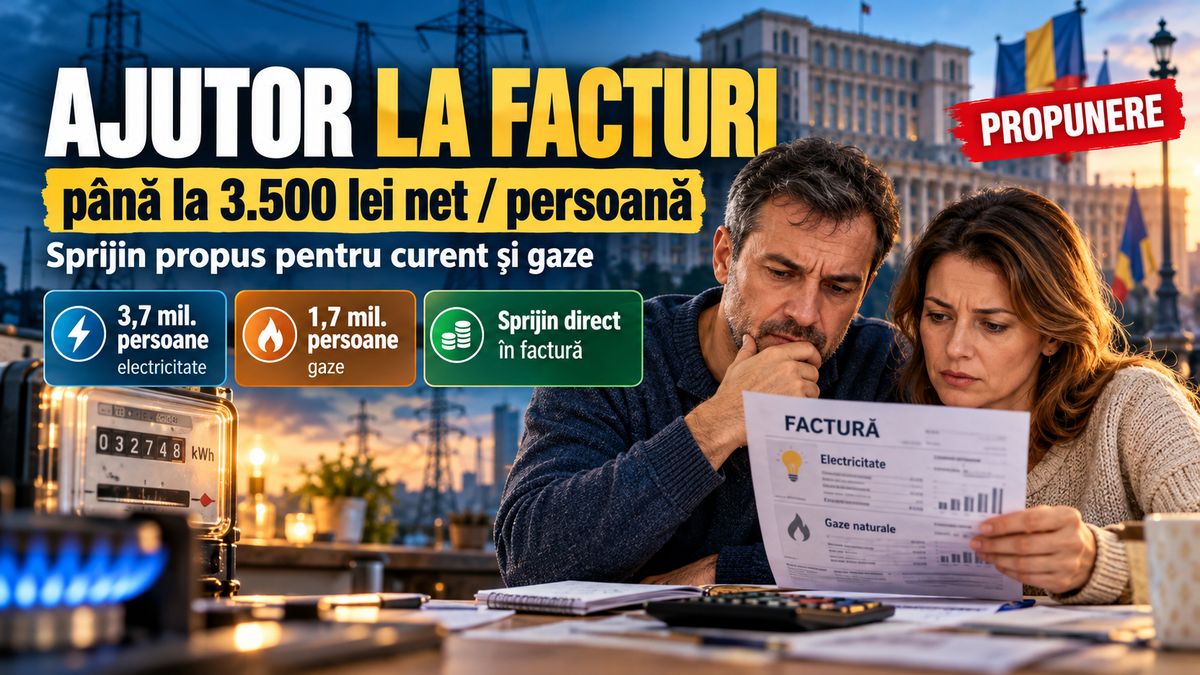
Romania could significantly expand support for household electricity and natural gas bills through a scheme targeted at individuals earning up to RON 3,500 net monthly per person. The proposal is detailed in the 2026–2028 government program, submitted to Parliament on October 15 by Prime Minister-designate Luca Niculescu. It aims to simplify access to aid, automate income verification, and apply discounts directly to eligible consumers' energy bills. The social scope of the measure is substantial. According to estimates outlined in the document, approximately 3.7 million people could fall within the scope of electricity support and 1.7 million for natural gas. These figures reflect the potentially targeted population rather than an approved count of beneficiaries, with significant overlap between the two categories. The new threshold would grant access to households currently exceeding income caps under existing aid programs, but for whom energy costs remain a heavy financial burden. The proposed reform comes as existing protection mechanisms in Romania approach their expiration dates. The monthly RON 50 electricity voucher scheme is regulated through December 31, 2026, while special protective measures for household natural gas consumers are set to expire on March 31, 2027. The government program seeks to ensure continuity of support while gradually transitioning to a system where aid is targeted according to each consumer's economic status. The RON 3,500 threshold could broaden access to energy bill relief Currently, under Emergency Ordinance (GEO) No. 35/2025, the monthly RON 50 electricity voucher is granted to single individuals with a net monthly income of up to RON 1,940 and families with net monthly incomes of up to RON 1,784 per member. Designed for energy-poor consumers, this mechanism relies on income verification and the identification of the specific consumption point for which support is requested. The net monthly income threshold of up to RON 3,500 per person set out in the new government program marks a significant expansion of the income criterion compared to the current scheme. For a single-person household, the gap between the existing cap of RON 1,940 and the proposed ceiling is RON 1,560 per month. Compared to the RON 1,784 per family member limit under the active scheme, the proposed value is nearly double. While these comparisons illustrate the scale of the expansion, definitive eligibility criteria will depend on secondary legislation. For instance, in a household comprising two adults and a child with a combined net monthly income of RON 9,000, the average income stands at RON 3,000 per person. This would fall under the proposed ceiling if the future mechanism adopts average income per household member as its metric. However, the program has not yet specified all calculation rules, covered income types, or potential secondary criteria. Consequently, these numerical examples serve as indicative benchmarks, with actual eligibility subject to forthcoming implementation rules. Such an expansion could encompass households earning more than those currently targeted by electricity aid, yet burdened by high energy expenditures. This is particularly relevant for large families, residents in energy-inefficient buildings, and households relying exclusively on electricity or gas for heating. The actual degree of financial protection will be dictated by both the income ceiling and the specific monetary value of the subsidy. Direct bill application to eliminate bureaucratic hurdles for consumers A major change proposed by the Government concerns the delivery mechanism for aid. The program outlines a unified platform designed to automatically verify eligibility wherever possible, drawing on data already held by public institutions. The subsidy would be applied directly to energy bills, allowing eligible consumers to pay only the net balance after deducting the grant. The cornerstone of this framework will be the National Register of Vulnerable Consumers, interconnected with the tax authority (ANAF), the Ministry of Labor, and energy suppliers. The register will cross-reference income data, beneficiary status, and consumption points according to established regulatory guidelines. The program also guarantees assistance for individuals unable to navigate digital platforms, ensuring access to aid does not hinge on digital literacy. The existing RON 50 scheme operates through the EPIDS digital platform, developed and managed by the Special Telecommunications Service (STS). Applicants submit requests, and the platform cross-checks eligibility against databases held by competent authorities. The voucher is tied to a specific consumption point via its Point of Delivery (POD) code, with bill settlement handled through the statutory process involving the national postal operator, Poșta Română. Under the new architecture, the Government aims to minimize administrative hurdles for beneficiaries. Automated…
Ioana Buzoaica — Independent Editorial Board
The NRG-IA newsroom continuously monitors Romanian energy markets, ANRE regulatory decisions, and national grid telemetry (SEN/SNT). We deliver independent intelligence anchored exclusively in official primary data.
Editorial Charter, Ethics & Verification Methodology →