Romanian Gas Distribution Tariffs to Drop 7.1% on July 1 — NRG-IA
Gaze Naturale Author: Ioana BuzoaicaGas distribution tariffs in Romania will drop on average from July 1, 2026. The cut affects only the distribution component, not the total gas price.
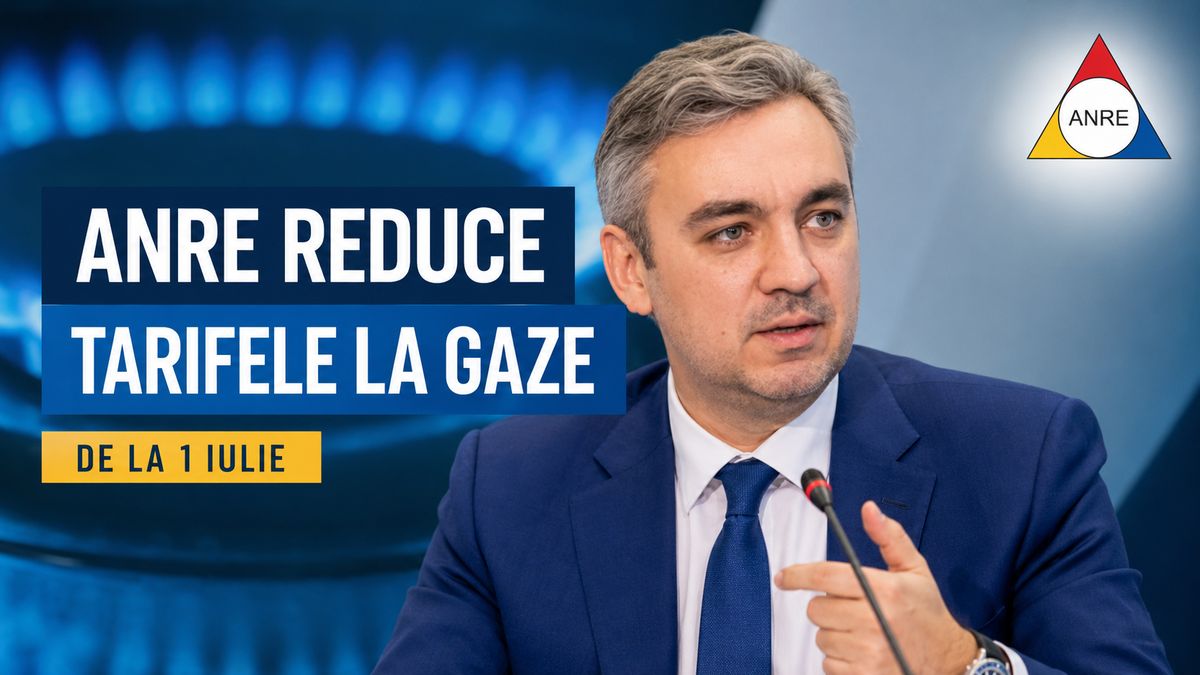
The weighted average natural gas distribution tariff will decrease by 7.1% starting July 1, 2026, after ANRE's Regulatory Committee approved the regulated tariff package applicable to the 27 licensed distribution operators nationwide. The average, calculated based on gas volumes distributed through the networks, drops from RON 58.47/MWh to RON 54.32/MWh. The decision directly impacts the final bill, but only on one of its components. Distribution represents the cost paid for using the local gas network, not the commodity price of gas, nor the total cost borne by the consumer. This distinction is essential: a 7.1% reduction in the average distribution tariff does not translate into a 7.1% cut in the entire bill. The tariff decreases on average, but not uniformly The decline in the national average is primarily driven by large-volume operators. Distrigaz Sud Rețele and Delgaz Grid, the most significant operators by distributed volumes, jointly serve nearly 90% of the total forecasted volume, estimated at 72.59 TWh, and their tariffs are on the decline. This reality explains why the general message can be favorable for most consumers, even though the reduction is not identical for every customer. The weighted average moves downward because large volumes are concentrated in networks where approved tariffs are falling. At the same time, the complete picture remains mixed: ANRE indicates 14 tariff increases and 13 decreases across operators, with four operators seeing reductions of at least 10% and six operators recording increases of at least 5%. These differences stem from each network's cost structure, completed investments, forecasted volumes, and the specific parameters of each operator. A customer connected to a zone operated by a distributor with a falling tariff will experience a different effect compared to a customer on a network where the tariff is rising. Distribution matters, but it does not control the bill on its own For household consumers, the real stake is how much of the final bill comes from distribution. Profit.ro points out that, in an offer available to Bucharest residents in the ANRE comparison tool, at a final price of RON 301.13/MWh, the distribution tariff of RON 68.87/MWh represents nearly 23% of the final price, while the gas commodity, at RON 162/MWh, accounts for almost 54%. This ratio shows why distribution is important, but also why it cannot explain the bill on its own. A decrease in the distribution tariff helps, but the final effect can be reduced, amplified, or neutralized by the evolution of other components: gas procurement, the supply component, transmission, VAT, and excise duties. In simple terms, ANRE's decision reduces pressure on a regulated component of the bill. It does not directly change the price of gas purchased by suppliers and does not guarantee the same reduction for all households. The final price remains the sum of several components The regime applicable to household customers between April 1, 2026, and March 31, 2027, confirms this structure. The final billed price includes the procurement component, the supply component, the regulated tariffs set by ANRE for transmission and distribution, as well as VAT and excise duties. This is the critical point for public communication. ANRE approves distribution and transmission tariffs based on its own regulations, but the final bill is built by adding several elements. For household customers, the framework applicable after the end of the classic price cap introduces a protection formula where the final price is determined by comparing the contract price with the price calculated according to GEO no. 12/2026, as subsequently amended. Therefore, the distribution reduction should be read as a favorable adjustment within a broader gas market mechanism, not as a general price cut for gas. The methodology puts pressure on costs and investments Distribution tariffs are established based on the methodology approved by ANRE Order no. 89/2024, which regulates the calculation of tariffs for distribution services in the natural gas sector. The order entered into force on January 1, 2025, repealing the old 2018 methodology. The methodology was amended by ANRE Order no. 4/2026, published in the Official Gazette no. 148 of February 26, 2026, to adjust the calculation mechanism applicable to regulated distribution tariffs. From an economic perspective, the tariff must cover the operator's justified costs, necessary network investments, and a regulated rate of return, without automatically transferring inefficient costs to consumers. This is the central tension of distribution: networks need funding, but consumers cannot be turned into passive payers of any cost structure. ANRE conveys the same line: the tariff must be calculated transparently, predictably, and proportionally to the economic reality of each operator, and investments must be efficient, justified, and oriented toward better services for consumers. The concrete…