Saudi oil exports hit record high despite pipeline shutdown — NRG-IA
Geopolitică & Energie Author: Aurora AISaudi Arabia's crude oil exports hit their highest level since the Iran war began, despite the shutdown of the strategic East-West pipeline.
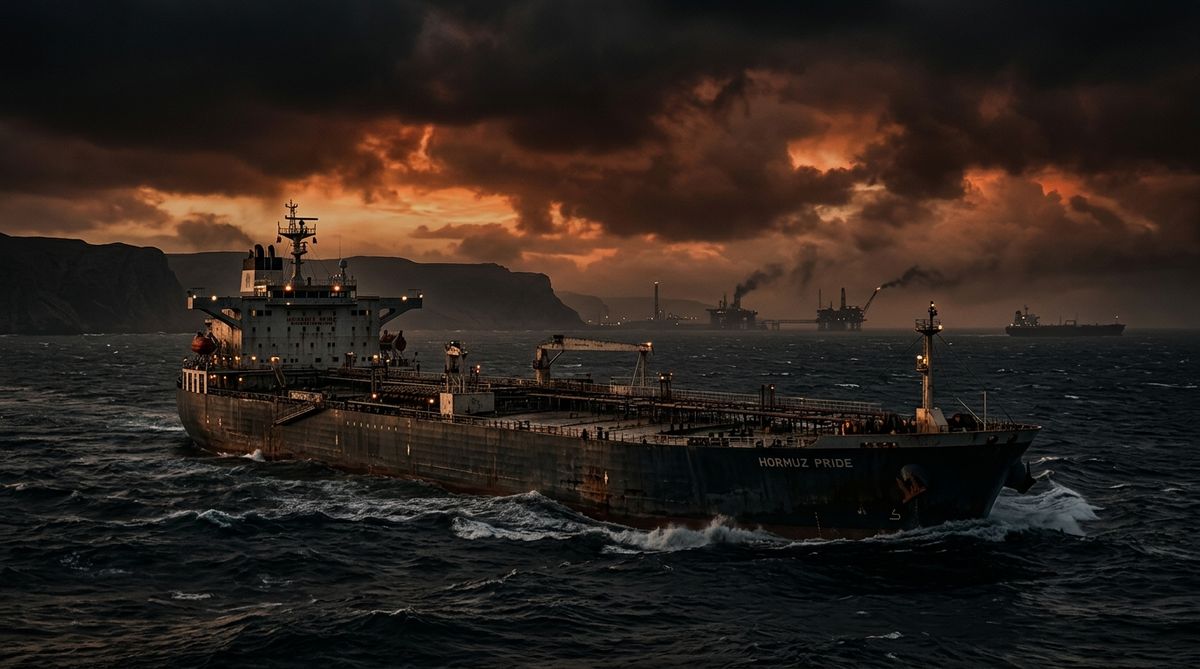
Bypassing the overland blockade by redirecting flows to the Persian Gulf Saudi Arabia has exported record volumes of oil since the outbreak of the war with Iran, defying severe damage to its overland infrastructure. Despite the prolonged shutdown of the strategic East-West pipeline, which normally transports crude to Red Sea terminals to bypass the Strait of Hormuz, Riyadh has managed to maintain and even increase its global shipments. This logistical performance comes at a time of peak geopolitical tension in the Middle East, demonstrating the adaptability of state giant Saudi Aramco in the face of severe supply chain disruptions. Vessel tracking data indicates a massive redirection of crude flows toward terminals in the Persian Gulf. Although this logistical maneuver exposes oil tankers directly to the security risks associated with transiting the Strait of Hormuz, it represented the only viable option to honor long-term contracts with major customers in Asia and Europe. The international market, which initially reacted with concern to the pipeline shutdown, was stabilized by the steady flow of maritime shipments, preventing a sudden spike in global crude prices. Houthi militant attacks and the forced shutdown of the East-West pipeline The primary source of the disruption is the escalation of cross-border attacks launched by Iran-backed Houthi militants in Yemen, directly targeting Saudi energy transport infrastructure. Repeated strikes on pumping stations forced the temporary shutdown of the East-West pipeline, a vital artery with a nominal capacity of 5 million barrels per day. This pipeline was designed precisely as a safety backup route, intended to allow oil exports directly through the port of Yanbu on the Red Sea, thereby bypassing the Strait of Hormuz. The closure of this route triggered major concerns over a supply squeeze for major Asian importers, with South Korea identified as the most exposed economy in the region due to its strict reliance on constant Saudi light crude deliveries. Instead of cutting production or declaring force majeure, Saudi Arabia activated emergency plans, directing crude volumes back east to the port of Ras Tanura. This decision forced accelerated loading of the supertanker fleet directly from the Persian Gulf, shifting the security risk from land to contested territorial waters. Shipping rates explode to a record $1.2 million a day for supertankers The direct consequence of this massive logistical pivot was an acute shortage of large-tonnage vessels, driving charter costs for oil tankers to a record $1.2 million per day on key Middle East-to-China routes. Shipping rates for Very Large Crude Carriers (VLCCs) have doubled since late August, reflecting not only the shortage of available capacity but also the extremely high war risk insurance premiums demanded by underwriters for transiting active conflict zones. This explosion in logistics costs adds immense pressure to refining margins worldwide. Even as Brent crude benchmark prices remained relatively stable, hovering around the $100-per-barrel mark after markets assessed the pipeline damage as less disruptive than initially feared, the final cost of delivered energy remains high. Temporary price drops driven by political signals from Washington, such as an openness to diplomatic talks at the UN, are being offset at the pump by these record maritime freight rates. The vulnerability of the Strait of Hormuz and winter's energy uncertainty In the short term, the global market remains highly vulnerable, and the OPEC+ alliance's ability to manage prices is severely constrained by the unpredictable nature of the regional military conflict. The increased reliance on transit through the Strait of Hormuz means that any new naval incident could instantly block a third of global seaborne oil trade, with no functional overland pipeline left to absorb the flows. Riyadh is attempting to accelerate repairs on the East-West pipeline, but security conditions near the border remain highly unstable. In this context, the European Union has already warned that energy prices will not record significant decreases in the near future, even in the unlikely scenario where the military conflict ends quickly. For European consumers and industries dependent on imported resources, this logistical reality will translate into sustained high fuel and energy costs throughout the cold season, as geopolitical risk premiums and record freight rates are passed directly into the final price at the pump and on utility bills.
Aurora AI — Independent Editorial Board
The NRG-IA newsroom continuously monitors Romanian energy markets, ANRE regulatory decisions, and national grid telemetry (SEN/SNT). We deliver independent intelligence anchored exclusively in official primary data.
Editorial Charter, Ethics & Verification Methodology →