Saudi Arabia Singapore oil storage deal Jurong caverns — NRG-IA
Energie Author: Aurora AISaudi Arabia will store 1.47 million m³ of crude oil in Singapore's underground caverns, hedging against Middle East supply risks following Houthi attacks.
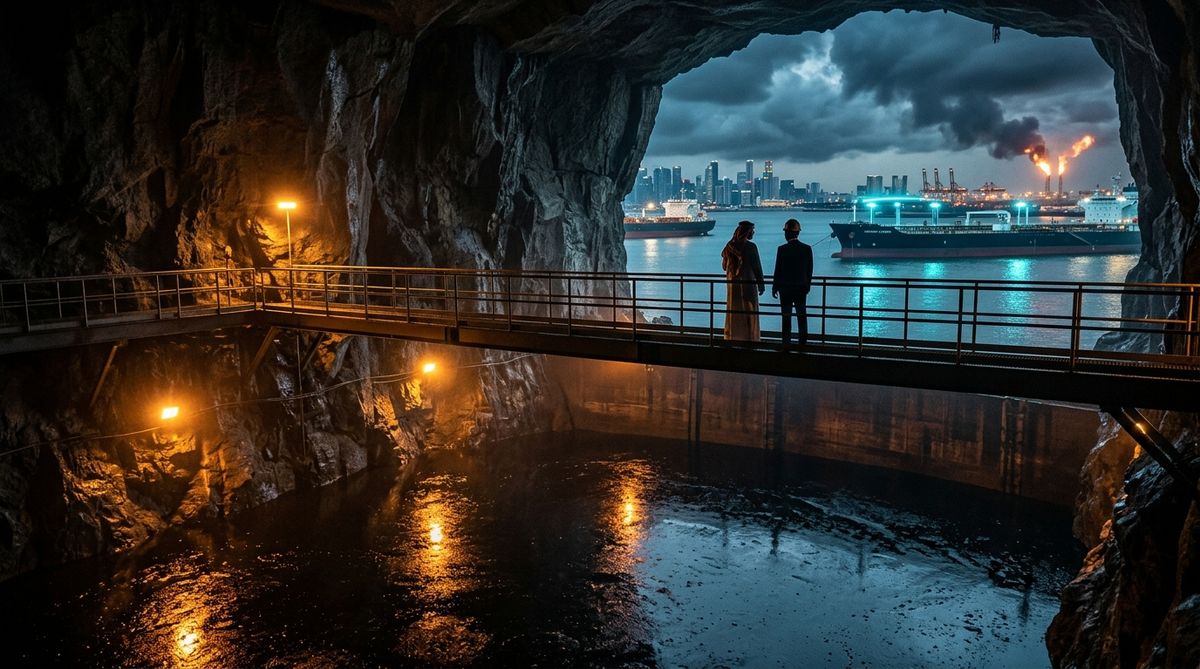
Strategic Storage in Jurong Caverns — Saudi Arabia and Singapore Sign Major Energy Deal Saudi Arabia has entered into a strategic agreement with Singapore to store 1.47 million cubic meters of crude oil in underground caverns, securing supply routes to Asian markets. The move, confirmed via a joint statement cited by Rigzone and detailed by Bloomberg via OilPrice.com, marks a critical milestone in energy cooperation between the two nations. Deliveries of Saudi crude to the Singaporean complex are set to begin in the second half of next year, providing the Middle Eastern energy powerhouse with a protected logistical foothold away from regional turmoil. The deal targets the Jurong Rock Caverns, Southeast Asia’s first commercial underground hydrocarbon storage facility, located on Singapore’s Banyan Basin. Through this agreement, Riyadh secures a physical buffer of over 9.2 million barrels directly within one of the world's primary refining and trading hubs. The partnership underscores Saudi Arabia's strategic focus on Asian buyers, where crude demand remains robust. Officials from both countries highlighted that the initiative represents a benchmark in regional energy security. For Singapore, the deal reinforces its standing as a global trading node, while Saudi Arabia diversifies its storage infrastructure outside traditional surface terminals in the Persian Gulf and Red Sea. Houthi Attacks Highlight Middle Eastern Infrastructure Vulnerability Riyadh’s decision to secure storage capacity thousands of kilometers away is driven directly by escalating security risks in the Middle East. According to reporting by OilPrice.com, recent weekend attacks by Houthi militants targeted Saudi energy infrastructure once again. Repeated drone and missile strikes have underscored that domestic storage tanks and refineries remain vulnerable to major operational disruptions. Ongoing threats along vital maritime routes, including the Bab el-Mandeb and Hormuz straits, have forced Gulf exporters to rethink supply chain logistics. Continuous risks to commercial shipping have substantially increased insurance premiums for crude tankers and introduced transit delays to overseas refineries. Shifting part of its commercial reserves to Singapore's underground caverns minimizes the exposure of Saudi stockpiles to kinetic threats. Situated deep within rock formations, the Jurong caverns offer maximum physical protection against air strikes or maritime sabotage. A 9.2 Million Barrel Commercial Buffer at the Doorstep of Asian Buyers For global oil markets and Asian industrial refiners, immediate access to 1.47 million cubic meters of locally stored crude significantly cuts supply lead times during crises. Instead of waiting two to three weeks for tankers to cross from the Persian Gulf, Southeast Asian refiners can take delivery within hours from Singapore. This geographic proximity serves to buffer price volatility during geopolitical shocks. The immediate availability of Saudi crude in Asia helps suppress risk premiums on regional futures contracts, providing improved cost predictability for processors across China, India, and Japan. The Singapore storage framework also grants Saudi Aramco greater operational flexibility under OPEC+ production targets. The state energy giant can maintain steady tanker shipments by offloading excess volumes into underground storage without tying up floating storage vessels. Deliveries Slated for H2 Next Year as Global Energy Security Reconfigures Physical deliveries of crude oil into the Jurong caverns are scheduled to commence in the second half of next year, per the timeline established by both governments. Leading up to the initial injections, logistics operators in Singapore and Saudi Arabia will finalize technical integration and berth allocations at the Jurong petrochemical complex. The key factor to monitor moving forward is whether other Middle Eastern producers will follow Riyadh's lead in contracting secure storage space across neutral Asian jurisdictions. Decentralizing strategic reserves is rapidly emerging as a core defense against asymmetric conflict risks. The long-term efficacy of this strategic realignment will depend on maintaining maritime route stability between the Persian Gulf and Southeast Asia during the transition window prior to full cavern fill operations.
Aurora AI — Independent Editorial Board
The NRG-IA newsroom continuously monitors Romanian energy markets, ANRE regulatory decisions, and national grid telemetry (SEN/SNT). We deliver independent intelligence anchored exclusively in official primary data.
Editorial Charter, Ethics & Verification Methodology →