Oil prices fall as Saudi Red Sea exports recover — NRG-IA
Energie Author: Aurora AIOil prices fall as Saudi Arabia partially restores crude exports through its Red Sea ports following drone attacks on its East-West pipeline.
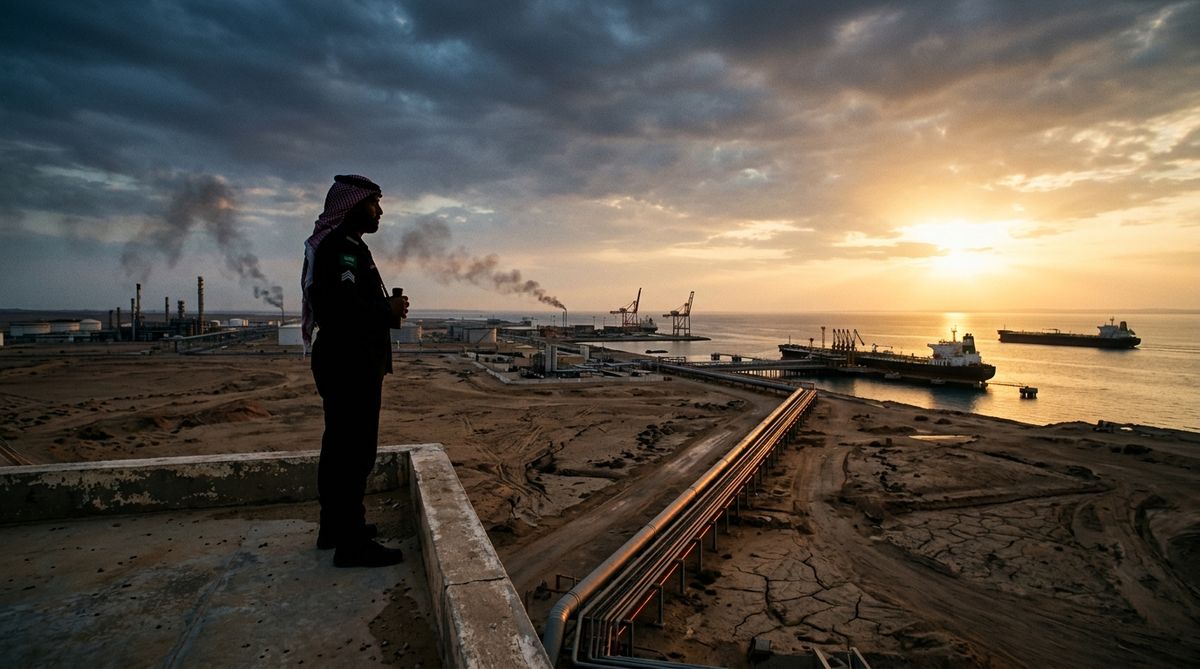
The East-West Pipeline Restarts Partially — Saudi Arabia Resumes Crude Loadings at Yanbu Global oil prices fell on Tuesday as Saudi Arabia partially restored crude oil exports through its strategic Red Sea terminals. According to data reported by CNBC Energy, Riyadh has successfully restored flows through its onshore East-West pipeline to approximately 3.5 million barrels per day (bpd). This operational recovery represents a decisive step toward stabilizing global energy markets, which had been severely rattled by recent geopolitical uncertainties. The resumption of loading operations at the Yanbu port on the Red Sea was confirmed by OilPrice.com, citing vessel-tracking data and trade sources reported by Reuters. This infrastructure is considered a vital safety valve for the Kingdom, enabling the direct export of crude to European and North American markets without transiting the Strait of Hormuz, a highly congested and geopolitically sensitive maritime chokepoint. The return of these flows provides immediate relief to the physical oil market, where global refiners were already facing a tightening supply of medium-sour crude grades. By restoring volumes at the Yanbu terminal, international buyers can once again access Saudi Light and Saudi Medium grades, optimizing refining margins at a time of widespread economic volatility. September Drone Attacks and the Forced Infrastructure Shutdown This gradual recovery in deliveries follows a period of severe operational disruption caused by physical security threats. Saudi Arabia was forced to completely shut down the onshore East-West pipeline for two weeks after systematic drone attacks damaged key pumping stations on September 10, as detailed by OilPrice.com. This forced shutdown highlighted once again the acute vulnerability of Middle Eastern energy infrastructure to asymmetric threats. Although the pipeline resumed partial service last Thursday, the technical process of repairing and calibrating the system has been highly complex. The affected pumping stations require specialized replacement equipment and rigorous pressure testing to ensure the safe transport of crude across more than 1,200 kilometers, from the eastern oil fields to the western coast. The Kingdom prioritized the physical integrity of the pipelines before ramping up system pressure. The Cooling Effect on Brent and WTI Crude Benchmarks The announcement of resumed exports through the Red Sea quickly deflated the geopolitical risk premium embedded in crude prices over recent weeks. Benchmark prices for Brent and West Texas Intermediate (WTI) experienced immediate corrective declines as physical shortage fears dissipated. Energy traders interpreted the restart of the Yanbu port as a clear signal that Saudi Arabia maintains its delivery capabilities even under crisis conditions. The sheer scale of this transport corridor is substantial: the pipeline has a total capacity of about 7 million barrels per day, with approximately 5 million bpd typically earmarked for export, according to technical data published by Rigzone. Reaching a flow of 3.5 million bpd so rapidly demonstrates the operational flexibility of state-owned Saudi Aramco. This partial recovery significantly reduces the likelihood of sharp retail fuel price hikes in major import-dependent economies. Security Risks Persist Amid Delayed Full Transport Capacity While the market reacted positively, restoring export volumes to pre-attack levels will take time. Industry experts cited by OilPrice.com warn that a full resumption of flows of about 4 million bpd through this route would likely take weeks. Until then, a portion of the crude volumes must either be rerouted through Persian Gulf terminals or temporarily held in the Kingdom's domestic storage facilities. The geopolitical stakes remain high: any further security incident along the East-West pipeline route would force Riyadh to rely exclusively on the Strait of Hormuz. For the European Union and regional refiners, the stability of Red Sea deliveries is essential to maintaining price equilibrium at Mediterranean refining hubs. Price trends in the coming weeks will depend directly on the pace at which Saudi Aramco completes permanent repairs on the damaged pumping stations.
Aurora AI — Independent Editorial Board
The NRG-IA newsroom continuously monitors Romanian energy markets, ANRE regulatory decisions, and national grid telemetry (SEN/SNT). We deliver independent intelligence anchored exclusively in official primary data.
Editorial Charter, Ethics & Verification Methodology →