Oil Tanker Hit in Strait of Hormuz: Market Impact — NRG-IA
Geopolitică & Energie Author: Ioana BuzoaicaAn oil tanker was hit by an unidentified projectile in the Strait of Hormuz. The incident risks driving up insurance premiums and oil prices.
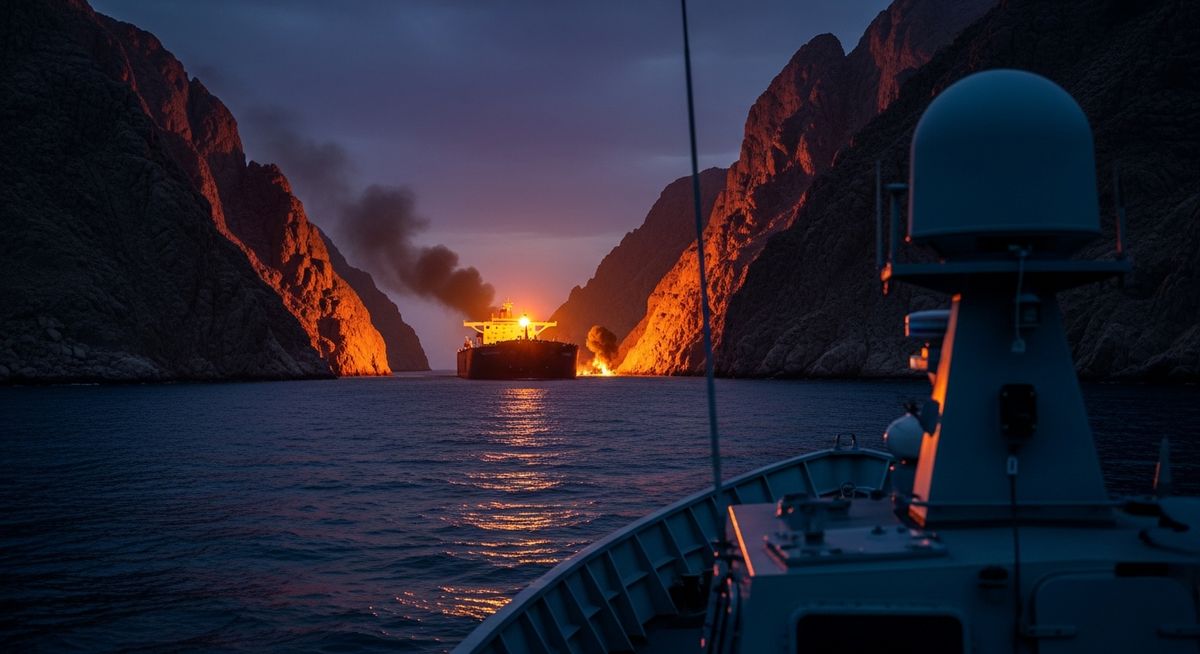
Global energy security under threat: oil tanker struck off the coast of Oman One-fifth of global oil transit faces immediate risk after a tanker was hit by a projectile in the Hormuz region on Monday. The United Kingdom Maritime Trade Operations (UKMTO), cited by Romanian publications Economica.net and Mediafax, officially reported this serious security incident. The attack took place off the coast of Oman at a moment of maximum fragility for global energy markets. The incident puts international naval forces and major commercial fleet operators on immediate alert. Initial technical reports indicate that the vessel suffered minor structural damage following the impact with the unidentified projectile. Fortunately, the crew is safe, and no oil spills have been reported in Oman's territorial waters. Nevertheless, the aggression highlights the extreme vulnerability of commercial vessels transiting the narrow corridors of the Middle East. Shipowners have already begun re-evaluating safety protocols for active shipping routes. British maritime authorities are continuing their investigations to determine the exact dynamics of the attack and the type of ammunition used. Preliminary information suggests the use of an attack drone or a medium-caliber guided projectile. The coastal area of Oman remains heavily monitored by allied military radars to prevent similar future incidents. Commercial operators are advised to report any suspicious activity detected in the vicinity. Middle East instability and the vulnerability of maritime chokepoints Unresolved geopolitical tensions in the Persian Gulf region represent the primary cause of this new disruption to maritime transport. The Strait of Hormuz functions as a vital canal connecting Gulf producers with global consumer markets. The constant presence of non-state militias near commercial shipping lanes increases the risk of unpredictable asymmetric attacks. The lack of a regional security agreement leaves commercial fleets directly exposed to these military risks. Military analysts point out that using unidentified projectiles allows attackers to avoid direct political or military accountability. This hybrid warfare tactic complicates the response of the international community and maintains a permanent state of uncertainty. For importing nations, reliance on this maritime corridor represents a critical point of strategic vulnerability. Monday's incident demonstrates that no commercial vessel is fully protected without active military escorts. Rising insurance premiums and indirect pressure on fuel prices The immediate economic consequence of this attack translates into a significant increase in war risk insurance premiums. Insurance companies are already re-evaluating rates for all vessels scheduled to transit the Strait of Hormuz in July. These additional operating costs are automatically transferred to the final price of each delivered barrel of Brent crude. The financial pressure propagates rapidly throughout the entire energy supply chain. For the Romanian market, the effects could be felt at the pumps through moderate increases in gasoline and diesel prices. Although Romania imports a significant portion of its crude oil through alternative Black Sea routes, local prices follow international benchmarks. A sustained increase in Brent crude directly influences refining margins and reference prices set by major domestic distributors. Thus, incidents in the Middle East ultimately reflect on consumers' bills. Intensified international monitoring and the risk of further shipping disruptions In the coming period, market attention turns to the military and diplomatic response of the international maritime security coalition. The United States and its regional allies could decide to intensify patrol missions in the Gulf of Oman. However, excessive militarization of the strait risks further disrupting the delivery schedules of oil tankers. Decisions made by major shipping companies over the next 48 hours will be decisive for price trends. A scenario involving the bypass of the Strait of Hormuz via alternative routes would add thousands of nautical miles and huge fuel costs. For now, most operators are keeping their routes active but are navigating with early warning systems set to maximum alert. NRG-IA will continue to monitor the evolution of commodity markets and the impact of these tensions on European energy security. Industrial and residential consumers must remain attentive to price volatility in the fuel market.
Ioana Buzoaica — Independent Editorial Board
The NRG-IA newsroom continuously monitors Romanian energy markets, ANRE regulatory decisions, and national grid telemetry (SEN/SNT). We deliver independent intelligence anchored exclusively in official primary data.
Editorial Charter, Ethics & Verification Methodology →