Hormuz Crude Flow Drops 27%, Brent Climbs to $104 — NRG-IA
Geopolitică & Energie Author: Ioana BuzoaicaHormuz crude flows fell 27% to 10.1 mb/d amid rising attacks. Exporters use alternative routes, but costs are rising as Brent hits $104.28.
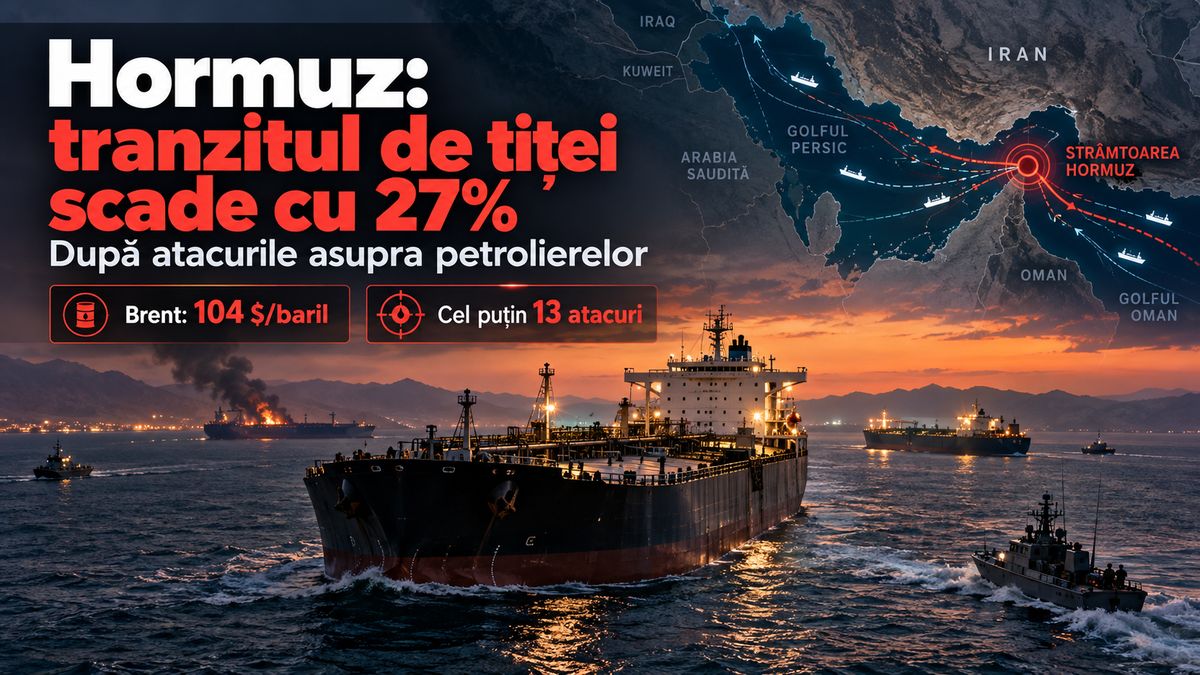
Crude oil flows through the Strait of Hormuz have fallen by 27% from the previous week's peak to approximately 10.1 million barrels per day (bpd), following intensified attacks on tankers and gas carriers in the Persian Gulf. Commercial traffic has dropped to its lowest level in over two months, and Brent crude has climbed back above $104 per barrel, marking a fresh escalation of risks to global energy supplies. Data published by Reuters on October 8, 2026, based on tracking by Kpler, shows that only seven commercial cargo vessels transited the strait on Tuesday, October 6—the lowest number recorded since July 23. On Wednesday, traffic recovered modestly to ten transits, compared to more than 20 vessels per day recorded earlier in the week. This decline follows the most intense period of attacks on energy shipments since the conflict between Iran, the United States, and Israel erupted in late February. According to Lloyd’s List Intelligence, at least 13 attacks targeting tankers and gas carriers have been recorded since September 28. For the oil market, the impacts extend beyond the reduction in transit through the strait. Middle Eastern producers are managing to maintain a significant portion of their exports via pipelines, alternative terminals, and ship-to-ship transfers, but these operations are more expensive and exposed to growing security risks. Hormuz Records Lowest Commercial Traffic in Two Months The Strait of Hormuz is one of the world's most critical energy transit chokepoints, connecting the Persian Gulf with the Gulf of Oman and the Indian Ocean. This maritime passage handles crude oil and liquefied natural gas (LNG) exported by some of the Middle East's largest producing nations. Prior to the conflict, approximately one-fifth of global oil flows and a comparable share of international LNG trade transited this area. The escalation of attacks in recent days has triggered a rapid decline in the number of vessels willing to transit the strait. According to Kpler, only seven transits by commercial cargo vessels were identified on Tuesday, October 6. Data from LSEG indicates eight transits on the same day, a discrepancy explained by differing tracking methodologies. In terms of volume, the quantity of crude oil transported through Hormuz fell to at least 10.1 million bpd, 27% below the wartime weekly peak recorded just a week earlier. According to Kpler analysts, the current volume represents about 74% of pre-conflict levels. This reduction is highly significant for a route that handles a vital share of global oil trade. The decline has particularly affected shipments linked to ship-to-ship (STS) transfer operations in the Gulf of Oman, where cargoes are transferred between vessels to continue their journey to international markets. This logistical infrastructure has become increasingly vital for maintaining exports amid regional shipping restrictions and risks. At Least 13 Attacks on Energy Vessels Since September 28 The escalation of maritime incidents is the primary driver behind the temporary withdrawal of a portion of commercial shipping. According to Reuters, maritime security sources documented at least 12 incidents between September 28 and October 5, including attacks, attempted attacks, and acts of intimidation against vessels. The International Maritime Organization had confirmed nine incidents during the same period using its own verification procedures. Tracking by Lloyd’s List Intelligence, updated as of October 8, raises the total to at least 13 attacks recorded since September 28. The intensity of these incidents surpasses previous periods of escalation during the conflict. Among the targeted vessels was the Panama-flagged tanker "On Peace", which was struck on October 6 by an unidentified projectile while transiting the strait. According to information from Indian authorities reported by Reuters, 12 crew members were injured. On October 7, the chemical tanker "Acers" was struck by multiple projectiles off the coast of Qatar. The incident is also significant due to its location. The vessel was attacked deep inside the Persian Gulf, far from the actual Hormuz passage, indicating that the threat is expanding to maritime routes used to access regional energy terminals. The attacks increase risks for crews and shipowners, prompting voyage re-evaluations, route changes, and higher insurance and shipping costs. Oil Exports Maintained via the Red Sea and Gulf of Oman Despite the drop in Hormuz transits, total crude oil exports from the Middle East have remained close to pre-conflict levels, according to Kpler estimates. This is one of the most significant developments in the oil market in recent months. Exports via terminals on the coast of the Gulf of Oman and the Red Sea have risen to approximately 6.7 million bpd, more than double pre-war levels. The growth of these flows has offset a major portion of the volume reductions through Hormuz. Saudi Arabia is utilizing its East-West…
Ioana Buzoaica — Independent Editorial Board
The NRG-IA newsroom continuously monitors Romanian energy markets, ANRE regulatory decisions, and national grid telemetry (SEN/SNT). We deliver independent intelligence anchored exclusively in official primary data.
Editorial Charter, Ethics & Verification Methodology →