Tanker Attacks Halt Kazakh Black Sea Oil Exports Again — NRG-IA
Geopolitică & Energie Author: Ioana BuzoaicaKazakh oil exports halted again after Black Sea tanker attacks, threatening Petromidia's main supply route. No immediate deficit is expected.
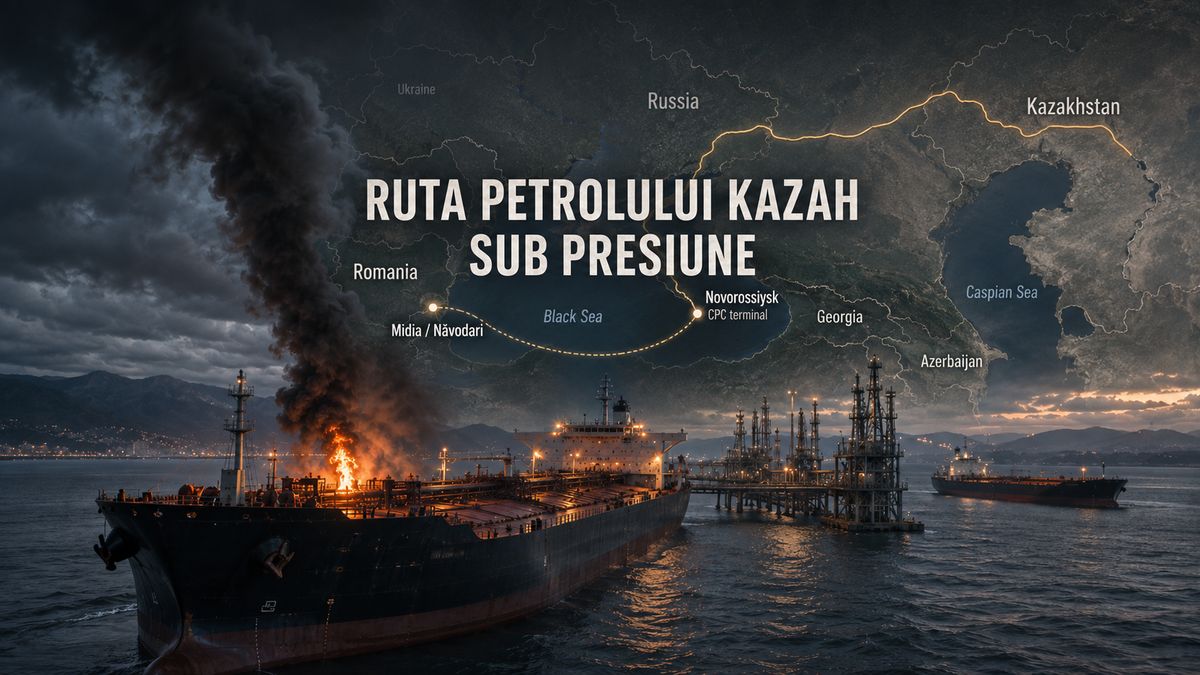
The tanker Nissos Sifnos was struck while loading oil at the Caspian Pipeline Consortium's marine terminal, sparking a fire on board. A second vessel, the Marathi, was attacked near the terminal. Loading operations have been suspended once again, just three days after the consortium announced their resumption following a previous disruption that severely curtailed Kazakhstan's oil exports and production. Publicly available information does not yet allow for a full assessment of the consequences of the latest attacks. There is no clear confirmation of casualties, oil spills, the extent of the damage to the two vessels, or any impact on the terminal's facilities. However, the suspension of loadings is confirmed, and as of the morning of July 31, no resumption of operations had been announced. The Nissos Sifnos is a large crude carrier built in 2020 with a capacity of nearly 158,000 tonnes, operated within the Okeanis Eco Tankers fleet. There is no public data indicating that the vessel was controlled by Chevron or that its cargo was destined for Romania. The connection to major US oil companies lies in the Kazakh oil fields and their stakes in the transport system, rather than vessel ownership. Three Shutdowns in a Single Month The July 30 incident continues an unusually rapid succession of attacks on vessels operating at the Caspian Pipeline Consortium terminal. On July 19, the tankers ASIA and Nissos IOS were attacked while loading oil at two offshore single-point moorings. The ASIA was carrying oil for Tengizchevroil, the operator of the Tengiz field in which Chevron is the primary Western shareholder. The Nissos IOS was loading crude from the Kashagan project and volumes associated with KazMunayGas. A fire that broke out on the ASIA was extinguished, and the terminal operator announced at the time that there were no casualties or oil spills. Loadings were halted, then resumed later that evening. On July 20, another tanker, the NELSA, was attacked, prompting another suspension of operations. The terminal remained closed for about a week. On July 27, the consortium announced the resumption of loadings, with two tankers connected to the offshore transfer points. Just three days later, the attacks on the Nissos Sifnos and Marathi triggered yet another shutdown. The repetition of these incidents changes the nature of the risk. This is no longer an isolated disruption resolved by withdrawing a vessel and inspecting the facilities. The terminal operates in an area where tanker safety, crew availability, and the risk tolerance of shipowners and insurers could become just as critical as the pipeline's technical integrity. The Pipeline May Work, but the Oil Must Be Loaded onto Ships The Caspian Pipeline Consortium system transports oil over 1,500 kilometers from western Kazakhstan, through Russian territory, to the Black Sea terminal. This route carries more than 80% of Kazakhstan's oil exports and serves the Tengiz, Kashagan, and Karachaganak fields, which are operated by consortia involving companies such as Chevron, ExxonMobil, Shell, and Eni. The terminal handles volumes equivalent to approximately 2% of global daily oil supply. Oil is transferred from the terminal's storage tanks to vessels via offshore loading facilities. Even if the pipeline, pumping stations, and storage tanks remain fully functional, exports cannot continue normally if tankers cannot safely moor and load. This distinction is critical. Terrestrial infrastructure does not need to be destroyed for trade flows to be disrupted. It is enough for vessels to be unable to operate, for shipowners to avoid the area, or for insurance premiums and security conditions to render transport temporarily unviable. The Bottleneck Rapidly Reaches the Oil Fields Kazakhstan has limited capacity to store oil that cannot be exported. When the Black Sea terminal stops receiving or loading scheduled volumes, storage tanks in the system fill up, forcing producers to curtail extraction. This effect became visible following the previous attacks. Kazakhstan's oil and condensate production dropped on one of the days to approximately one million barrels per day, down from a June average of 2.16 million barrels per day. The reduction was driven by the inability to evacuate the oil normally, rather than any geological or technical issues at the producing fields. At Tengiz, the country's largest oil field, production had previously fallen to approximately 406,000 barrels per day, down from an average of about 925,000 barrels per day. Kazakhstan's Ministry of Energy described the cut as a controlled adjustment necessary to prevent storage capacities from filling up. A new, prolonged suspension could trigger the same mechanism: first, oil accumulates in storage tanks, then companies cut production, and volumes available for export decline. Consequently, the duration of the disruption becomes far more significant than the damage caused to any single vessel. Alternative Routes…