Oil hovers near $90 amid US-Iran clashes and Hormuz risks — NRG-IA
Geopolitică & Energie Author: Ioana BuzoaicaNew Middle East attacks pushed oil back to $90. Risks have spread from Hormuz to the Red Sea, but ongoing exports limit further price gains.
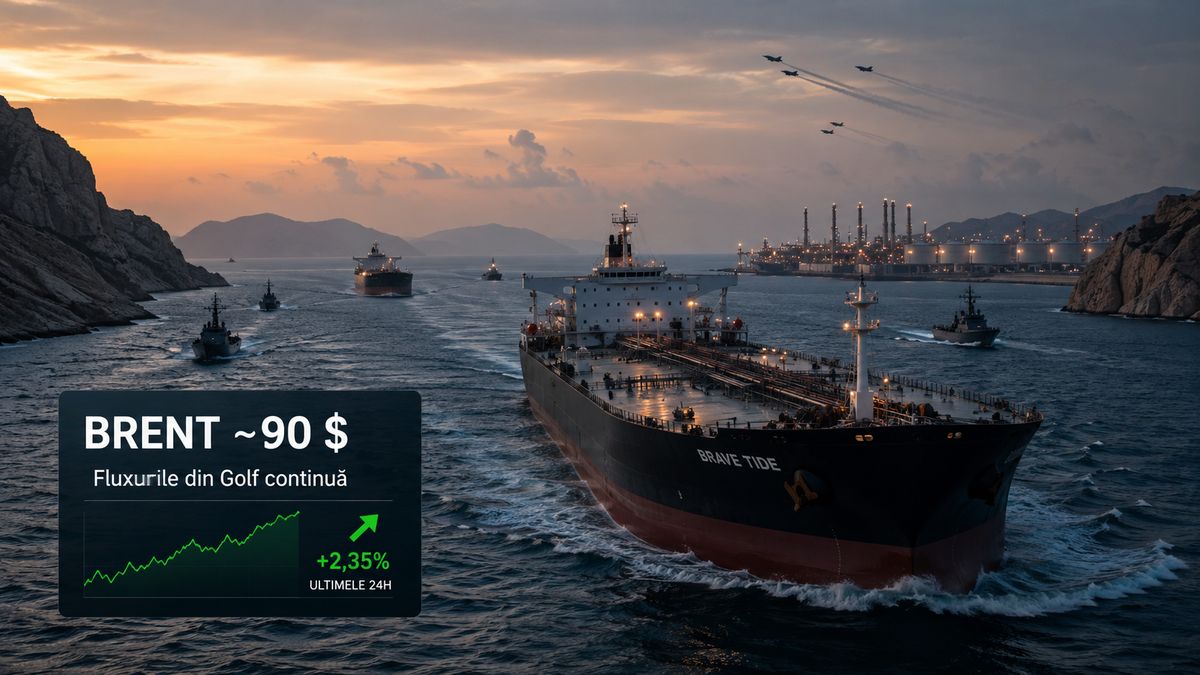
Oil has returned to around the $90 per barrel threshold following a fresh military escalation between the United States and Iran, but the market quickly pared some of its gains once it became clear that Gulf exports are continuing. The divergence between the initial reaction and subsequent price action highlights the mechanism currently driving prices: attacks add risk, but only an actual loss of significant volumes can sustain oil at much higher levels. Brent crude closed the July 29 session at $90.74 per barrel, following a 7.91% increase. US crude rose by 6.56% to $84.46. By the morning of July 30, Brent had slipped to around $89.78, and US crude to $83.82, as investors shifted their focus from the intensity of the confrontation back to the concrete supply situation. The pullback does not mean geopolitical risk has vanished. On the contrary, the confrontation has expanded to military bases, Iranian facilities, armed groups in Iraq, and widely dispersed shipping routes. Prices eased slightly because oil continues to flow, not because the region has become safer. Iranian attack and US response price risk back in Iran launched missiles at a US base in Jordan, with Jordanian air defenses intercepting several projectiles. President Donald Trump promised a strong response, and the United States subsequently struck dozens of targets linked to the Revolutionary Guards, including command centers and military facilities. In parallel, US and Saudi forces struck positions of Iran-backed groups in Iraq, following actions directed against US forces and Saudi infrastructure. This sequence of events has increased the probability of a military incident affecting oil production, terminals, or shipping. The market reacted immediately because the risk is no longer confined to a single flashpoint. Iran can pressure traffic through the Strait of Hormuz, Tehran-aligned groups can strike infrastructure or shipping in Iraq and the Arabian Peninsula, and Houthi rebels threaten navigation through the Red Sea. These flashpoints are linked by the same commercial supply chain. Oil produced in the Gulf must reach terminals, be loaded onto vessels, and transit one of the few available routes to Asia, Europe, and other markets. The Strait of Hormuz remains the epicenter of global risk Under normal conditions, approximately 20.9 million barrels of oil and petroleum products passed through the Strait of Hormuz daily. This volume represents about 20% of global consumption and roughly a quarter of the world's seaborne oil. The strait's importance is further underscored by the lack of sufficient alternatives. Pipelines through which Saudi Arabia and the United Arab Emirates can bypass Hormuz have an estimated combined capacity of about 4.7 million barrels per day. While they can mitigate the impact of a disruption, they cannot fully replace normal transit through the strait. This imbalance explains the extreme price sensitivity. An attack on a vessel can trigger a rapid price spike even if it does not immediately reduce global supply, as shipowners, traders, and insurers must assess the likelihood of further incidents. However, if vessels continue their voyages and exporters utilize alternative pipelines and terminals, the risk premium can recede. This exact distinction was visible between Wednesday's surge and Thursday's moderate decline. Estimates cited by Reuters indicate that approximately 13 million barrels per day continue to flow from the Gulf to international markets, despite restrictions and risks. While this volume is well below the region's normal capacity, it is sufficient to prevent a major additional supply shortage for now. A gas shipment shows the route is not completely closed Traffic through Hormuz remains reduced, selective, and dangerous, but it has not ceased. A QatarEnergy-controlled carrier exited the strait with a cargo of liquefied natural gas, marking the first such visible transit in nearly three weeks. On the same day, tracking data indicated the passage of several commercial vessels. These movements do not represent a return to normal operations, but they send an important signal to the market: exporters and shippers are still finding ways to move energy out of the Gulf. Visible traffic, however, does not provide a complete picture. Some vessels may turn off their public tracking systems to reduce the risk of identification and attack. Under these conditions, flow estimates are frequently revised and can vary among tracking firms. Data uncertainty itself breeds volatility. The market does not know the exact volume of oil in transit in real-time and must react to incomplete information regarding vessels, loadings, and terminals. The Red Sea threatens the primary Saudi alternative Saudi Arabia can reduce its reliance on Hormuz by transporting oil via the East-West pipeline to the port of Yanbu on the Red Sea. From there, tankers can sail to Europe via the Suez Canal or to Asia through the Bab el-Mandeb strait.…