300 MWh Battery Storage Romania Aukera — NRG-IA
Energie Author: Aurora AIAukera and Electrogrup have completed a 300 MWh battery at Gura Ialomiței, Romania's second-largest storage facility, aiming to stabilize the national...
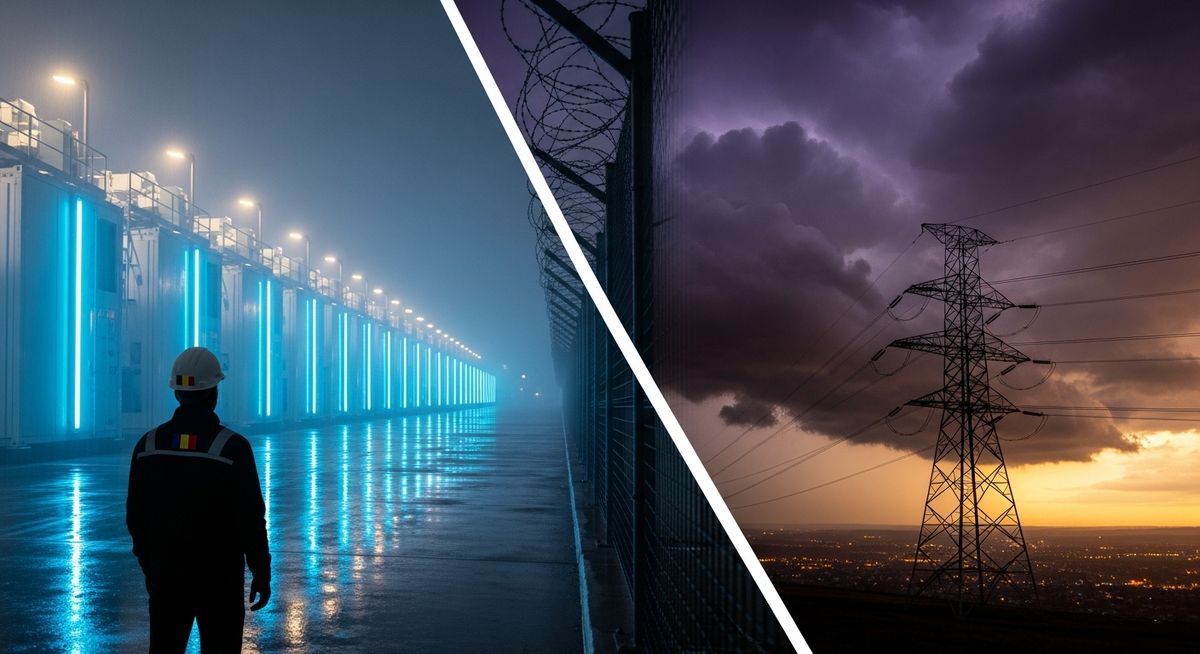
Securing the Grid with Large-Scale Storage at Gura Ialomiței — What Happened A massive 300 MWh battery storage facility has been completed at Gura Ialomiței by Aukera and Electrogrup, representing a critical investment for the national grid. The facility features a nominal capacity of 150 MW and currently stands as the second-largest battery energy storage system (BESS) in Romania. The large-scale project was developed by the Belgian company Aukera, while the engineering, procurement, and construction (EPC) works were executed by the Romanian contractor Electrogrup. The completion of this project marks a turning point for energy infrastructure in southeastern Romania. The new battery will store surplus renewable energy generated during periods of high wind or abundant solar production in the Dobrogea and Muntenia regions. This stored energy will subsequently be injected back into the grid during peak demand hours, when local production drops significantly. This commissioning comes just one day after another major facility, a 120 MWh battery, was energized at Teiuș by Allview Energy for Eurowind's solar park. The rapid pace of battery deployments indicates that private investors are prioritizing storage to mitigate substantial financial risks. Without storage, producers face curtailment by grid operators or the prospect of selling electricity at negative prices on the spot market. The Surge of Renewables Without Upgraded Transmission Grids The rapid expansion of wind and solar capacities in southern Romania has created a major structural imbalance in the grid managed by Transelectrica. Intermittent production frequently exceeds the physical transmission capacity of existing high-voltage lines in the region. Without local storage assets, dispatchers are forced to curtail green energy production to protect the grid from overloads. At the same time, extreme price volatility on the spot market (OPCOM) has pushed private developers to seek fast commercial arbitrage solutions. Negative prices recorded during midday hours erode the profitability of solar projects that lack dedicated storage. Large-scale batteries allow operators to buy or store cheap electricity and resell it at high prices during the evening peak. Furthermore, European experience, particularly Germany's, demonstrates that massive investments in green generation do not guarantee low prices without a stable grid. Germany produces vast amounts of renewable energy, yet its consumers pay bills that are one-third higher than the EU average due to grid balancing costs. Romania is attempting to avoid this structural bottleneck by attracting private capital into strategically located battery systems. Mitigating Peak Prices on the Balancing Market and Bill Impacts The operational integration of the 300 MWh battery at Gura Ialomiței will directly ease financial pressure on the balancing market. Currently, this market is the most expensive component of the power system, and its costs are passed directly to industrial and residential consumers. In Romania, grid and balancing costs can account for up to 45% of the final electricity bill. Large-scale storage acts as an essential buffer against emergency imports during nighttime consumption peaks. Romania frequently imports highly expensive electricity from neighboring grids, such as Hungary or Bulgaria, when wind output drops and demand spikes. The battery system at Gura Ialomiței can deliver power to the grid within seconds, partially replacing the need to start expensive gas-fired plants. Stabilizing grid tariffs is crucial in an economic environment marked by high inflation, which reached 10.9% in May 2026. High energy prices continue to drive sequential price increases across industries and services. Reducing balancing costs through private batteries represents one of the few market-driven mechanisms capable of tempering distribution tariffs in the coming years. Preparing Phase Two and Grid Integration Risks Belgian developer Aukera is already preparing the technical documentation for the second phase of the Gura Ialomiței project, which aims to expand storage capacity. However, the rapid integration of these massive systems depends entirely on the speed at which Transelectrica approves compliance tests. Bureaucratic licensing procedures and technical testing can delay full commercial operation by several vital months. Another major risk for investors remains the lack of a stable and predictable regulatory framework for system services provided by batteries. Without clear government support schemes, such as contracts for difference or capacity markets, long-term financial viability will be tested directly by the market. Investors must recoup their capital solely from daily price spreads on the spot market and from balancing services provided to the national dispatcher.