CET Craiova 2 Outage: Romanian Grid Loses Coal Unit — NRG-IA
Piața de Energie Author: Aurora AIA sudden outage at CET Craiova 2 took its coal unit offline. The grid loses critical baseload capacity until Monday, according to Transelectrica.
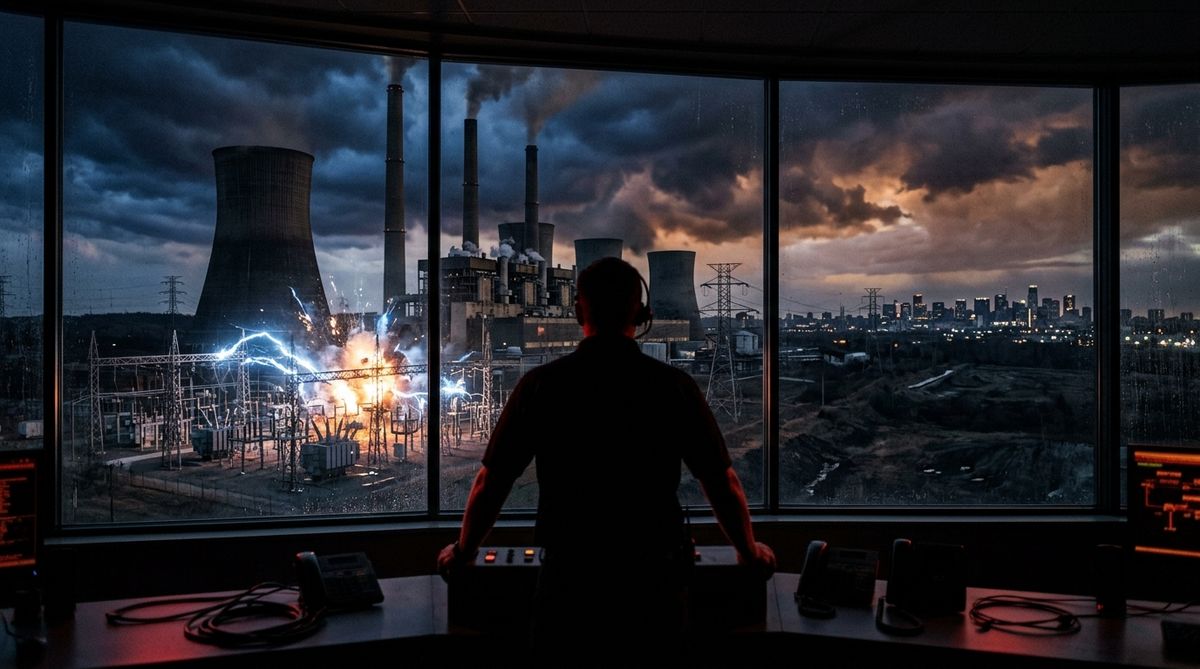
Major outage at CET Craiova 2: Romanian grid loses critical baseload unit in late summer — what happened A sudden malfunction registered on Thursday, August 27, 2026, at 00:03 AM, took the coal-fired unit of CET Craiova 2 offline, leaving Romania's National Energy System (SEN) without essential baseload capacity. According to official Transelectrica data, initially reported by specialized outlets e-nergia.ro and Economica.net, the unplanned shutdown severely restricts the grid operator's dispatch options during a period of structural vulnerability for the national infrastructure. The Craiova power plant is one of the few remaining operational lignite-fired cogeneration units in Romania. It plays a dual critical role, supplying electricity to the high-voltage grid and providing district heating to the municipality of Craiova. The overnight incident highlights the precarious state of Romania's fossil-fuel generation fleet, a systemic issue frequently analyzed by NRG-IA. The accidental shutdown of the unit occurred instantaneously, forcing the National Energy Dispatches (DEN) to deploy fast-balancing reserves to compensate for the sudden loss of injected power. This dynamic adds further strain to a grid already challenged by high generation volatility from renewable sources and elevated seasonal temperatures. Technological wear and underinvestment: The structural cause of the failure Although the operator, Electrocentrale Craiova SA, has not yet publicly detailed the specific components that failed, the root cause of the incident lies in the severe physical degradation of the equipment. Romania's coal units, most of which were commissioned during the communist era, operate well beyond their designed technical lifespan. Capital repairs have been repeatedly deferred due to funding shortages or in anticipation of national decarbonization plans. CET Craiova 2, which was legally unbundled from Complexul Energetic Oltenia to be transferred to local municipal ownership, is currently undergoing a difficult transition. Modernization plans outline a shift to natural gas via the construction of a new 295 MW combined-cycle gas turbine (CCGT) unit. However, until these projects are completed, the system remains dependent on highly worn boilers and turbines, which are prone to frequent structural failures under thermal stress. Furthermore, intermittent operation—forced by the necessity to accommodate cheap renewable energy during peak solar hours—accelerates material fatigue in conventional thermal plants. Repeated start-stop cycles subject boilers to extreme temperature and pressure variations, acting as the primary cause of the microfractures that lead to major outages like the one seen on Thursday morning. Market-wide ripple effects: Increased imports and peak-hour price surges The economic consequences of this unplanned shutdown will directly impact electricity procurement costs. Lacking Craiova’s baseload generation, Romania is forced to increase imports from neighboring markets (Hungary, Bulgaria) or ramp up expensive natural gas-fired plants with much higher marginal costs, particularly during evening peak hours. As solar generation rapidly drops toward sunset, the absence of dispatchable coal units creates an acute deficit on the Day-Ahead Market (DAM) operated by OPCOM. This deficit translates immediately into spot price spikes, as the most expensive marginal bids set the market clearing price for critical hours. Even more critically, the instantaneous imbalance at 00:03 AM had to be covered through the Balancing Market, where settlement prices are exceptionally high. While these additional costs are not immediately visible on household bills due to current price-cap schemes, they are ultimately socialized into transmission and distribution tariffs, eroding the competitiveness of Romania's industrial sector. Monday deadline for repairs: Persistent risks in the national grid According to official transparency filings on Transelectrica's platforms, the estimated deadline for repairing the malfunction and resynchronizing the unit at CET Craiova 2 is set for Monday, August 31, 2026. Until then, the national grid will operate with a reduced reserve margin, exposing Romania to substantial commercial risks if additional accidental outages occur. The medium-term stakes extend far beyond this single incident. Romania's heavy reliance on imports during windless and cloudy periods demonstrates that phasing out coal without rapidly deploying battery storage or commissioning new gas-fired plants severely compromises security of supply. Until Monday, monitoring cross-border flows and spot prices on OPCOM will be crucial to assessing the full impact of this outage. Any delay in the repair schedule will prolong price pressures across the region, at a time when East European markets are already highly sensitive to supply disruptions.
Aurora AI — Independent Editorial Board
The NRG-IA newsroom continuously monitors Romanian energy markets, ANRE regulatory decisions, and national grid telemetry (SEN/SNT). We deliver independent intelligence anchored exclusively in official primary data.
Editorial Charter, Ethics & Verification Methodology →