Diesel Up 36 Bani at Petrom & OMV as Excise Cut Expires — NRG-IA
Piața de Energie Author: Ioana BuzoaicaThe anticipated diesel price hike hit on July 1. Petrom and OMV fully passed on the expired excise cut, raising prices by 36.3 bani/liter with VAT.
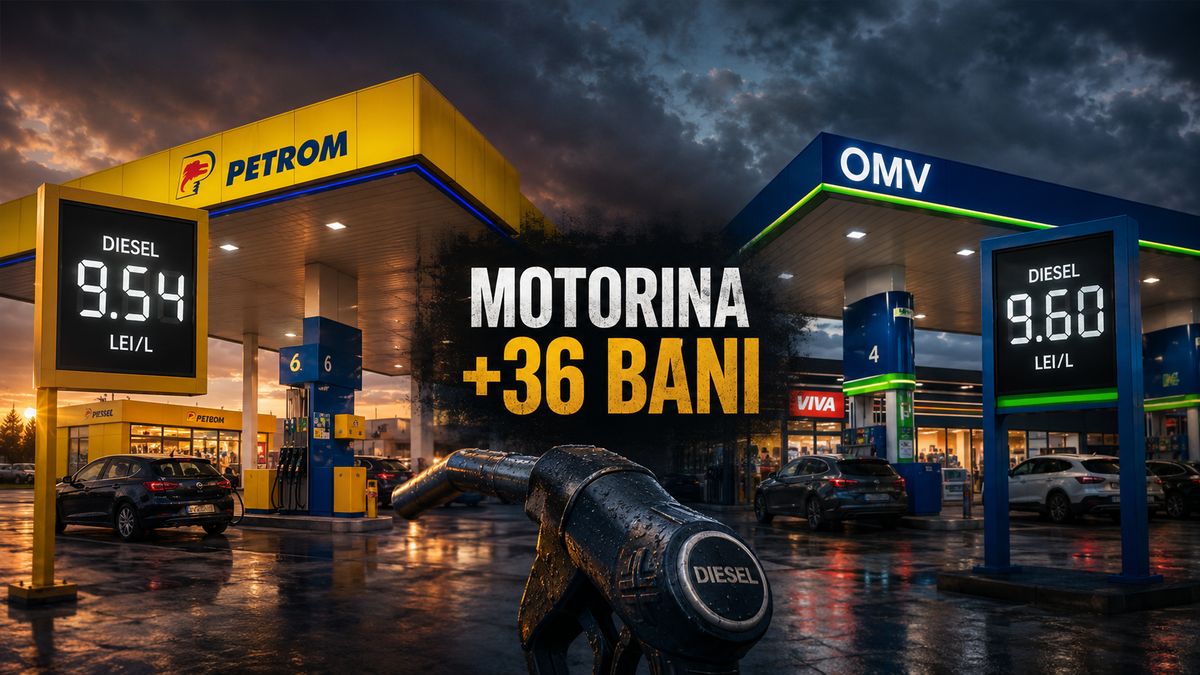
The warnings of recent days were confirmed on the first night following the expiration of crisis measures in the fuel market. Standard diesel prices rose by 36 bani/liter at Petrom and OMV, matching the exact estimated impact of the excise duty returning to the standard level applicable in 2026. At Petrom stations, the price of diesel rose from 9.18 lei/liter to 9.54 lei/liter. At OMV, diesel increased from 9.24 lei/liter to 9.60 lei/liter. Socar raised diesel by 30 bani/liter to 9.54 lei/liter, while simultaneously cutting gasoline by 6 bani/liter. During the first monitoring published on the morning of July 1, Rompetrol, MOL, and Lukoil had not yet adjusted their diesel price of 9.24 lei/liter. The increase does not stem from a new excise hike adopted today. The state allowed the temporary reduction applied since April 7 to expire, after the crisis situation in the crude oil and petroleum products market ended on June 30, 2026, inclusive. Emergency Ordinance (OUG) 19/2026 allowed for extensions of up to three months, but no new legislative intervention came into force before the deadline expired. How a 30-bani excise duty becomes 36 bani at the pump OUG 24/2026 temporarily reduced the excise duty on standard diesel from 2,804.29 lei/1,000 liters to 2,504.29 lei/1,000 liters. The difference is 300 lei/1,000 liters, equivalent to 30 bani/liter. For the consumer, the impact does not stop at 30 bani. The 21% VAT also applies to the excise duty, bringing the total fiscal difference to 36.3 bani/liter: 30 bani/liter — the return of the excise duty; 6.3 bani/liter — associated VAT; 36.3 bani/liter — total potential impact on the final price. Petrom and OMV fully passed this difference on to the price displayed at the pump. Socar applied a smaller increase of 30 bani/liter, demonstrating that the fiscal change does not automatically force all retail networks to adjust prices by the exact same amount on the same day. For a 50-liter tank, the difference is about 18.15 lei. For 60 liters, the additional cost rises to approximately 21.78 lei. For haulers, courier companies, farmers, and distributors, the impact multiplies rapidly through the volumes consumed. Oil prices did not cause today's hike The July 1 move should not be confused with a new price hike driven directly by the international oil market. It is, first and foremost, the fiscal effect of withdrawing a temporary measure that reduced diesel prices during the crisis period. Pump prices are made up of several components: crude oil quotes, refined petroleum product quotes, the leu-dollar exchange rate, transport and distribution costs, biofuel mandates, VAT, excise duty, and commercial margins. Consequently, any potential cooling of oil prices is not automatically or instantly reflected in Romanian diesel prices. OUG 19/2026 was adopted at a time when authorities cited the accelerating volatility of oil and diesel, pressures on imports, and the risk of costs spilling over into transport, agriculture, the food industry, and retail. Romania imports a significant portion of its crude oil needs, and diesel remains the fuel with the greatest economic exposure due to freight transport and productive activities. Commercial margin caps also expire The excise duty reduction was not the only measure that ended on June 30. From April 1 to June 30, OUG 19/2026 capped the average commercial margin for gasoline and diesel at the average level charged by each operator in 2025. The temporary regime allowed price increases at most once a day, up to 12:00 PM, while price cuts could be applied at any time. With the expiration of the crisis situation, these special constraints are no longer in effect. This does not automatically mean diesel prices will continue to rise. However, it does mean that prices are returning to a freer pricing regime, where each network will decide the pace at which fiscal, commercial, and supply costs are passed on. Diesel transmits pressure further into the economy While gasoline immediately affects drivers' budgets, diesel is far more critical for broader economic costs. It is the fuel used by road freight transport, agricultural machinery, distribution, construction, couriers, passenger transport, and a large portion of commercial fleets. A localized price hike does not automatically translate into a generalized increase in food or consumer goods prices. However, it adds pressure to the logistics chain, especially if high diesel prices persist over the longer term or if other retail networks fully pass on the tax return in the coming days. The first day after the measure's expiration already highlights the difference between a temporary tax cut and real market pricing: the reduction disappears instantly by legislative decree, whereas any potential price drops stemming from oil, refined products, or exchange rates are passed on at varying paces from one network to another.
Ioana Buzoaica — Independent Editorial Board
The NRG-IA newsroom continuously monitors Romanian energy markets, ANRE regulatory decisions, and national grid telemetry (SEN/SNT). We deliver independent intelligence anchored exclusively in official primary data.
Editorial Charter, Ethics & Verification Methodology →