Ukraine Strikes Crimea-Bound Fuel Ships in New Logistics War — NRG-IA
Geopolitică & Energie Author: Ioana BuzoaicaUkraine expands its energy war, targeting fuel ships to occupied Crimea. The Azov campaign shows Russia's vulnerability is delivering finished fuel.
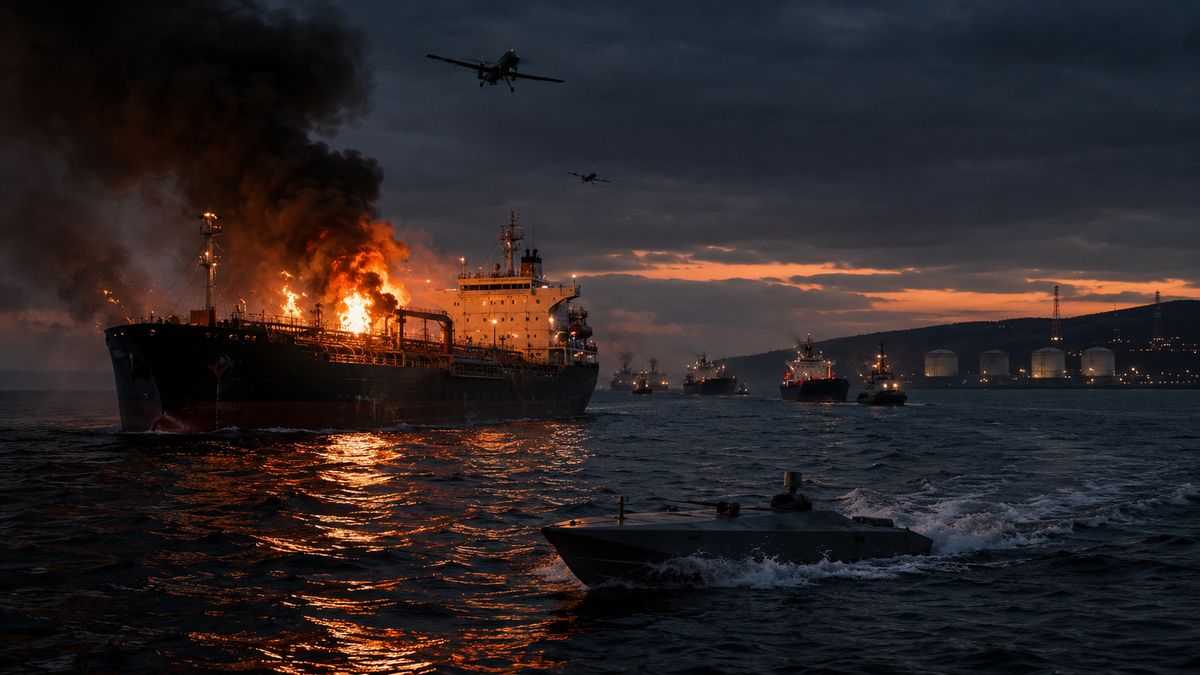
Ukraine has entered a new phase in its war on Russian energy logistics: systematic attacks on vessels transporting fuel to occupied Crimea. Following months of strikes on refineries, depots, and oil infrastructure, Ukrainian drones are now targeting the final link in the chain: tankers and cargo ships carrying gasoline, diesel, and supplies across the Sea of Azov. Kyiv claims to have struck dozens of Russian vessels in just a few days. While the full tally comes from the Ukrainian side and Reuters noted it could not independently verify all images published by the Ukrainian military, the campaign itself is a confirmed phenomenon. Reuters reported attacks on tankers carrying fuel to Crimea, and specialized maritime publications recorded strikes on 21 vessels within 72 hours, including tankers, a cargo ship, and a ferry. The Sea of Azov becomes a logistical front The Sea of Azov is no longer just a transit zone under Russian military control. It is becoming an arena where Ukraine is attempting to cut off supplies to occupied Crimea. The targeted vessels are not naval symbols, but functional components of a supply system: they transport fuel, support military mobility, meet civilian needs, and keep the occupation infrastructure running. For Russia, Crimea holds major military and political value. The peninsula serves as a base for operations in southern Ukraine, a stronghold for Black Sea defense, and a logistical hub for troops, vehicles, aviation, and administration. Without fuel, sustaining all these functions becomes increasingly difficult. Striking vessels in the Sea of Azov thus carries broader stakes than merely damaging a few tankers. Ukraine is attempting to turn Crimea's supply chain into an expensive, slow, risky, and unreliable process. Every vessel that is delayed, retreats, catches fire, or requires repairs reduces the predictability of deliveries. The real target is the finished fuel Russia remains one of the world's major oil producers. However, this raw power does not automatically solve the gasoline and diesel problem. Crude oil must be refined, loaded, transported, unloaded, and distributed. In a war, every single stage becomes vulnerable. Ukrainian attacks on refineries have already reduced Russia's capacity to produce fuel at normal rates. Shortages, sales restrictions, gasoline imports, and pressure on the domestic market have emerged in several Russian regions. The Sea of Azov campaign takes this same logic a step further: even the fuel that is produced must actually reach Crimea. This is the essential difference. It is not enough for Russia to have oil. It must be able to deliver usable fuel exactly where it is needed. Ukraine is now striking the transport of the finished product, not just the infrastructure that produces it. The shadow fleet enters drone range Some of the targeted vessels are described by Ukraine as being associated with Russia's so-called "shadow fleet": tankers and ships used to transport oil or petroleum products outside normal commercial channels, including through opaque structures, flag-swapping, or routes designed to mitigate the impact of sanctions. The term must be used with caution, as not all publicly identified vessels are independently confirmed to be sanctioned. However, the operational stakes are clear: Ukraine is not just striking isolated commercial vessels, but elements of the maritime infrastructure that supports Russian supply lines to Crimea. This campaign resembles a sanction enforced by military means. Instead of merely pursuing financial or legal blocks on shipments, Ukraine is physically attacking the vessels that maintain the flow of fuel. The result is direct pressure on transport costs and risks. Crimea feels the fuel squeeze Fuel is one of the most sensitive resources on an occupied peninsula. It powers military vehicles, generators, port logistics, civilian transport, infrastructure projects, agriculture, and distribution. When deliveries become unreliable, the impact is felt simultaneously by the military and in daily life. Ukrainian authorities describe the operation as a "battle for gasoline." This is a powerful phrasing because it clearly highlights Russia's vulnerability: not its symbolic control over Crimea, but its ability to supply it consistently. In a territory dependent on limited routes, every logistical link matters. The attacks on vessels complement strikes on refineries, depots, and land routes. Together, these actions create cumulative pressure: production is disrupted, storage becomes risky, and final transport to Crimea becomes a target. Drones shift the cost-benefit ratio at sea The campaign demonstrates the efficiency of asymmetric warfare at sea. Ukraine is using drones to strike vessels, infrastructure, and logistics that Russia long treated as protected by its military control over the area. The cost of a drone is incomparably lower than the value of a ship, its cargo, or the supply chain it disrupts. This disparity…
Ioana Buzoaica — Independent Editorial Board
The NRG-IA newsroom continuously monitors Romanian energy markets, ANRE regulatory decisions, and national grid telemetry (SEN/SNT). We deliver independent intelligence anchored exclusively in official primary data.
Editorial Charter, Ethics & Verification Methodology →