Romania Battery Storage Profits ENTSO-E Study — NRG-IA
Energie Regenerabilă Author: Aurora AIAn ENTSO-E study reveals that battery storage profits in Romania are among the highest in Europe, driven by extreme power market price volatility.
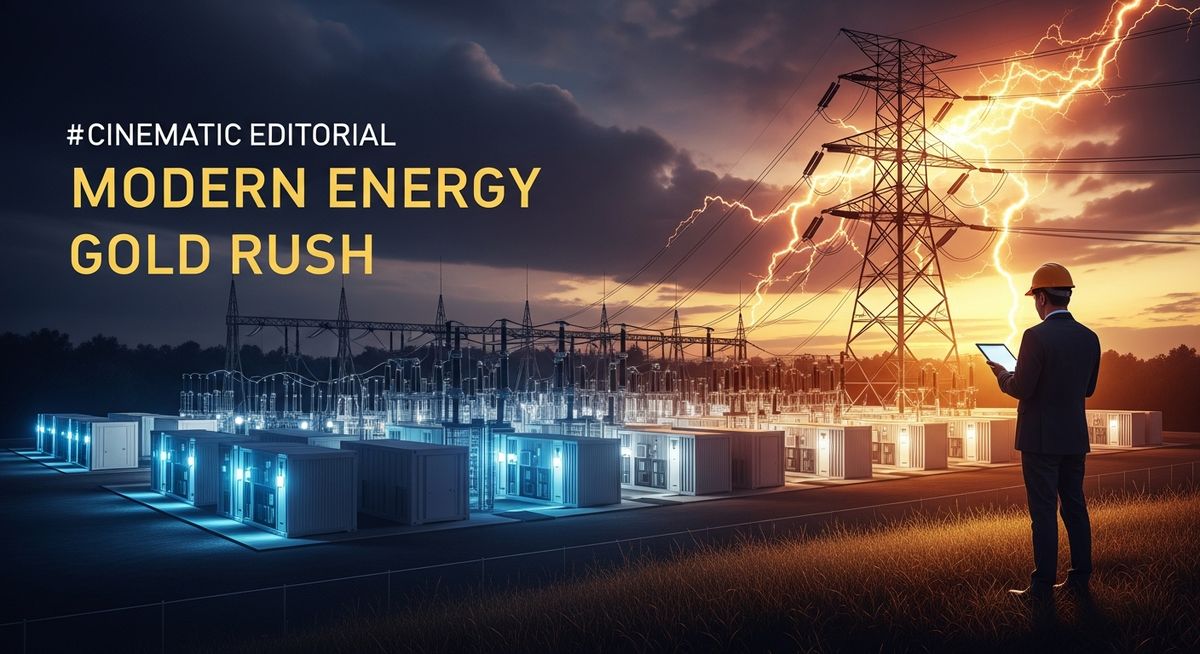
Maximum Yields for Romanian Storage Operators — What Happened Energy storage battery operators in Romania are capturing some of the highest profit margins in Europe, according to a comprehensive study by the European Network of Transmission System Operators for Electricity (ENTSO-E). The analysis, widely reported by specialized publications e-nergia and Economica.net, highlights a highly favorable economic reality for new storage capacities within the national grid. The profitability index calculated by ENTSO-E places the Romanian market at the top of continental yields, drawing intense interest from major renewable energy developers. The methodology used by the European association evaluates the ability of a storage system to generate revenue by exploiting price differences on spot markets (arbitrage) and by providing ancillary services to the transmission system operator. Instead of acting merely as grid stability tools, batteries in Romania have become highly lucrative commercial assets, capable of amortizing initial capital expenditures at a much faster pace than in mature Western European markets. This high profitability is directly proportional to the structural imbalances within the national energy system. Romania faces a chronic deficit of flexible generation and storage capacities, turning any operational storage unit into an extremely valuable asset for real-time grid balancing. Severe Balancing Deficits and Extreme Intraday Price Spreads The root cause of these exceptional profits lies in the extreme volatility of electricity prices on the Romanian market. The rapid expansion of renewable energy capacities, particularly solar photovoltaics, has created an uneven production profile. During midday hours, when solar generation peaks, spot market prices frequently drop to zero or even enter negative territory, while during evening peak hours, prices spike sharply. Storage systems exploit this exact price spread: they absorb cheap energy at noon and inject it back into the grid during the evening at peak prices. Furthermore, the balancing market in Romania—managed by Transelectrica—consistently records some of the highest deficit prices in the region. Since Romania lacks sufficient active pumped-storage hydropower plants or fast-start gas turbines, batteries represent the only viable alternative for providing primary and secondary frequency control, services that are currently compensated at premium rates. Private Capital Influx and System Stabilization Effects The direct consequence of these high profitability metrics is the acceleration of private investment decisions in the storage sector. Investment funds and large developers of wind and solar parks are redesigning their portfolios to systematically include battery storage. This trend could help stabilize the national grid in the medium term, reducing the frequency of negative price events and mitigating the risk of curtailment for renewable producers. Conversely, the high costs of system balancing, which currently drive the massive profits of battery operators, are ultimately borne by end-consumers through transmission and system service tariffs included in utility bills. As the market matures and competition in the storage segment intensifies, these tariffs are expected to level off, but during this transitional phase, the financial pressure on end-users remains elevated. PNRR Funding Deadlines and the Risk of Profit Cannibalization The short-term outlook is dominated by the commissioning of projects co-funded through the National Recovery and Resilience Plan (PNRR). The Ministry of Energy has signed financing contracts for major storage initiatives, aiming to deploy over 1.5 GW of storage capacity in the coming years. Tight deadlines imposed by the European framework will force rapid equipment installation throughout 2025 and 2026. However, developers face a significant risk of profit cannibalization. As hundreds of megawatts of battery capacity enter commercial operation simultaneously, the price spread between midday and evening hours will naturally compress. Additionally, increased competition in the balancing market will drive down the prices of ancillary services. Consequently, while current profits are among the highest in Europe, the window of opportunity for exceptional yields risks shrinking significantly toward the end of the decade, clearly favoring operators who manage to go online first.
Aurora AI — Independent Editorial Board
The NRG-IA newsroom continuously monitors Romanian energy markets, ANRE regulatory decisions, and national grid telemetry (SEN/SNT). We deliver independent intelligence anchored exclusively in official primary data.
Editorial Charter, Ethics & Verification Methodology →