Romania energy storage: battery record during peak hours — NRG-IA
Piața de Energie Author: Aurora AIRomania's storage batteries delivered record energy during the evening peak on August 12, reaching a power output comparable to a nuclear reactor.
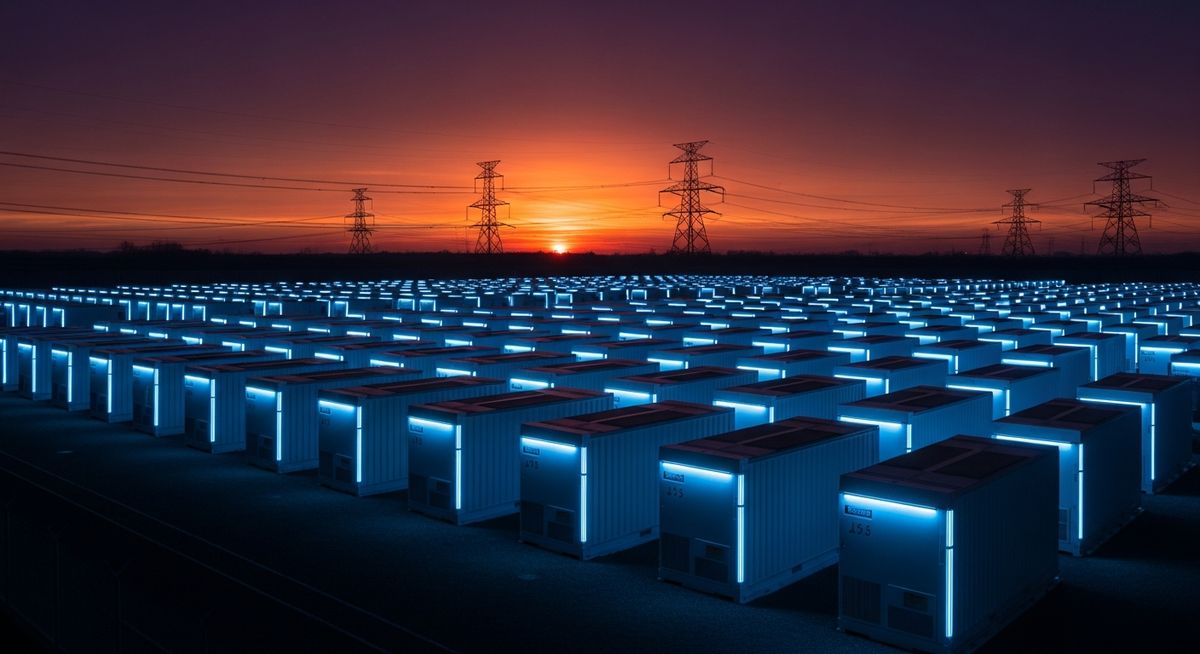
Grid balancing via rapid storage: batteries deliver massive power during August 12 peak demand Romania's energy storage batteries injected a cumulative power output nearly equal to a Cernavodă nuclear reactor into the grid on August 12, 2026, marking a historic milestone for the National Energy Grid (SEN) stability. According to reports published by specialized outlets e-nergia and Economica.net, this technical performance occurred during the evening consumption peak, the most critical interval of the day for grid dispatchers. This milestone coincided with the last day Romania fully benefited from the output of both nuclear reactors before one scheduled maintenance shutdown. Real-time system data shows that operational battery parks discharged energy at maximum capacity precisely when national consumption peaked and renewable generation plummeted. This rapid mobilization of storage assets proves that the technology has transitioned from experimental phases to an active balancing tool in Romania. The National Energy Dispatcher (DEN) successfully utilized these resources to partially mitigate the generation deficit in the grid. The storage capacity installed in recent months, although still fragmented, is beginning to make its presence felt directly in the security equation of the national grid. Traditionally, any major deficit during evening peaks was covered exclusively through expensive cross-border imports or by starting up fast-acting but highly expensive gas and coal units. The entry of batteries offers a technical alternative that responds within milliseconds. Sunset and scheduled baseload outages forced storage mobilization The primary cause of this record mobilization of stored energy lies in the overlap of three critical factors: solar generation curves, persistent heatwaves, and maintenance schedules of major power plants. As solar output drops rapidly to zero at sunset, household air conditioning demand remains extremely high due to elevated nighttime temperatures. This gap creates a generation deficit of several hundred megawatts between 20:00 and 22:00. The situation on August 12 was further amplified by preparations for the temporary shutdown of a Cernavodă nuclear reactor. With a nominal capacity of approximately 700 MW taken out of the equation, the grid lost a massive source of cheap, clean baseload power. In this imminent deficit scenario, batteries charged during midday—when surplus solar power drops market prices—represented the ideal resource for rapid discharge. The commercial mechanism behind this operation is price arbitrage, driven by extreme volatility on the Day-Ahead Market (PZU) and the Balancing Market. Storage system operators accumulate energy at minimal (or even negative) prices during midday and resell it at peak prices during the evening. This business model, while speculative in nature, provides the grid with the exact flexibility service required to prevent blackouts. Mitigating peak prices and reducing emergency cross-border imports The direct consequence of this massive battery power injection is the limitation of short-term wholesale electricity price spikes, protecting suppliers and, ultimately, end-consumers from soaring costs. When batteries discharge hundreds of megawatts into the grid, they eliminate the need to purchase emergency import energy at panic prices from neighboring markets (Hungary or Bulgaria), which often exceed extreme thresholds during regional crises. Additionally, the presence of storage reduces physical stress on Transelectrica's interconnection lines. By balancing production and consumption locally, grid overloading is avoided, and transmission losses are minimized. For industrial consumers, this contribution translates into a more predictable market and a lower risk of load shedding during systemic stress periods. However, while batteries delivered instantaneous power comparable to a nuclear reactor, their total energy capacity (expressed in megawatt-hours) remains limited. They can support the grid for two to four hours, being designed for peak shaving rather than replacing baseload production over extended periods of days or weeks. PNRR targets for 2026 and grid adequacy risks in the cold season The short-term outlook indicates a race against time to install new capacities. Under the National Recovery and Resilience Plan (PNRR) and the Modernisation Fund, Romania aims to commission over 1,000 MW of storage projects by the end of 2026. The success in August proves the technology works, but the current volume is still insufficient to guarantee energy security during extreme winter scenarios, when solar generation remains minimal for several consecutive days. The deadline for connecting large-scale projects funded by state aid schemes is fast approaching, and investors still face bureaucratic hurdles in obtaining technical grid connection permits (ATR) from distribution operators and Transelectrica. Furthermore, ANRE regulations regarding grid…
Aurora AI — Independent Editorial Board
The NRG-IA newsroom continuously monitors Romanian energy markets, ANRE regulatory decisions, and national grid telemetry (SEN/SNT). We deliver independent intelligence anchored exclusively in official primary data.
Editorial Charter, Ethics & Verification Methodology →