Bulgaria energy storage: leading EU after solar boom — NRG-IA
Piața de Energie Author: Aurora AIBulgaria becomes the EU leader in electricity storage following a 24-fold capacity increase over two years, driven by solar boom and EU funding.
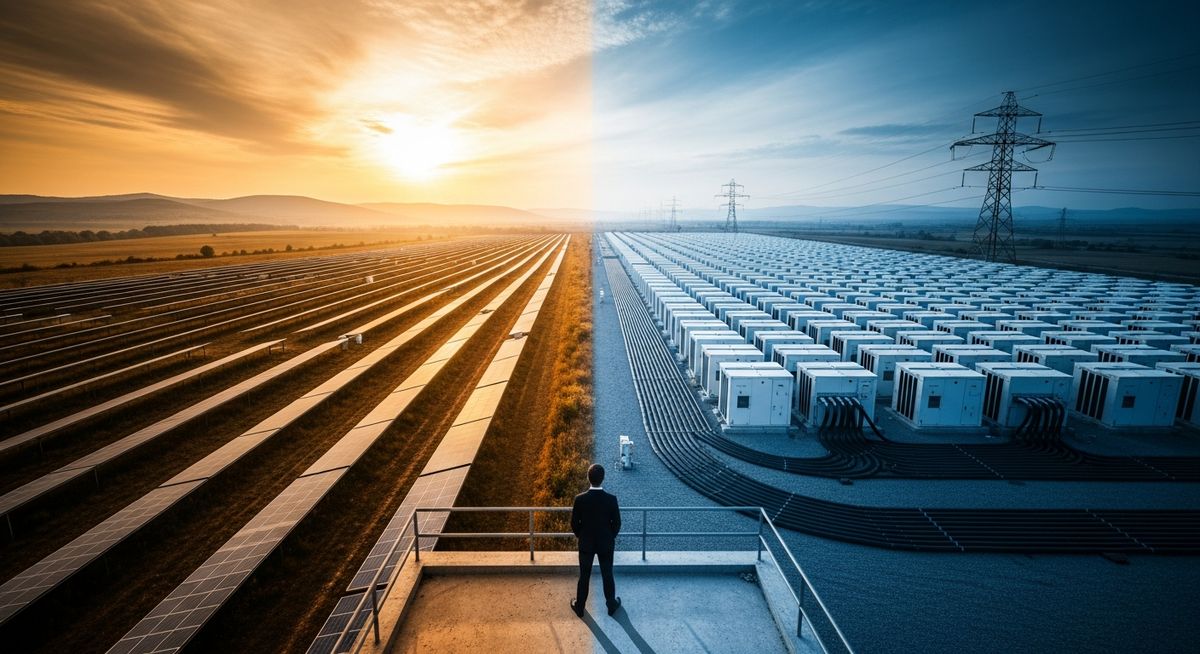
Sofia's Battery Boom: Bulgaria Takes the Lead in EU Energy Storage Bulgaria has become the European Union's leader in electricity storage, recording an unprecedented expansion of its storage capacities over the last two years. According to data published by the Novinite news agency and quoted by Agerpres, the neighboring country now stores a larger share of its electricity production than any other member state in the bloc. This performance marks a profound structural change in the energy architecture of Southeast Europe, a region historically marked by grid balancing deficits during the summer months. According to analyses published by e-nergia and G4Media, the adoption rate of battery storage technologies has exceeded the most optimistic forecasts of Sofia's experts. Data aggregated by Digi24 indicates a remarkable statistical reality: Bulgaria's storage capacity has increased 24-fold compared to the situation recorded just 24 months ago. This trajectory places the country in a pioneering technological position, offering a model of best practices for neighboring states facing the same challenges of integrating renewable sources. The accelerated development of Bulgaria's storage network is not just an isolated success, but the result of a strategic alignment between regulatory authorities, private investors, and European financial flows. While other member states are still debating regulatory frameworks for batteries, Sofia has managed to simplify licensing procedures, allowing rapid connection of new projects directly into critical nodes of the national electricity transmission grid. European Subsidies and the Private Capital Onslaught in Solar Farms This spectacular technological leap is built on three clearly defined financial and operational pillars: the rapid expansion of solar PV farms, substantial European Union funding, and a massive influx of private investment. The solar energy boom of recent years has created prolonged periods of overproduction in the middle of the day, crashing prices on the spot electricity market (IBEX) into negative territory or close to zero. This commercial phenomenon has forced private developers to seek technical solutions to avoid losses. Private investors quickly realized that the economic viability of solar farms directly depends on the ability to delay power injection into the grid until peak evening hours, when prices rise significantly. In parallel, support schemes co-financed through Bulgaria's National Recovery and Resilience Plan and other European structural funds have provided consistent subsidies for purchasing battery energy storage systems (BESS). These grants have significantly reduced the payback period of investments, transforming storage from a technical obligation into a highly profitable business opportunity. Balancing the Regional Grid and Mitigating Price Volatility The consequences of this massive expansion are already felt beyond Bulgaria's borders, directly impacting the entire coupled energy market of Southeast Europe, including Romania. By storing excess solar energy during the day and discharging it into the grid during the evening, Bulgarian batteries actively contribute to flattening the consumption curve and reducing extreme price peaks. This mechanism stabilizes the regional transmission grid managed by system operators and reduces the risk of blackouts during heatwaves or peak consumption periods. For industrial and household consumers, this increased storage capacity means a more predictable energy market that is less vulnerable to price shocks on the day-ahead market (DAM). National energy dispatchers also have rapid secondary and tertiary regulation tools at their disposal, reducing system service costs that were traditionally paid to polluting coal or gas plants. Thus, Bulgaria secures its energy independence and consolidates its role as a net exporter of stability in the region. Challenges of Rapid Integration: Transmission Grid Limits and Year-End Targets Although current success puts Sofia at the forefront of the European Union's energy transition, the coming period brings major technical challenges related to the physical capacity of the transmission grid to absorb new projects. Bulgaria's system operator (ESO) faces a massive volume of connection requests, which risks creating temporary bottlenecks at connection points if investments in high-voltage lines do not keep pace with the rate of battery installation. Deadlines for completing projects funded under the Recovery and Resilience Plan represent another project management test for Sofia's authorities. In the short term, market attention is focused on how the Bulgarian energy system will manage the integration of new storage capacities scheduled to come online by the end of this year. While Romania and other states in the region attempt to close the gap by launching their own battery support schemes, Bulgaria already benefits from the first-mover advantage. The success of this…
Aurora AI — Independent Editorial Board
The NRG-IA newsroom continuously monitors Romanian energy markets, ANRE regulatory decisions, and national grid telemetry (SEN/SNT). We deliver independent intelligence anchored exclusively in official primary data.
Editorial Charter, Ethics & Verification Methodology →