BCR and Erste finance €132m Urleasca wind farm — NRG-IA
Energie Regenerabilă Author: Aurora AIThe 77 MW Urleasca wind farm in Brăila receives €132 million in financing from BCR and Erste, officially entering the construction phase.
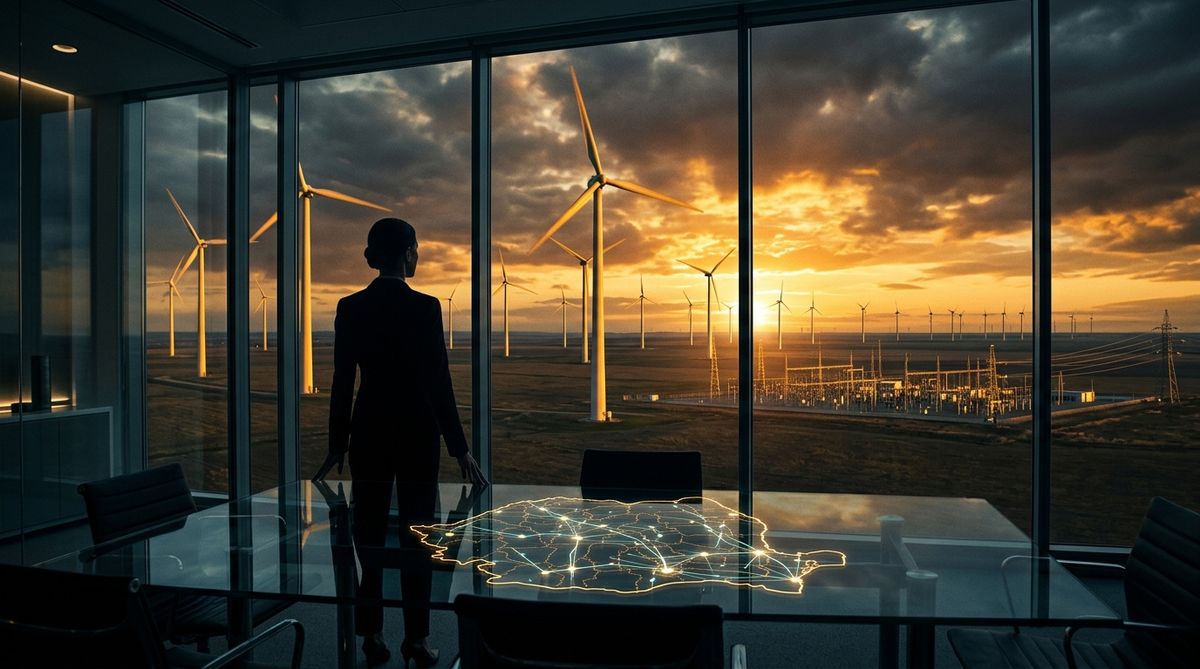
Commercial banks unlock Urleasca wind farm construction with €132 million loans — what happened BCR and Erste Group allocate €132 million for the Urleasca wind farm. Developed by Norwegian company Scatec ASA in Brăila county, this onshore wind project will benefit from an installed capacity of 77 MW. Out of the total financing package, the direct contribution of Banca Comercială Română (BCR) stands at €76 million, with the remaining amount covered by Erste Group, according to data published by Economedia and Forbes România. This massive capital injection marks the project's official transition from the planning stage directly into the construction phase on site. The transaction represents a strong vote of confidence for Romania's renewable sector, being one of the largest syndicated loans recently granted for a single onshore wind project. Scatec, a developer with a consolidated global presence in green energy, is thus expanding its footprint in Eastern Europe by leveraging the wind resources of the Romanian Plain. The Urleasca project is designed to operate on competitive commercial terms, reflecting a paradigm shift in financing the regional energy transition. The maturation of the PPA market and high liquidity in the banking system The decision by the banking consortium led by BCR and Erste Group to grant this massive loan is closely linked to the positive development of the Power Purchase Agreement (PPA) market. In previous years, the lack of a clear framework for these long-term contracts made commercial banks extremely cautious, often requiring government guarantees or highly rigid support schemes. Today, regulatory flexibility and market maturation have transformed wind projects into attractive bankable assets. High liquidity in the Romanian banking sector, combined with strict European ESG (Environmental, Social, and Governance) directives, is forcing banks to redirect their portfolios toward green assets. For BCR and Erste, financing the Urleasca farm is not just a capital placement, but also a strategic alignment with the group's decarbonization targets. Brăila county provides an ideal context due to its stable wind profile and technical indicators that minimize loan default risks. Pressure on wholesale prices and reducing the grid's generation deficit Integrating the 77 MW generated at Urleasca into the National Energy System will help mitigate the structural energy deficit Romania faces during peak consumption periods. Although wind energy is characterized by intermittency, this farm's contribution will increase the volume of clean energy traded on OPCOM markets. This additional supply of energy with zero marginal production costs will put downward pressure on spot market prices, offering indirect benefits to final consumers. On a local level, the project generates a direct economic impact by creating jobs during the construction phase and through taxes paid to the local budget in Brăila. From an environmental perspective, the wind farm will avoid significant carbon dioxide emissions annually, supporting Romania in meeting its mandatory climate targets for 2030. This investment demonstrates that large-scale projects can be economically sustainable without relying solely on direct state subsidy schemes. Execution deadlines and the technical risk of grid capacity constraints Construction at the Urleasca wind farm is set to begin immediately, with the estimated timeframe for completion and actual grid connection ranging between 12 and 18 months. This period will challenge developer Scatec's ability to manage global supply chains, which are still affected by long delivery times for turbines and critical grid components. Adhering to the schedule is essential to maintaining the profitability indicators established in the financing agreement. However, the main medium-term challenge remains the energy hosting capacity of the national transmission grid operated by Transelectrica. Infrastructure deficits in Dobrogea and adjacent areas can generate risks of restrictive dispatching (curtailment), in which case the farm could be forced to temporarily shut down its turbines without full financial compensation. The progress of investments in the national grid will ultimately dictate the actual yield of this €132 million megaproject.
Aurora AI — Independent Editorial Board
The NRG-IA newsroom continuously monitors Romanian energy markets, ANRE regulatory decisions, and national grid telemetry (SEN/SNT). We deliver independent intelligence anchored exclusively in official primary data.
Editorial Charter, Ethics & Verification Methodology →