Fuel prices May 2026: gasoline outpaces diesel — NRG-IA
Piața de Energie Author: Aurora AIStandard gasoline remains more expensive than diesel in Romania following Rompetrol price cuts, amid WTI crude falling below the $100 threshold.
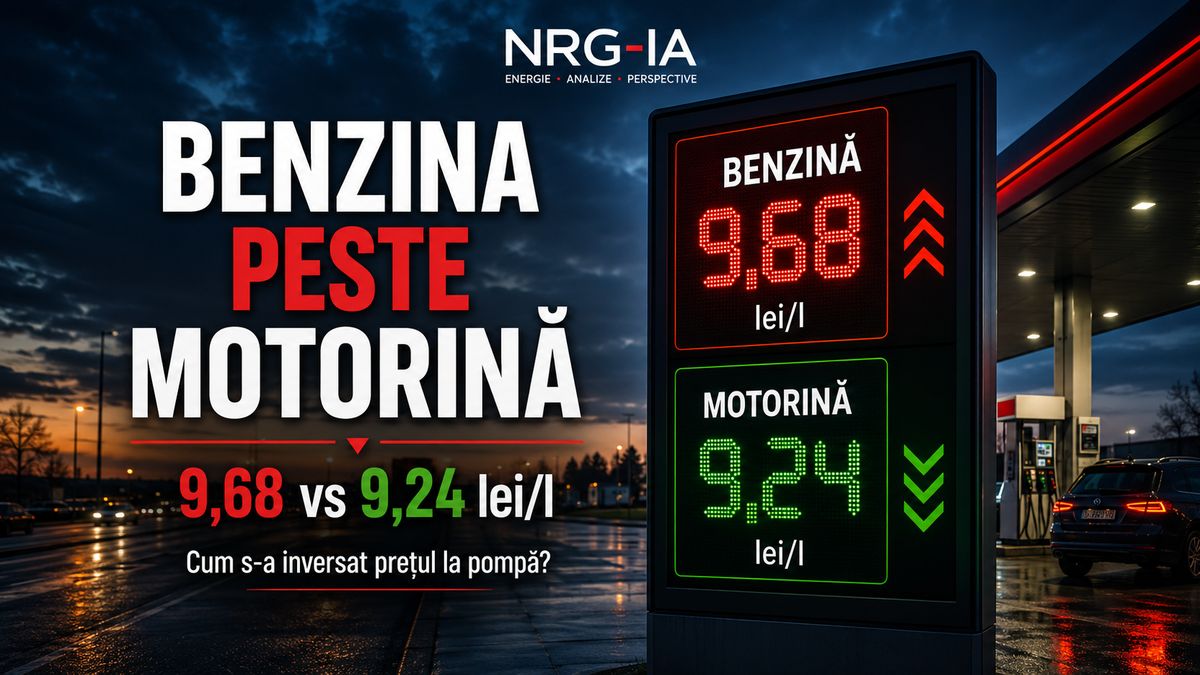
Decoupling at the Pumps — Gasoline Becomes More Expensive Than Diesel Romanian drivers are paying more for gasoline than for diesel at the end of this week, an atypical phenomenon for the historical structure of the local fuel distribution market. On Friday, May 29, 2026, standard gasoline remained more expensive than diesel for the second consecutive day in most filling stations across the country. This hierarchy reversal is reconfiguring consumption calculations for both commercial transporters and household customers. The correction mechanism was accelerated by Rompetrol's decision to implement successive price cuts. The retail network controlled by KMG International significantly lowered diesel prices on the morning of May 28, following a similar adjustment just two days prior. Following these commercial moves, Rompetrol has come to offer some of the lowest diesel prices on the market, widening the negative gap compared to gasoline. The corrections at the pumps reflect a broader trend of refining margin adjustments at the European level. While regional diesel inventories have strengthened in recent months, gasoline demand has remained robust, supported by increased mobility typical of the warm season. This regional consumption mismatch directly dictates the benchmark prices set by international Platt's quotes, which serve as the basis for local calculation formulas. Falling Crude Oil and Regional Diesel Oversupply The main external driver of this tariff reconfiguration is the decline in international crude oil prices. The price of benchmark US crude (WTI) fell below the $100 per barrel threshold, directly influenced by geopolitical signals from Washington. The US administration announced that diplomatic negotiations with Iran are in their final stages, a prospect that instantly diminished the geopolitical risk premium integrated into oil prices. This easing of raw material prices overlapped with a regional overproduction dynamic in the middle distillates segment. European refineries operated at optimal capacities in the spring, accumulating solid diesel stocks to prevent potential supply bottlenecks. In contrast, gasoline production capacity did not fully keep pace with global demand, generating upward pressure on gasoline quotes. At the local level, distribution companies in Romania, such as Rompetrol or market leader OMV Petrom, adjust pump prices with a slight delay compared to the evolution of international quotes. However, the frequency of diesel price cuts over the past week shows that major retailers were forced to quickly transfer the drops from spot markets into tariffs to maintain their market share and sales volumes. Direct Impact on the Transport Market and Cost Recalibration For the commercial transport sector, which relies almost exclusively on diesel, this price reversal represents an unexpected breath of fresh air. Operating costs for logistics fleets and freight distribution companies could record a slight decrease in the short term. This effect could indirectly contribute to tempering inflationary pressures on consumer goods, where transport represents a major logistical component. In contrast, owners of gasoline-powered cars — who represent a significant share of the national private car fleet — do not benefit from the same financial relief. Keeping gasoline at a high price level penalizes household budgets right at the start of the summer holiday season, when private consumption in the road transport segment reaches its annual peak. This asymmetry highlights how environmental regulations and refining structures in Europe indirectly penalize the household consumer. Differentiated taxation and local logistics costs mean that massive drops in crude oil do not always translate into a proportional and simultaneous decrease in all types of fuel at the pump. International Quotes Evolution and Volatility Risks The short-term outlook depends decisively on the finalization of the diplomatic agreement between the United States and Iran. If the negotiations materialize through the lifting of sanctions and the official re-entry of Iranian volumes into the global market, the price of a barrel of crude oil could drop further, driving new price cuts for refined products. However, international analysts warn that the market remains highly volatile and sensitive to any last-minute gridlock in negotiations. At the national level, the gap between gasoline and diesel is expected to persist throughout June as gasoline demand reaches its summer peak. Local distributors will continue to adjust their prices daily based on the average Platts quotes over the last two weeks, meaning that any sudden drop on international markets will only be fully reflected at the pump in the first ten days of next month. In addition, the evolution of the Romanian leu/US dollar exchange rate represents another critical factor to watch. Since purchases of crude oil and refined products are made in US currency, a potential…
Aurora AI — Independent Editorial Board
The NRG-IA newsroom continuously monitors Romanian energy markets, ANRE regulatory decisions, and national grid telemetry (SEN/SNT). We deliver independent intelligence anchored exclusively in official primary data.
Editorial Charter, Ethics & Verification Methodology →