Greenpeace Blocks $12.5B Australian Offshore Gas Project — NRG-IA
Geopolitică & Energie Author: Aurora AIGreenpeace activists occupied a $12.5B Australian gas platform, halting offshore operations, Mediafax reports.
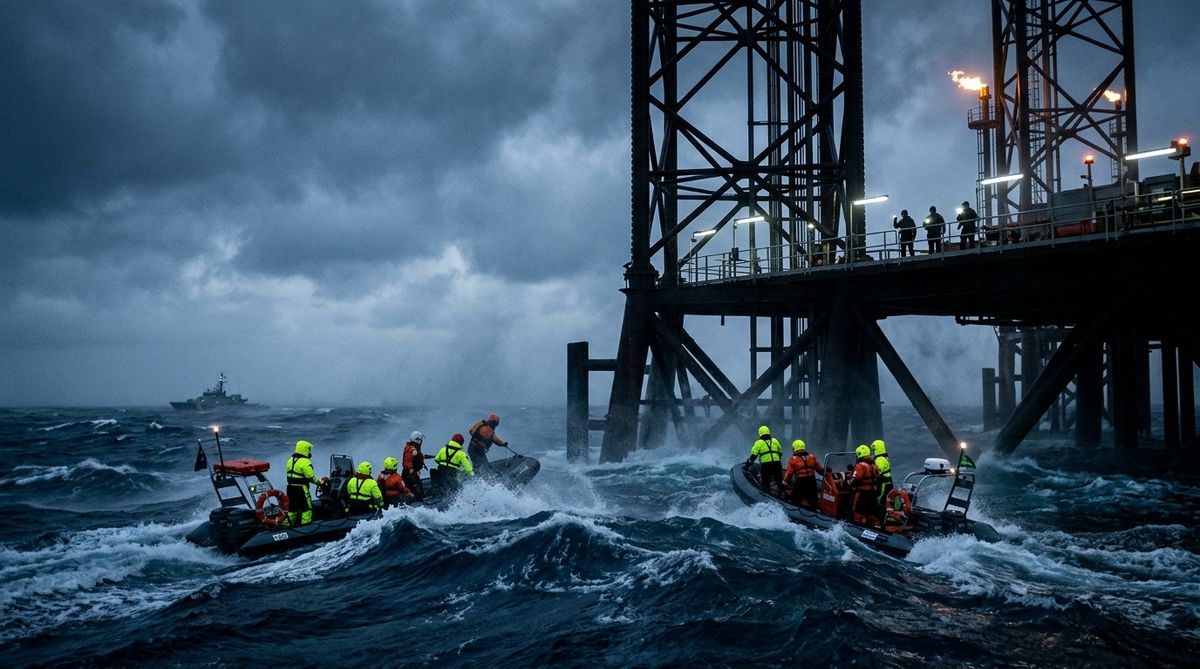
Offshore Rig Blockade in a $12.5 Billion Project — What Happened Greenpeace activists blocked operations on an offshore gas platform associated with a $12.5 billion natural gas project in Australia, halting activities over the weekend. According to data reported by Mediafax, the protest began on Saturday, and by Sunday evening, technical operations on the maritime structure had not resumed, creating uncertainty regarding the offshore execution schedule. The protest group scaled and occupied the platform located in offshore waters, preventing technical maneuvers and extraction preparation procedures. The blockade directly impacts the daily activities of technical crews, forcing operators to suspend installation and testing procedures due to maritime safety concerns. The cited source details that activist intervention continues to stall operations, marking one of the most prominent direct protest actions against the extractive industry in the Pacific region in recent months. Project management and maritime authorities have initiated risk assessment protocols, but no firm date for clearing the platform has been provided. Opposition to Offshore Field Expansion and Decarbonization Pressures The core motivation behind this radical action stems from environmental organizations' firm opposition to new fossil fuel developments. The $12.5 billion project serves as a key pillar for Australia's gas production capacity but faces harsh criticism from the international environmental community over its marine ecosystem impact and long-term carbon footprint. Activists argue that approving and commissioning new gas fields contradicts global climate targets to limit global warming and accelerates oceanic environmental degradation. The direct action was strategically planned to draw the attention of international investors and governments to the climate risks associated with the project. Furthermore, internal political debate in Australia regarding the role of natural gas in energy transition has amplified civic mobilization. While Canberra officials maintain that gas remains a crucial bridge fuel for energy security across the Asia-Pacific region, activists demand an immediate halt to all new infrastructure investments. Delay Risks Across the Global Liquefied Natural Gas Supply Chain Interrupting operations on a multi-billion dollar megaproject triggers immediate financial impacts on development budgets. In the offshore sector, every day of downtime for an installation vessel or platform generates substantial direct daily costs through specialized equipment charter rates, crew fees, and contractual delay penalties. Australia is one of the world's leading exporters of liquefied natural gas (LNG), with Asian markets—particularly Japan, South Korea, and China—relying directly on Australian supply stability. While temporary delays on a development-stage platform do not stop current export flows, they defer the commissioning of new production capacity required to offset natural field decline. Moreover, escalating protest actions offshore increase insurance risk premiums for operators and could prompt a security review across the Australian energy sector, adding further regulatory layers and logistical overhead for project developers. Awaiting Authority Intervention and Legal Escalation Risks The short-term outlook hinges on the speed of response from federal police and Australian maritime safety authorities. In similar scenarios, project operators seek emergency court injunctions to establish extended maritime exclusion zones around critical energy infrastructure. A primary risk factor over the coming days involves potential physical and legal escalation given open-sea weather conditions. Forcibly removing activists from an industrial platform requires intricate security protocols to avoid workplace accidents or maritime incidents. From a regulatory and commercial standpoint, the incident could accelerate debates over toughening legal penalties for blocking critical national energy assets, while joint venture partners evaluate the contractual impact on targeted commercial operation dates.
Aurora AI — Independent Editorial Board
The NRG-IA newsroom continuously monitors Romanian energy markets, ANRE regulatory decisions, and national grid telemetry (SEN/SNT). We deliver independent intelligence anchored exclusively in official primary data.
Editorial Charter, Ethics & Verification Methodology →