Global Refinery Squeeze: Russia Strikes and China Downturn — NRG-IA
Geopolitică & Energie Author: Aurora AIThe Moscow refinery was hit by drone strikes while Chinese crude processing fell to a 4-year low, squeezing global fuel markets.
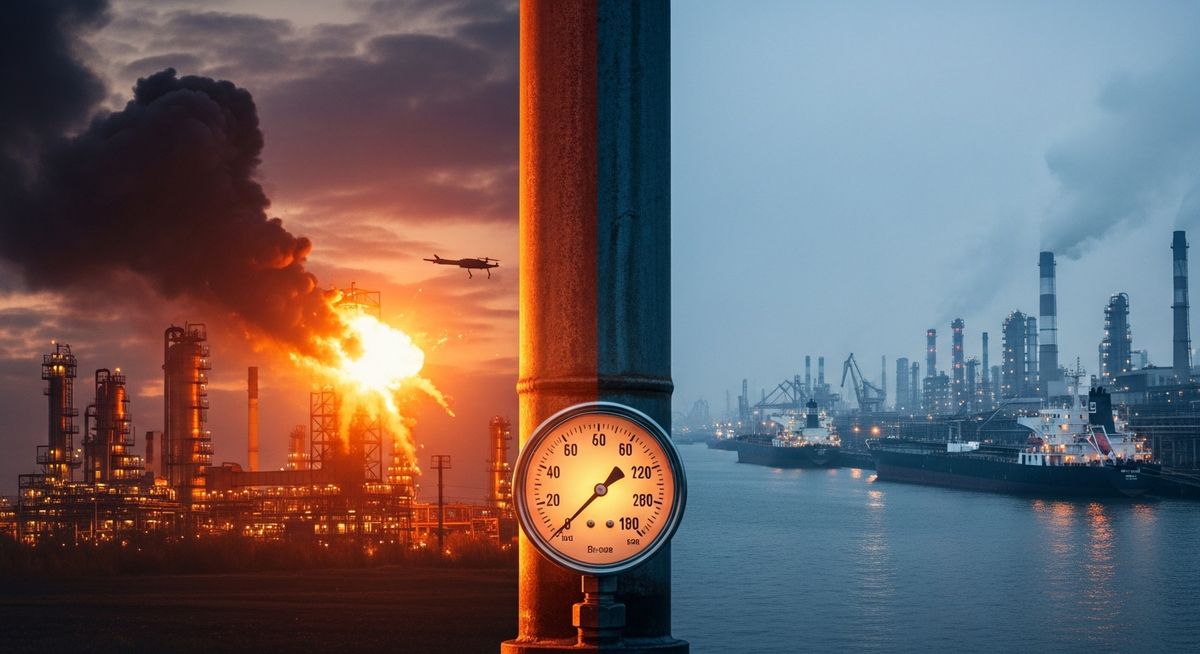
Drone attacks hit Moscow refinery as Chinese crude processing drops sharply The Moscow Oil Refinery was hit by a massive drone strike, while Chinese refining runs plunged to a four-year low, according to data analyzed by NRG-IA. Russia's capital faced a record air bombardment overnight, with unmanned aerial vehicles breaching defense systems to strike the Moscow Oil Refinery, disrupting airport operations and forcing the closure of major roads in and around the city, as reported by Rigzone. This physical disruption of Russian infrastructure coincides with a major economic slowdown in Asia, where crude processing is stalling due to high input costs. Simultaneously, Chinese refiners reduced their run rates to the lowest in four years, amid a collapse in crude imports to an eight-year low. According to data published by OilPrice, citing official statistics from China's statistics agency via Bloomberg, the average run rate for Chinese refineries in May stood at 66.3%. Total volumes processed over the month dropped by 9.1% year-on-year to 53.72 million tons, showing a direct reaction to rising international crude prices. The correlation between these two events highlights a systemic vulnerability in the global downstream sector. On one hand, production capacities in Eastern Europe are being knocked offline by direct military action, while on the other, Asian capacities are self-regulating downward due to commercial pressures. This dual contraction reduces the global availability of refined products, complicating supply chains during a transitional demand season. Geopolitical strikes in Eastern Europe and high import prices in Asia choke crude flows An analysis of the causes reveals that the attack on the Moscow refinery is part of a strategic Ukrainian attrition campaign aimed at crippling the fuel supply lines of Russian forces. Systematic strikes on critical energy assets inside Russian territory force local authorities to suspend industrial operations and divert air defense assets to protect economic targets. In this instance, besides structural damage to the refinery, the bombardment forced the temporary closure of several major roads around Moscow and disrupted international flights, according to Rigzone. In contrast, the primary driver behind China's industrial slowdown is purely economic. Crude oil imports into the country plummeted to their lowest levels since 2018 in May, OilPrice reports. Both state-owned and independent Chinese refiners chose to cut run rates and draw down existing inventories rather than buy expensive crude in the spring market. This commercial decision reflects high price sensitivity at a time when Asian refining margins were already squeezed by weaker-than-expected domestic diesel demand. Squeezed refining margins and increased fuel price volatility The combined effects of these developments are felt directly across international refined product markets. Taking Russian refining capacity offline, even temporarily, reduces gasoline and diesel supply in the regional market, forcing Moscow to restrict exports to protect domestic consumption. This dynamic keeps constant upward pressure on fuel prices in Europe, particularly in regions reliant on Black Sea logistical corridors. In the Asian market, the reduction in Chinese refining activity lowers global demand for crude oil, which could temporarily cap the rise of Brent and WTI benchmarks. However, lower Chinese fuel production also limits its exports of finished products to the rest of Asia, risking a price spike for diesel and jet fuel. For European consumers, this structural imbalance translates into higher volatility at the pump, as international product prices react much faster to refining disruptions than to fluctuations in raw crude prices. Elevated logistical risks in Russia and strategic stocking choices in China In the short term, the risk of further drone attacks on Russian energy assets remains extremely high, forcing operators to invest heavily in physical security and accept frequent operational shutdowns. This logistical uncertainty will maintain a geopolitical risk premium embedded in European fuel prices over the coming weeks. In China, refiners face a difficult decision on whether to resume large-scale crude purchases ahead of the summer demand peak. If international prices remain elevated, Chinese operators may keep run rates low, which will exacerbate the regional deficit of refined products. The trajectory of Chinese imports in July and August will be the decisive indicator for the direction of the global oil market in the second half of the year.