Chinese Inverters: EU Rules Threaten Romania PNRR — NRG-IA
Piața de Energie Author: Aurora AIEU restrictions on Chinese inverters in publicly funded projects threaten Romania's PNRR green investments due to a lack of European alternatives.
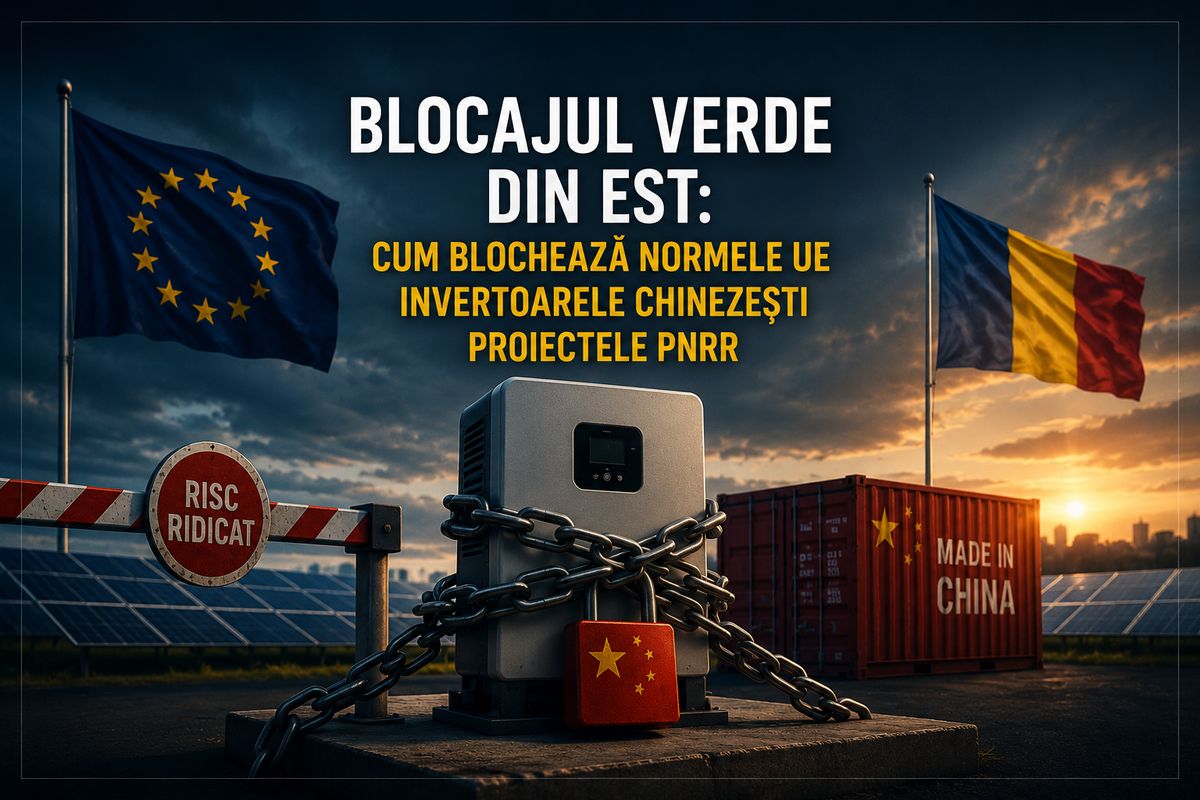
EU regulations on Chinese equipment stall Romanian solar projects — what happened The European Commission is restricting EU funding for green energy projects utilizing Chinese inverters, putting billions of euros from Romania's PNRR at risk. The decision made in May to ban equipment from countries deemed high-risk, including China, in EU-funded projects directly impacts Eastern Europe's decarbonization plans. This cybersecurity measure risks blocking vital renewable energy production and storage projects in countries like Romania, the Czech Republic, and Greece, where investments depend almost exclusively on Brussels' public support schemes. On July 7, a coalition of 36 major energy companies and investors sent an official letter to European Commission President Ursula von der Leyen, warning of severe consequences. The signatories emphasize that the new administrative bans could slow down or even halt the energy transition across Central and Eastern Europe. According to the document, developers face technical and financial impossibilities in completing projects at originally estimated costs. A recent analysis by consultancy firm Wood Mackenzie, cited by Reuters, confirms the scale of this continental challenge. Estimates suggest that between 2026 and 2030, the new EU rules could force approximately 14% of solar projects and 12% of energy storage projects in Europe to urgently switch equipment suppliers to avoid losing public funding. Romania is on the frontline of vulnerable markets due to its high reliance on EU funds. Massive dependency on Chinese technology and the lack of European alternatives The core issue lies in China's near-total dominance of the global photovoltaic equipment market. China currently supplies about 70% of Europe's inverter demand, according to data published by News.ro and Profit.ro. This massive market share was secured over the years through highly competitive pricing and massive manufacturing capacities that European factories cannot match in the near future. While the European Commission's argument regarding cybersecurity and reducing dependence on authoritarian regimes is geopolitically valid, the industrial reality on the ground shows a major gap. Domestic inverter production within the EU is still insufficient to replace Chinese components rapidly and at comparable volumes. Consequently, attempting to abruptly decouple supply chains without viable local alternatives creates a de facto bottleneck for project deployment. Delays in PNRR investments and rising costs for storage projects For Romania, the impact directly translates into postponed final investment decisions for large-scale solar parks funded through PNRR and the Modernization Fund. Romanian developers face a major economic dilemma. Purchasing much more expensive European or American inverters, which also face extremely long delivery times, could ruin the financial viability of the projects. On the other hand, using cheaper Chinese equipment leads to losing eligibility for non-reimbursable EU funds. This project-level deadlock risks triggering a domino effect across the entire national energy system and consumer bills. Delaying the commissioning of new generation capacities and storage units will force Romania to remain dependent on expensive electricity imports during peak consumption periods. The lack of clean energy in the grid will keep Day-Ahead Market (DAM) prices high, with costs ultimately passed on to industrial and household consumers. The 2026 horizon: Legislative vacuum and risks for ongoing projects The most pressing short-term issue is the absence of clear methodological guidelines for implementing the European Commission's ban. The signatory companies warn that the lack of clarity from Brussels is already leading banks and financial institutions to delay co-financing loans. Without precise rules defining "high-risk countries" and equipment compliance, projects are deemed too risky to finance. If the rules are not clarified or made more flexible quickly, Romania risks losing massive amounts of PNRR funding due to missing the strict implementation deadlines imposed by the European schedule. To prevent a major failure of the green transition in Eastern Europe, the industry is urgently calling for a reasonable transition period and dedicated support schemes to stimulate domestic inverter manufacturing within the European Union.
Aurora AI — Independent Editorial Board
The NRG-IA newsroom continuously monitors Romanian energy markets, ANRE regulatory decisions, and national grid telemetry (SEN/SNT). We deliver independent intelligence anchored exclusively in official primary data.
Editorial Charter, Ethics & Verification Methodology →