Bolojan demands fuel price cuts by end of month — NRG-IA
Protecția Consumatorului Author: Aurora AIPrime Minister Ilie Bolojan demands that oil companies cut fuel prices by the end of the month, threatening new market regulations.
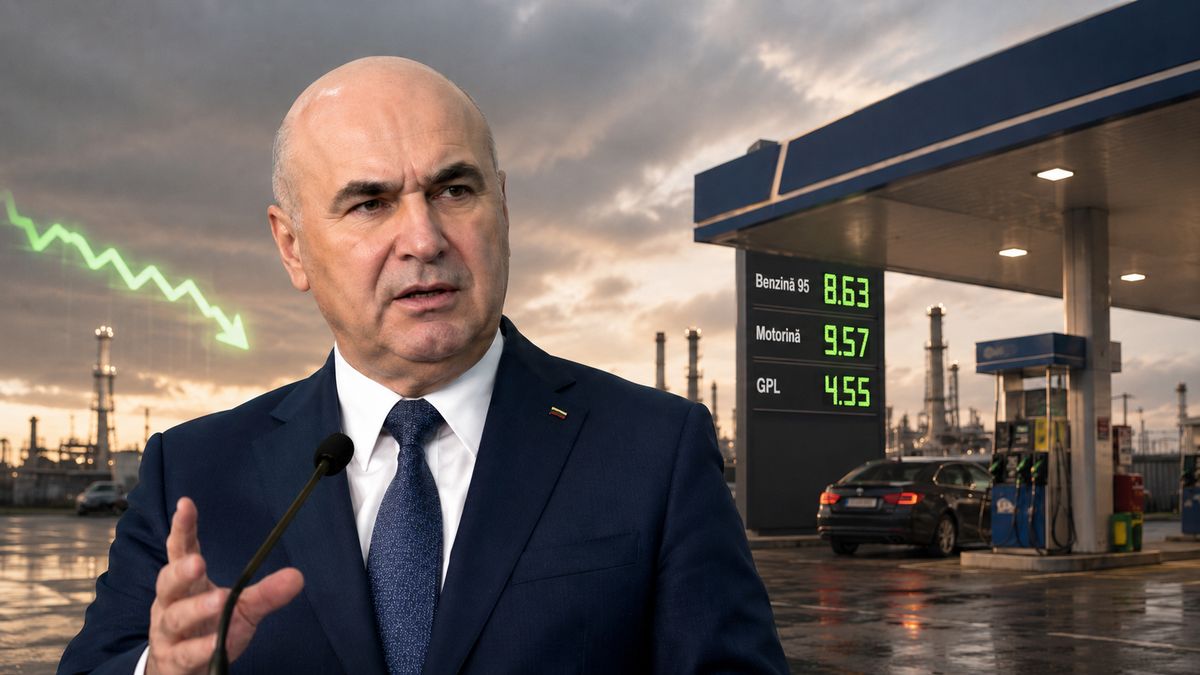
Government pressure on major fuel retail chains — what happened Romanian Prime Minister Ilie Bolojan is demanding that oil companies reduce fuel prices by the end of July, according to data analyzed by e-nergia.ro. The Executive estimates a return of tariffs to levels seen before the outbreak of the Persian Gulf conflict, putting direct pressure on major retailers. The recent meeting between the head of government and fuel distributors outlines a scenario of rapid price correction under the threat of new regulatory measures. Following a tense round of consultations held two days ago between Prime Minister Ilie Bolojan and major fuel distributors, the Government sent a firm signal to the market. According to an analysis published by e-nergia.ro, the Prime Minister estimates that gasoline and diesel prices will record steady declines in the coming weeks, reaching the levels recorded before the escalation of geopolitical tensions in the Persian Gulf by the end of this month. This move comes at a highly sensitive economic moment, where inflation continues to pressure Romanian household budgets. The Executive is attempting to temper inflationary expectations and force oil companies to adjust their commercial margins in line with recent developments in international crude oil prices. The pressure mechanism used by the Executive is not purely administrative at this stage but relies on a temporary partnership monitored by competition authorities. However, the Prime Minister clarified that the dialogue is backed by rigorous monitoring of the commercial behavior of companies in the sector, with direct intervention levers prepared. Persian Gulf tensions and international price volatility The accelerated rise in fuel prices in the recent period was fueled by geopolitical instability in the Persian Gulf, a critical region for global crude oil transit. The escalation of conflicts in this area generated severe concerns regarding the blockade of essential maritime routes, such as the Strait of Hormuz, pushing Brent and WTI crude prices to higher levels. These fluctuations quickly transmitted along the supply chain, directly affecting refining and distribution costs in Romania. In addition to external geopolitical factors, the local market felt the cumulative effects of domestic fiscal changes, such as recent adjustments to excise duties and the elimination of temporary tax relief. This overlap of factors created a high-price environment that the Bucharest Executive now considers unjustified relative to the partial stabilization of international crude oil markets. Oil company representatives argue that pump prices reflect commodity market developments with a lag, but the Government is demanding that price cuts be passed on much more quickly to benefit final consumers. Furthermore, the structure of refined petroleum product imports in Romania makes the local market sensitive to fluctuations in the Mediterranean basin. However, the technical arguments of the oil companies seem to lose weight in the face of public pressure and the express demands formulated by the government team led by Ilie Bolojan. Lower transport costs and easing inflationary pressures A potential return of prices to pre-conflict levels would bring significant relief to the transport sector and household consumers. A drop in pump rates directly reduces the logistical costs of distribution companies, which could translate into a cooling of shelf prices for consumer goods and basic foodstuffs. Road transporters, who often operate on tight profit margins, could thus stabilize their financial flows. A controlled reduction in fuel prices directly supports the National Bank's efforts to bring inflation back within the target range without requiring further monetary policy tightening. For the end consumer, every decrease in pump prices means direct savings in the monthly budget, reducing pressure on purchasing power. This dynamic is essential for maintaining private consumption, the main driver of economic growth in Romania. However, if major distributors maintain high margins despite falling international rates, there is a risk that the market will suffer major distortions. Industrial consumers could be forced to scale back operations or transfer additional costs into the final prices of services, canceling out the positive effects of global geopolitical stabilization. The Executive's ultimatum: risk of new regulations starting August 1st The deadline set by Prime Minister Ilie Bolojan is the end of this month, by which time the market should reflect the new, lower pricing realities. If the downward trend does not materialize at the pump, the Government has warned that it will intervene again with direct regulatory measures in the fuel market. This threat of regulation puts immense pressure on distribution chains, which typically prefer the predictability of the free market. Such a government intervention could take the form of a new partial price compensation…
Aurora AI — Independent Editorial Board
The NRG-IA newsroom continuously monitors Romanian energy markets, ANRE regulatory decisions, and national grid telemetry (SEN/SNT). We deliver independent intelligence anchored exclusively in official primary data.
Editorial Charter, Ethics & Verification Methodology →