Bolojan warns of major Modernisation Fund project delays — NRG-IA
Piața de Energie Author: Aurora AIIlie Bolojan warns of major delays in Modernisation Fund energy projects at CE Oltenia, Transelectrica, and ELCEN, risking Romania's energy system.
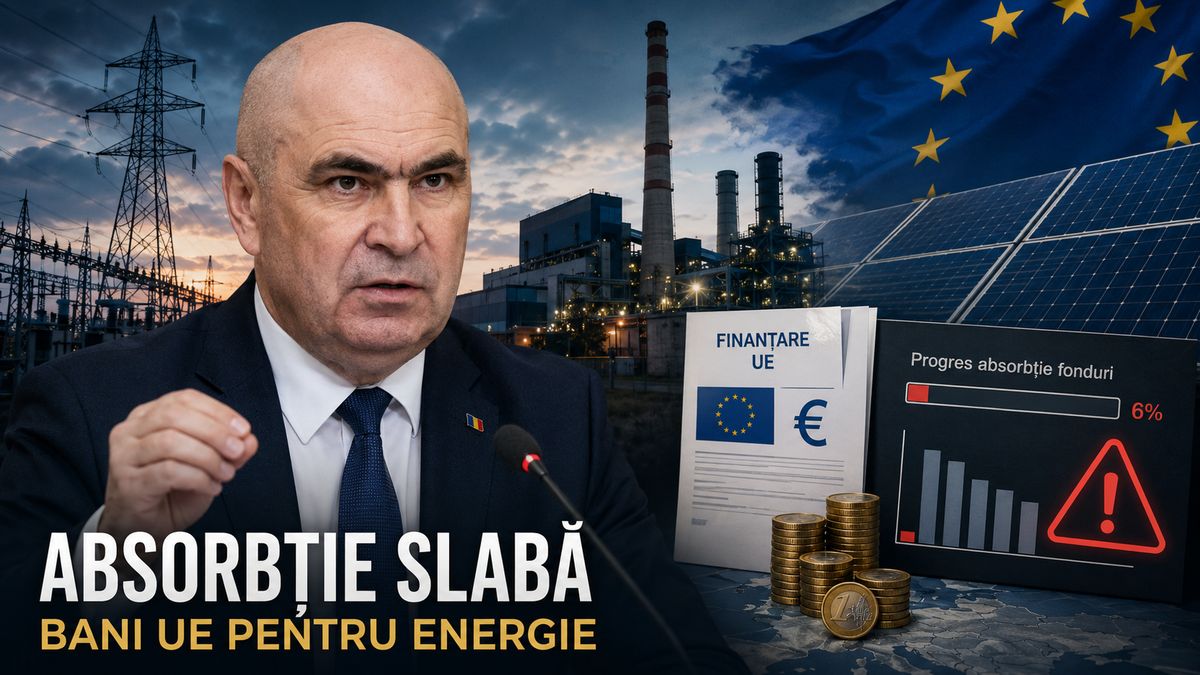
Ilie Bolojan has raised one of the toughest issues facing the state-owned energy sector: Romania has approved European funds for energy investments, but projects by strategic companies are progressing very slowly. According to public data reported by e-nergia, three companies—Complexul Energetic Oltenia, Transelectrica, and ELCEN—have projects worth nearly €2 billion funded by the Modernisation Fund, with settlement rates reported at under 10%, under 4%, and zero, respectively. The message goes beyond simple administrative criticism. Bolojan directly links investment delays to energy prices, industrial competitiveness, and Romania's capacity to build new generation, storage, and modern grids. In the post cited by e-nergia, he states that lowering electricity prices is a fundamental condition for economic recovery and that cost reduction depends on completed investments, not just approved funding. The Modernisation Fund finances the very critical infrastructure of the transition The Modernisation Fund is one of the most important European instruments for energy investments in lower-income member states. The European Commission indicates that the fund supports the modernisation of energy systems, energy efficiency, renewable energy, storage, energy grids, interconnections, and a just transition in carbon-dependent regions. Romania is among the beneficiaries of the fund, which is financed by revenues from the EU Emissions Trading System (EU ETS). For this reason, the reported delays do not just affect a European funding line. They impact the exact areas where Romania needs rapid investment: new generation capacities, the gradual phase-out of lignite, renewable integration, grid capacity expansion, interconnections, and efficient cogeneration for Bucharest. Bolojan claims that Romania has €12 billion in approved non-repayable investments through the Modernisation Fund, of which €7.7 billion is allocated to energy. The funds have reportedly been transferred, but the projects are progressing with great difficulty. CE Oltenia: under 10% for projects meant to replace lignite The most sensitive case is Complexul Energetic Oltenia. According to the data presented by Bolojan, the company has 11 approved investments, worth nearly €900 million, for photovoltaic parks and gas-fired power plants. Nine were reportedly signed in the summer of 2023, and two in 2024. Settled works reportedly account for under 10%, and the gas-fired plants are at high risk of not being completed on schedule. Context is essential. As early as 2022, CE Oltenia announced that the projects in its Restructuring and Decarbonisation Plan included eight solar parks with an installed capacity of 735 MW, and two gas-fired units at Turceni and Ișalnița, with a total capacity of 1,325 MW. Approximately €895 million was to be allocated from the Modernisation Fund, with the estimated timeline pointing to 2024 for the solar parks and mid-2026 for the gas-fired units. The stakes are twofold. On one hand, these investments are part of CE Oltenia's transformation from a lignite producer into a less carbon-intensive portfolio. On the other hand, the gas-fired plants are meant to provide dispatchable capacity in a system that is increasingly integrating solar and wind power. Their delay could put simultaneous pressure on decarbonisation and power system adequacy. Bolojan warns that failing to complete these projects could create serious issues regarding decarbonisation milestones and could lead to the loss of European funds. The correct phrasing is a risk of loss, not a loss already incurred, but the risk is highly relevant because the projects have deadlines tied to funding and committed energy targets. Transelectrica: under 4% for grid, interconnection, and substation projects In the case of Transelectrica, the cited data points to 11 contracts, totaling over €530 million, for new power lines, interconnections, and substation upgrades. Bolojan states that, after four years, settled works amount to nearly €20 million, which is under 4%. Transelectrica's public list shows that projects funded by the Modernisation Fund include 400 kV lines, Banat Axis projects, upgrading certain corridors to 400 kV, digital substations, reactive power compensation, smart grid systems, and works for renewable integration. Examples include the Constanța Nord–Medgidia Sud line, the Gădălin–Suceava line, the Banat Axis (Reșița–Timișoara/Săcălaz and Timișoara/Săcălaz–Arad), and the upgrade to 400 kV of the Brazi Vest–Teleajen–Stâlpu corridor. Here, the problem is structural. Romania can approve thousands of MW of renewable generation, but without transmission grids, modernised substations, grid connection capacity, and interconnections, new power struggles to enter the system or causes congestion, curtailment, and additional costs. The grid is the infrastructure that transforms generation projects into actual delivered energy. However, a distinction must be made: Bolojan's criticism…
Aurora AI — Independent Editorial Board
The NRG-IA newsroom continuously monitors Romanian energy markets, ANRE regulatory decisions, and national grid telemetry (SEN/SNT). We deliver independent intelligence anchored exclusively in official primary data.
Editorial Charter, Ethics & Verification Methodology →