Gas turbine orders hit 25-year high on data center boom — NRG-IA
Energie Author: Aurora AINatural gas turbine orders have hit a 25-year high, driven by US data center power demand, threatening global LNG infrastructure investments.
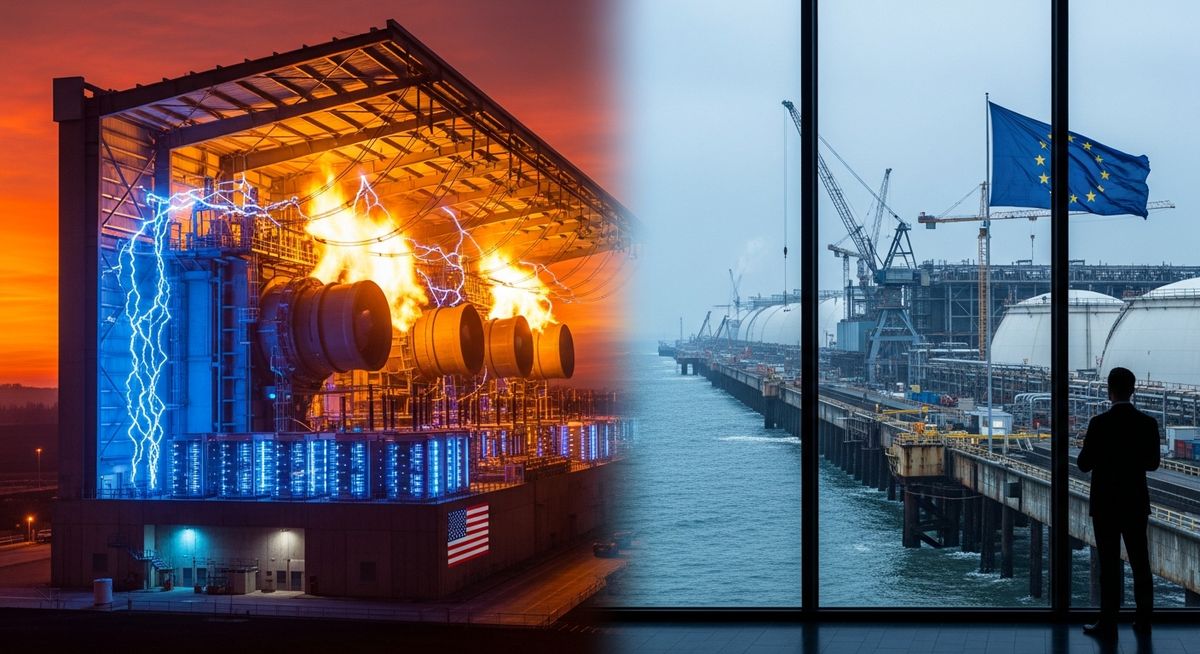
Global gas turbine orders hit historic high — what happened Global orders for natural gas turbines have reached their highest level in 25 years, driven by the rapid expansion of artificial intelligence infrastructure in the United States, according to an analysis published by Natural Gas Intel. This development reflects a major structural shift in the allocation of capital within the global energy sector. The US tech giant and its data centers consume massive volumes of electricity, forcing grid operators to turn to rapid and reliable baseload generation solutions, a role primarily assumed by natural gas-fired power plants. According to data compiled by the International Energy Agency (IEA) and reported by Natural Gas Intel, current market dynamics point to a massive redirection of financial flows. The volume of capital directed toward domestic power generation in the US has become so intense that it risks directly impacting energy infrastructure projects in other regions of the world. This unprecedented demand for generation equipment put pressure on global supply chains and alters the priorities of major energy technology manufacturers. While the global energy transition has promoted a reduction in fossil fuel usage, the operational reality of data centers demands a constant power supply that does not depend on weather conditions. Gas turbines offer the flexibility and rapid start-up times required to support the consumption fluctuations of servers dedicated to artificial intelligence, making them the preferred choice for industrial project developers in North America. Data centers divert capital away from LNG export terminals The mechanism behind this historical record is directly linked to the competition for financial resources in the North American market. The International Energy Agency highlights that investor appetite for gas-fired power generation projects in the US is so high that it threatens to crowd out or delay investments planned by traditional liquefied natural gas (LNG) importers. Private and institutional capital is rapidly migrating toward assets with guaranteed returns backed by long-term contracts signed with tech giants. This dynamic creates an imbalance in the global financing market. LNG export terminal projects, essential for the energy security of Europe and Asia, require billions of dollars and long authorization and construction periods. In contrast, gas power plants dedicated to data centers offer faster returns and lower commercial risks, supported by the high creditworthiness of the technology companies developing the computing infrastructure. The IEA warns that this crowding-out phenomenon could leave import infrastructure projects in LNG-dependent countries without the necessary capital resources. The direct consequence is a slowdown in the diversification of supply sources in regions trying to permanently transition away from Russian gas, maintaining a high level of geopolitical vulnerability over the medium term. Consumption pressure drives up regional prices at the Canadian AECO hub The effects of this massive natural gas demand for power generation are not limited to the equipment market; they are quickly propagating to physical fuel trading markets. Clear evidence of this pressure is the evolution of prices in the Canadian market, which is closely connected to the US energy system. According to data published by Natural Gas Intel, spot natural gas prices at Western Canada’s AECO hub rose to a three-month high in late May. This significant price increase at the AECO hub was driven by a general upswing in fuel demand across the North American region. As US power grids request additional volumes of gas to supply new generation capacities dedicated to data centers, cross-border commercial flows intensify, reducing gas availability in local markets and driving up benchmark prices. For industrial and household consumers, this correlation indicates a long-term risk: the cost of electricity and natural gas could remain elevated due to direct competition with the technology sector. The AECO hub, historically recognized for its highly competitive prices due to abundant production in the Western Canadian Sedimentary Basin, is beginning to lose its traditional discount in the face of relentless demand from the high-performance computing sector. The risk of underfunding global infrastructure in the medium term The short-term outlook indicates sustained tension in the turbine supply chain and constant pressure on gas prices. Data center developers are rushing to secure grid connection capacities and generation equipment before manufacturers' delivery times extend even further. In this context, final investment decisions for new gas liquefaction and regasification terminals could be delayed to the second half of the decade. This delay represents a major risk to global energy security. If investments in LNG transport and export infrastructure stagnate while US domestic consumption…
Aurora AI — Independent Editorial Board
The NRG-IA newsroom continuously monitors Romanian energy markets, ANRE regulatory decisions, and national grid telemetry (SEN/SNT). We deliver independent intelligence anchored exclusively in official primary data.
Editorial Charter, Ethics & Verification Methodology →