ELCEN to Build New RON 600M CHP Unit at Grozăvești — NRG-IA
Piața de Energie Author: Aurora AIELCEN plans a new Grozăvești CHP unit, a RON 600M project co-funded by the Modernisation Fund. However, massive network losses remain a major hurdle.
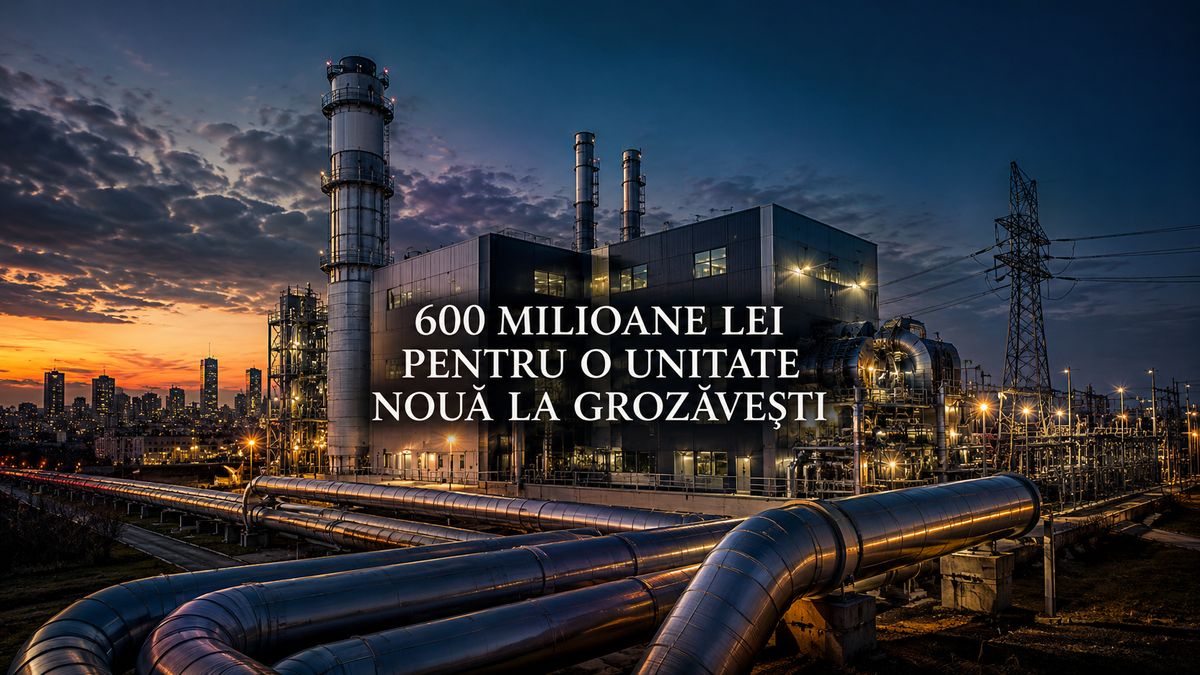
ELCEN has launched the procurement procedure for the project "Implementation of a high-efficiency cogeneration unit at CTE Grozăvești," an investment estimated at approximately RON 600 million. The new unit will have an installed capacity of 32.5 MWe and 41 MWt, simultaneously producing electricity and thermal energy using gas turbine and heat recovery steam generator (HRSG) technology. The project benefits from non-repayable funding through the Modernisation Fund, under a financing contract signed in November 2024. For Bucharest, this news is about more than just a procurement procedure. Grozăvești is part of a gradual overhaul of the generation infrastructure supplying the capital's district heating system. ELCEN produces approximately 90% of Bucharest's thermal energy demand, and modernizing its plants directly impacts the security of hot water and heating supply for consumers connected to the centralized system (SACET). Grozăvești gets a modern unit, not a complete solution for district heating The new capacity at CTE Grozăvești will run on natural gas and will be "hydrogen ready"—meaning it is designed to utilize hydrogen-gas blends as technology and the market develop. ELCEN indicates an overall cycle efficiency of 81.05% for this unit, and the company's strategic documents describe the technical solution as a high-performance cogeneration plant featuring a gas turbine and a heat recovery steam generator. Precision is key. This investment does not mean Bucharest will automatically escape outages, losses, or the historical issues of its district heating system. It modernizes the generation side—the point where thermal and electrical energy are produced. The transmission and distribution network remains a separate issue, managed by Termoenergetica and the municipality. In 2024, technological losses in Bucharest's district heating network amounted to 1,759,748 MWh, or 37.73%, with an estimated value of approximately RON 500 million, according to Termoenergetica data cited by HotNews. This figure highlights the limitations of investing solely in generation: a more efficient plant can deliver better output, but the final impact on the consumer depends on the pipelines through which the thermal agent flows. RON 600 million total investment, with grant and co-financing ELCEN's development and decarbonization strategy indicates a total value of RON 600.16 million for the Grozăvești project. Out of this amount, the non-repayable funding obtained through the Modernisation Fund is RON 258.6 million, while the required co-financing of RON 341.56 million will be secured from own and attracted sources, including loans. This financial structure changes the economic outlook of the project. While the state and the European Union cover a significant portion of the investment through grants, ELCEN must still secure the complementary financing. In practice, the timeline depends not only on the procurement procedure but also on securing debt financing, administrative approvals, the EPC contract, and actual execution. ELCEN indicates that the non-repayable financing contract, the contract for Owner’s Engineer technical consulting services, and the contract for advisory services to access debt financing have already been signed for Grozăvești. The documentation for the EPC procedure has been drafted, submitted to ANAP for validation, and is currently in the stage of analyzing feedback from the ex-ante review. The estimated deadline for signing the EPC contract is October 2026, with commissioning projected for September 2029. The energy stakes go beyond hot water The Grozăvești unit will simultaneously produce thermal and electrical energy. For the public, this means the same facility can contribute to hot water and heating supplies while also generating electricity in a high-consumption area, Bucharest-Ilfov. ELCEN's documents link the investment to the age of the existing equipment at Grozăvești, the risk of outages during critical periods, the need to ensure continuity of heat supply, and the maintenance of the 110 kV electricity distribution network's security in the capital area. High-efficiency cogeneration is valuable precisely because of this dual function. Heat is not produced separately from electricity, and fuel is used more efficiently than in separate generation. For a large city where thermal energy demand remains high in winter and electricity consumption is concentrated, a modern cogeneration unit can provide greater flexibility and local grid security. However, the project remains natural gas-based. The term "hydrogen ready" does not mean the unit will run on hydrogen immediately, nor does it make it a zero-carbon facility. It means the plant is designed to integrate hydrogen blends once technology, the market, and supply chains allow. Grozăvești is part of a larger program The Grozăvești project is the third major investment procedure launched by ELCEN under its modernization program for the București Sud,…
Aurora AI — Independent Editorial Board
The NRG-IA newsroom continuously monitors Romanian energy markets, ANRE regulatory decisions, and national grid telemetry (SEN/SNT). We deliver independent intelligence anchored exclusively in official primary data.
Editorial Charter, Ethics & Verification Methodology →