Nuclearelectrica Loses 1 Billion RON on BVB Due to Drought — NRG-IA
Piața de Energie Author: Aurora AINuclearelectrica lost 1 billion RON in market cap on BVB after severe drought forced the shutdown of both nuclear reactors at Cernavodă.
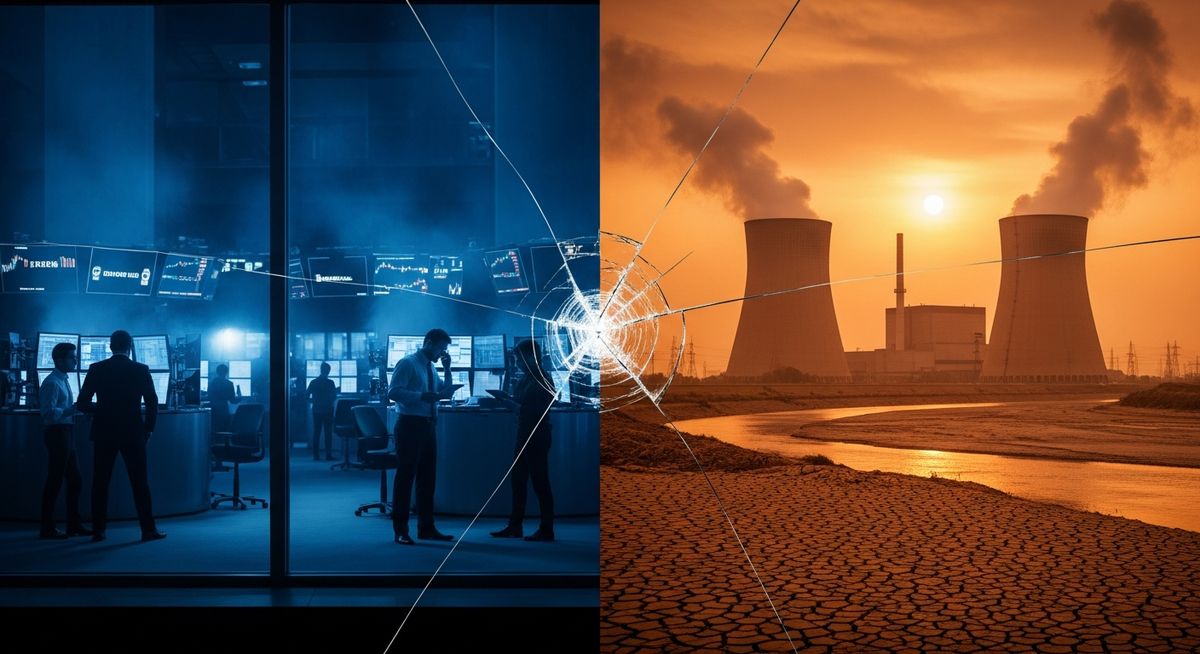
Massive Correction on BVB: Nuclearelectrica Loses 1 Billion RON in Minutes Nuclearelectrica lost one billion RON in market capitalization on Thursday morning at the Bucharest Stock Exchange, following a 5% drop in SNN shares at the opening of the trading session. This severe capital market reaction comes as a direct consequence of the controlled shutdown of both nuclear reactors at Cernavodă, an unprecedented situation in the recent history of the National Power System. Investors reacted swiftly to the prospect of diminished revenues during a high-consumption summer period. The sudden depreciation of SNN shares reflects concerns regarding the duration of the unavailability of the two units, which normally secure approximately 20% of the national electricity generation. The sudden shutdown of Unit 2, shortly after Unit 1 had already been preventively disconnected, left the local market without its most stable baseload source. Although the state-owned company recently secured solid financial agreements, operational vulnerability to environmental factors has raised alarm bells in the stock market. Transelectrica reported that the National Power System is operating safely, but grid balancing is currently being achieved through massive commercial imports. These cross-border purchases, conducted under free market conditions, carry high costs that could put pressure on spot market prices. For shareholders, the prolonged shutdown means not only direct production losses but also potential penalties or additional costs for the imbalances created in the grid. Extreme Drought and Critical Danube Levels Block Cooling Circuits The technical cause of this double shutdown is the severe drought affecting the entire Danube river basin, driving river flows down to emergency levels near the water intake at Cernavodă. Unit 1 was shut down in a controlled manner on Tuesday at 11:00 AM as a strictly preventive measure to protect internal installations. Subsequently, the continuous degradation of water flows and the impossibility of ensuring optimal cooling forced the state operator to disconnect Unit 2 from the grid as well. Nuclear safety procedures are extremely rigorous and prohibit the operation of reactors when cooling water levels fall below critical safety thresholds. The Danube's flow has reached nearly one-third of the average typical for this period, a phenomenon that severely limits the capacity to dissipate residual heat. Although Nuclearelectrica has previously carried out dredging and optimization works on the intake canal, the severity of the July 2026 drought exceeded standard operating scenarios. Former Energy Minister Virgil Popescu pointed out that this incident demonstrates how vulnerable the national energy infrastructure is to rapid hydrological changes. In this context, he warned that major infrastructure projects, such as the Porțile de Fier III pumped-storage hydropower plant, must be analyzed with extreme caution. Excessive dependence on the Danube's water resources, without a real diversification of cooling or storage sources, risks turning dry periods into recurring systemic crises. Production Deficit on the Market: Massive Imports and Emergency Call to Prosumer Batteries The simultaneous outage of both reactors, with a combined installed capacity of 1,400 MW, created a massive production gap in the grid. To compensate for this loss, Romania has become dependent on electricity imports from interconnected neighboring countries. However, high prices in regional markets during evening peak hours present a major challenge for local suppliers, who must purchase expensive energy to cover their clients' portfolios. In this crisis scenario, the Association of Prosumers and Energy Communities of Romania (APCE) launched an unprecedented public appeal to all prosumers holding battery storage systems. They are urged to inject power into the national grid during the critical 20:00–23:00 interval, the peak consumption period when the lack of nuclear production is most acutely felt. APCE emphasized that the cumulative capacity of prosumers in Romania is close to triple the capacity of the Cernavodă plant, representing an underutilized strategic resource. This voluntary mobilization of distributed storage could help mitigate frequency shocks in the distribution network. However, the technical mechanisms for compensating and coordinating these rapid battery injections are still in their infancy in Romania. The current incident proves that grid decentralization and the rapid integration of storage systems are no longer just ecological goals, but urgent national security necessities in the face of large centralized producers' vulnerability. Grid Tension Remains Until Hydrological Levels Recover The prospect of resuming production at the Cernavodă Nuclear Power Plant depends entirely on weather conditions and the recovery of the Danube's flow. Until water levels rise above the technical safety threshold, the reactors…