Electric trucks cheaper than diesel in EU markets — NRG-IA
Tehnologie & Inovație Author: Aurora AIElectric trucks are already cheaper to operate than diesel in six major EU markets, representing 46% of sales, according to a Transport & Environment...
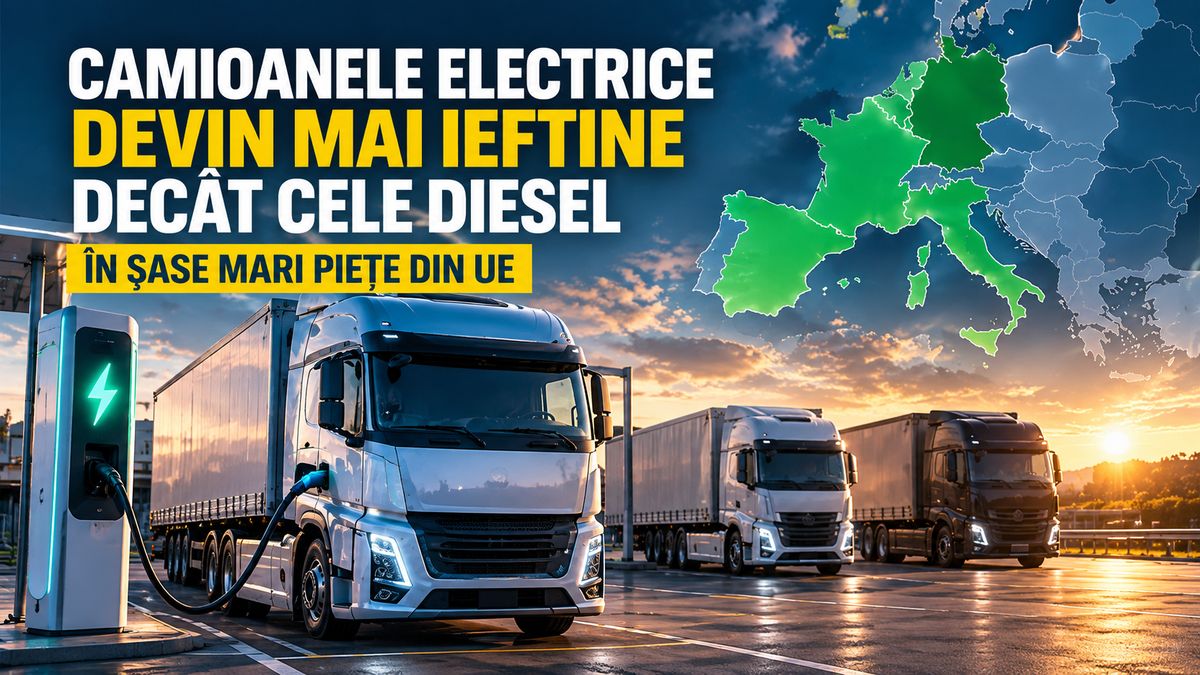
Heavy transport electrification passes the profitability threshold in 46% of the EU market — what happened Electric trucks are already cheaper to operate than diesel models in six out of nine major European Union markets, according to a new analysis by Transport & Environment (T&E) reported by CleanTechnica. These six national markets represent 46% of all new heavy-duty truck sales across the EU. The findings indicate a rapid structural shift in the economics of road transport, dismantling the argument that electric technology remains uncompetitive without massive, long-term subsidies. The total cost of ownership (TCO) analysis published in September 2026 shows that transport operators in these key markets can significantly reduce their operational expenses by switching to zero-emission fleets. The data indicates that savings on fuel and maintenance quickly offset the initial purchase price, which still remains higher compared to conventional diesel technology. According to the cited sources, this financial parity holds true under real-world operating conditions, factoring in standardized long-haul routes and the intense duty cycles typical of logistics fleets. For European hauliers facing renewed diesel price volatility, electrification is becoming a viable commercial option to shield profit margins from potential oil market crises. Lower electricity-to-fuel ratios and carbon-based road tolls drive the shift This economic transition is accelerated by two primary factors: the price spread between electricity and diesel, and the new road charging schemes implemented across the European Union. The superior energy efficiency of electric drivetrains allows trucks to cover the same distance at a much lower cost compared to burning diesel, particularly in countries where industrial electricity tariffs are optimized. Furthermore, the implementation of EU directives on infrastructure charging based on CO2 emissions directly penalizes diesel trucks. Countries like Germany have already introduced differentiated road tolls (LKW-Maut), offering substantial discounts or temporary exemptions for heavy-duty electric vehicles. This regulatory mechanism directly alters the financial equation for hauliers, shortening the payback period for the initial investment in electric trucks. Increased competitive pressure on hauliers and grid capacity challenges at logistics hubs The direct market consequence is the emergence of a major competitive advantage for early adopters of electric fleets. Logistics companies already operating electric trucks in the six favorable markets can reduce their cost-per-kilometer, allowing them to offer more competitive rates to shippers. This phenomenon risks marginalizing traditional hauliers who delay transition and remain dependent on fossil fuels subject to carbon taxation. On the other hand, this dynamic places massive pressure on electrical infrastructure at logistics depots and along transport corridors. Grid operators must accelerate investments in high-capacity connection points to enable simultaneous charging of multiple heavy-duty vehicles, a process requiring close coordination between the private sector, regulators, and distribution system operators. Strict 2030 CO2 targets and the race for megawatt charging infrastructure The medium-term outlook is defined by the European Union's ambitious targets, which mandate a 45% reduction in CO2 emissions for new heavy-duty vehicle fleets by 2030. This legal obligation will force truck manufacturers to completely pivot their production lines toward electric or hydrogen models to avoid heavy non-compliance penalties. The main short-term risk remains the deployment rate of public Megawatt Charging System (MCS) infrastructure. Without a dense network of high-power stations along the European TEN-T corridors, cross-border long-haul transport using electric vehicles will remain confined to fixed, point-to-point routes where charging can occur exclusively at fleet depots.
Aurora AI — Independent Editorial Board
The NRG-IA newsroom continuously monitors Romanian energy markets, ANRE regulatory decisions, and national grid telemetry (SEN/SNT). We deliver independent intelligence anchored exclusively in official primary data.
Editorial Charter, Ethics & Verification Methodology →