Kazakhstan Oil Blocked by Russian Transit Risks — NRG-IA
Geopolitică & Energie Author: Aurora AIThe EU demands more Kazakh oil, but transit through the Russian port of Novorossiysk exposes supplies to severe security risks.
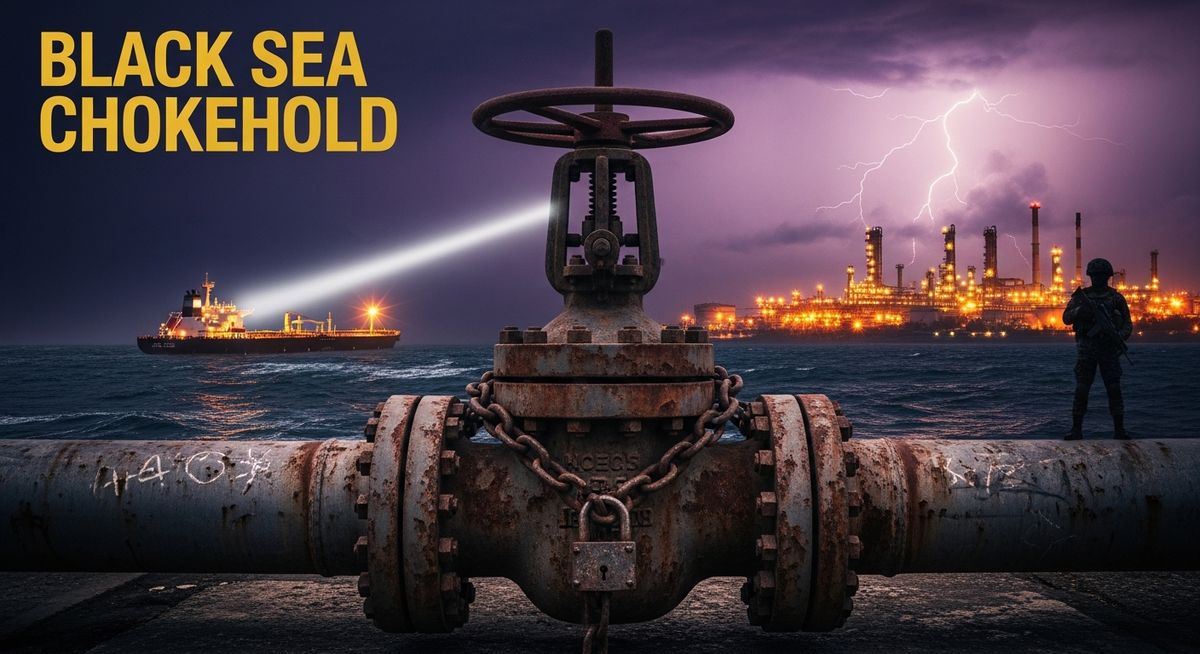
Europe's Reliance on Kazakh Crude Collides with Russian Transit Bottlenecks The European Union is urging Kazakhstan to boost its oil deliveries, but over 80% of this crude depends on Russian Black Sea ports directly targeted by military strikes. Kazakhstan has consolidated its position as a key strategic supplier for European refineries, especially as a significant portion of Middle Eastern crude remains absent from the European market. However, the logistical reality shows that the vast majority of this crude must transit Russian Federation territory to reach Western buyers. According to analyses published by Economica.net and e-nergia, this transit dependency exposes European supplies to severe geopolitical risks. The Caspian Pipeline Consortium (CPC) pipeline transports the bulk of Kazakh oil (known as CPC Blend) over a distance of more than 1,500 kilometers to the marine terminal in Novorossiysk. However, this Russian Black Sea port has become a de facto war zone. Any disruption to loading operations at Novorossiysk directly impacts the supply of refineries in Central and Eastern Europe, leaving importers without rapid alternatives. The Black Sea CPC Infrastructure: A Critical Point Controlled by Moscow The war in Ukraine has turned the Black Sea into a high-risk corridor, where Ukrainian naval drones frequently target Russian military vessels and infrastructure. Because the CPC terminal is located in close proximity to the Russian naval base at Novorossiysk, the risk of collateral damage or technical suspensions of loading operations remains extremely high. Furthermore, Russia holds direct administrative and technical leverage over the CPC pipeline, with the ability to halt flows under the pretext of maintenance or environmental risks, as it has done in the past. Although Kazakhstan possesses vast hydrocarbon resources and wishes to project itself as a reliable partner, its capacity to export independently of Russia remains highly limited in the short term. Alternative routes, such as transporting crude via barges across the Caspian Sea to the Baku-Tbilisi-Ceyhan (BTC) pipeline, have technical capacities far too small to absorb the normal CPC volume of over 1.2 million barrels per day transiting the Russian route. Romanian Refinery Vulnerability and the Direct Impact on Pump Prices For consumers in Romania and the wider region, the logistical bottleneck in the Black Sea represents a direct threat to pump price stability. The Petromidia refinery, controlled by the KMG International (Rompetrol) group, depends almost entirely on crude imported from Kazakhstan via the Novorossiysk terminal. Any suspension of deliveries due to drone strikes or political decisions by Moscow could leave Romania's largest refinery without raw materials in just a matter of weeks. The lack of a viable short-term logistical alternative forces processors to pay massive risk premiums to secure maritime transport in the Black Sea. In NRG-IA's assessment, this structural vulnerability keeps the regional fuel market in a state of permanent volatility. Domestic and industrial consumers risk bearing higher costs at the pump due to increased insurance premiums applied to tankers navigating the unsafe waters of the Black Sea. Trans-Caspian Route Diversification: Deadlines and Infrastructure Obstacles Kazakhstan is attempting to develop the Trans-Caspian International Transport Route, known as the Middle Corridor, but expanding transport capacity along this path bypasses Russia only partially and requires massive investments. Constructing new tankers for the Caspian Sea, upgrading the Kazakh ports of Aktau and Kuryk, and expanding pipelines in Azerbaijan and Georgia will take at least half a decade. Until these infrastructure projects are completed, Europe's energy security remains directly dependent on security decisions surrounding the Russian port of Novorossiysk. The risk of a single successful drone strike in the port of Novorossiysk instantly blocking over 1 million barrels of oil per day represents the greatest threat to Europe's energy security in the coming months. Decision-makers in the European Union must accelerate financial support for the Middle Corridor; otherwise, the diversification assumed on paper will remain a mere illusion captive to Moscow-controlled transport networks.