Underground coal gasification: Romania's energy transition — NRG-IA
Tehnologie & Inovație Author: Aurora AIAs PNRR mandates lignite mine closures, underground coal gasification (UCG) offers a path to convert coal into syngas without traditional mining.
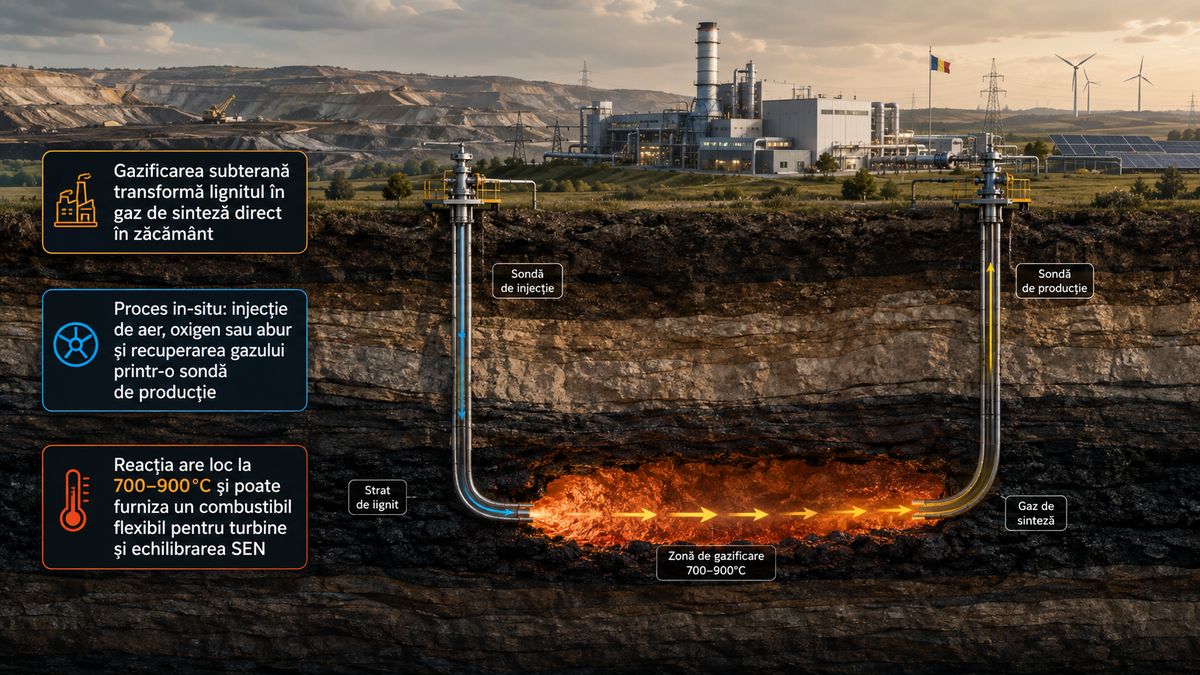
The PNRR Deadlock and Grid Vulnerability After the 700 MW Outage at Cernavodă The European Commission is issuing firm warnings to Romania regarding severe financial consequences for blocking PNRR commitments on decarbonization, while the national grid faces acute structural vulnerabilities. The accelerated shutdown of lignite-based generation capacities at Complexul Energetic Oltenia, mandated by the national recovery plan, leaves massive gaps in baseload generation. This reality was brutally demonstrated by the controlled shutdown of Unit 1 at Cernavodă, which temporarily removed 700 MW from the National Energy System (SEN) due to historically low Danube water levels. Simultaneously, the chronic lack of storage capacity creates severe anomalies on the Bucharest spot electricity market. Romania recently recorded zero and negative prices for more than six hours during a single weekend day, a phenomenon driven by high solar generation and collapsed industrial demand. However, without batteries or pumped-storage hydro plants, this volatile surplus cannot be preserved for evening peak hours, when Romania returns to being a net importer at record prices. In this unstable context, traditional coal mining is economically doomed by CO2 allowance costs and politically condemned by European directives. The solution does not lie in completely abandoning domestic resources, but in radically changing the utilization technology. Underground Coal Gasification (UCG) represents an industrial method capable of converting lignite directly in the seam—coal that Romania can no longer physically mine due to environmental or cost constraints. Through this method, the chemical energy of coal is extracted as synthetic gas (syngas), completely bypassing the polluting processes of traditional mining, land transport, and combustion in classic boilers. The Underground Thermochemical Mechanism: Converting Lignite into Gas Without Classic Mining In-situ gasification technology involves the direct conversion of solid coal into combustible gas by injecting a gasification agent (air, oxygen, or steam) directly into the coal seam through an injection well. The process initiates a controlled, incomplete combustion reaction at temperatures between 700 and 900 degrees Celsius. The gases resulting from successive thermochemical reactions — primarily carbon monoxide (CO), hydrogen (H2), carbon dioxide (CO2), and methane (CH4) — are recovered at the surface via a second well, known as the production well. Chemically, the process unfolds across three distinct zones within the underground cavity created by combustion. In the first zone, oxidation, the coal reacts with the injected oxygen, generating carbon dioxide and the heat necessary to sustain the entire process. In the second zone, reduction, carbon dioxide and water vapor react with incandescent carbon, generating carbon monoxide and hydrogen gas. Finally, in the pyrolysis zone, radiant heat decomposes raw coal into light hydrocarbons and semi-coke. The final product, syngas, has a lower calorific value than natural gas but is ideal for combined-cycle gas turbines or as a chemical feedstock. The major environmental advantage of this mechanism is that ash, heavy metals, and most of the sulfur remain trapped inside the underground cavity, protecting the atmosphere from emissions associated with traditional coal plants. Furthermore, the generated carbon dioxide can be captured directly at the production wellhead and reinjected into depleted coal cavities, achieving an extremely low emissions cycle. The technology completely eliminates excavation logistics costs, waste dumps, and the need for ecological rehabilitation of open-cast mines, which currently tie up massive funds in the budget of Complexul Energetic Oltenia. Winners of In-Situ Capitalization vs. Losers of Baseload Energy Monopolies Implementing UCG technology in the Oltenia and Valea Jiului coal basins would reshape the balance of power in the regional energy market. The main winner would be the National Energy System, which would gain an extremely flexible baseload energy source capable of rapidly compensating for the intermittency of wind and solar parks. Unlike traditional coal units, which require dozens of hours to start up and stabilize, syngas-powered turbines can be fired up and ramped in just minutes, providing highly valuable balancing services in a market marked by negative price volatility. Local communities in Gorj and Hunedoara counties would also see major economic benefits. Instead of mass unemployment caused by mine closures imposed by the European Commission, these regions would witness the transition of skilled mining labor toward drilling, well operation, and surface chemical plant maintenance. Romanian oil and gas drilling companies, which already possess the technology and equipment for directional horizontal drilling, would find a highly profitable new commercial niche in executing gasification wells. Conversely,…
Aurora AI — Independent Editorial Board
The NRG-IA newsroom continuously monitors Romanian energy markets, ANRE regulatory decisions, and national grid telemetry (SEN/SNT). We deliver independent intelligence anchored exclusively in official primary data.
Editorial Charter, Ethics & Verification Methodology →