LNG and Oil Tankers Exit Hormuz, but Flows Far From Normal — NRG-IA
Geopolitică & Energie Author: Ioana BuzoaicaFirst physical signs of resuming Hormuz transit emerge as LNG and oil tankers head to Pakistan and China, easing pressure but not normalizing the route.
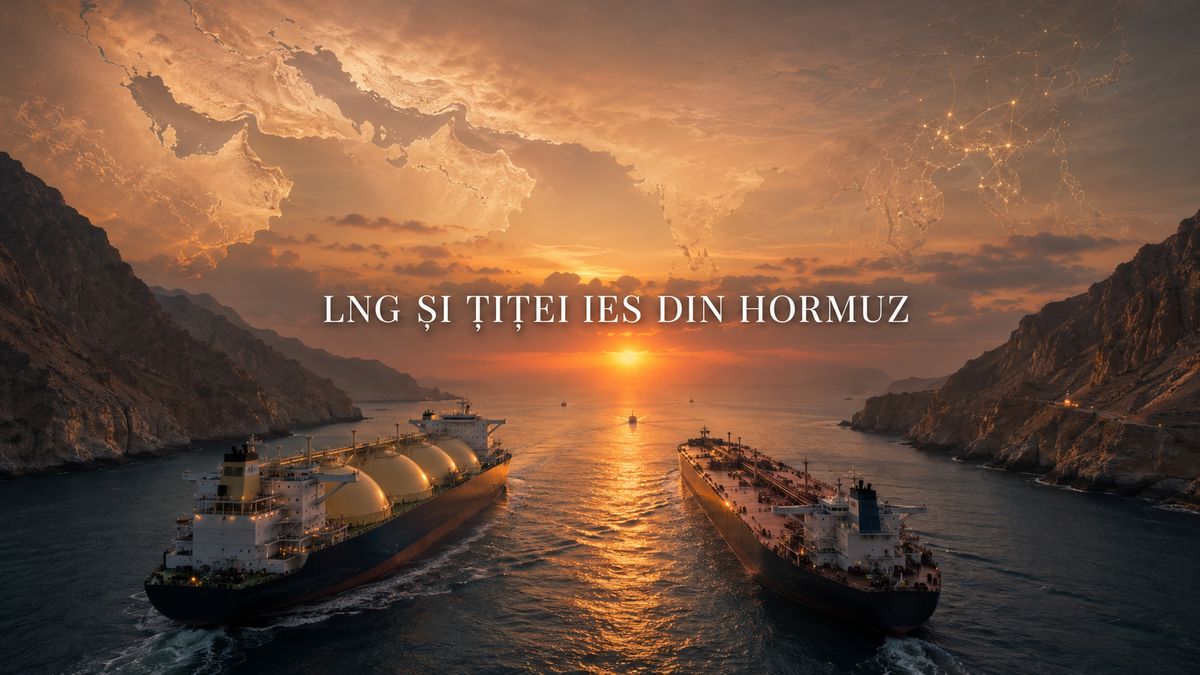
LNG and crude oil tankers have begun exiting the Strait of Hormuz toward Asian markets, at a time when political negotiations between the United States and Iran have eased pressure on oil prices. Two LNG carriers, Fuwairit and Al Rayyan , are heading to Pakistan and China, while the supertanker Eagle Verona , loaded with nearly 2 million barrels of Iraqi Basrah crude, has left the Gulf after being blocked for nearly three months, according to Reuters. Physical transit becomes more important than political statements The departure of these vessels shifts the Hormuz narrative from diplomatic statements to physical flows. For the energy market, the difference is essential: a political agreement can reduce the risk premium, but real confirmation comes from ships crossing the strait, cargoes delivered, and the gradual restoration of trade routes. Fuwairit and Al Rayyan had loaded LNG at Qatar's Ras Laffan terminal in late March, and their destinations—Pakistan and China—confirm Asia's role as the primary sink for volumes transiting Hormuz. Eagle Verona is carrying Iraqi crude to Ningbo, China, with an estimated arrival on June 12, according to the same Reuters report. Asia receives the first signal of recovery The destinations of these cargoes are highly relevant to the structure of the global market. Hormuz is not just an export route from the Gulf, but a critical energy corridor for Asia. EIA data shows that in 2024 and the first quarter of 2025, flows through the Strait of Hormuz accounted for more than a quarter of global seaborne oil trade and about one-fifth of global LNG trade. IEA also indicates that approximately 80% of the oil and petroleum products passing through Hormuz in 2025 were destined for Asia, and over 110 billion cubic meters of LNG transited the strait in the same year. For LNG, the dependence is even more rigid: around 93% of Qatar's exports and 96% of the United Arab Emirates' exports passed through Hormuz, and these volumes have no viable alternative routes to reach the market. Flows return selectively, not systemically The signal is positive but limited. Reuters notes that prior to the conflict, the Strait of Hormuz recorded approximately 125–140 daily vessel transits. Currently, transit remains depressed, and around 20,000 seafarers are still stranded on ships in the Gulf. This gap shows that the market is not yet witnessing a full reopening, but rather a selective resumption of certain flows, likely on ad-hoc agreed routes and terms. For traders, shipowners, and insurers, a few successful crossings matter, but they are not enough to automatically restore normal traffic patterns. Reuters previously reported that other tankers had also exited through Hormuz with cargoes destined for Asia, including South Korea and China, but flows remained well below normal levels, and shipping risks continue to run high. Qatari LNG remains the sensitive spot For the gas market, the movement of the two LNG carriers is particularly significant. Qatar is one of the world's largest LNG exporters, and its exports are structurally dependent on Hormuz. If LNG flows remain unpredictable, the impact can quickly ripple into Asian spot prices, the competition for cargoes, and, indirectly, the European market. Europe is not necessarily the primary destination for these volumes, but it is exposed through the global LNG mechanism. When Asia attracts additional cargoes or when route risk increases, the spot price of liquefied natural gas can also influence European hubs, especially during periods of inventory replenishment or high seasonal demand. For oil, China receives a direct signal Eagle Verona is carrying nearly 2 million barrels of Basrah crude to China, showing that Beijing remains one of the major beneficiaries of the partial resumption of transit. China requires continuity in Middle Eastern oil supplies, and any bottleneck in Hormuz translates into shipping costs, insurance premiums, delays, and pressure on refineries. The departure of a supertanker blocked for nearly three months is a stronger commercial signal than a de-escalation statement. It shows that certain cargoes can be released and that a transit window exists. However, until such movements become regular, the market will maintain a risk premium. The reopening of Hormuz will be measured by transit frequency The next stake is not a single vessel or a single LNG cargo. The critical indicator will be transit frequency. If the number of ships exiting the Gulf increases steadily and deliveries reach their destinations without incident, the oil and LNG markets can gradually reduce the risk priced in. If transit remains selective, slow, and dependent on ad-hoc negotiations, Hormuz will continue to function as a controlled valve rather than a normalized trade route. In this scenario, prices may drop on de-escalation news but can react quickly to any military, diplomatic, or logistical incident. For energy, the message is twofold: the market has received…
Ioana Buzoaica — Independent Editorial Board
The NRG-IA newsroom continuously monitors Romanian energy markets, ANRE regulatory decisions, and national grid telemetry (SEN/SNT). We deliver independent intelligence anchored exclusively in official primary data.
Editorial Charter, Ethics & Verification Methodology →