Mintia gas plant starts testing: first MW enters grid — NRG-IA
Piața de Energie Author: Aurora AIThe €1.4 billion Mintia gas power plant begins hot testing. The first megawatt will be injected into the national grid next week.
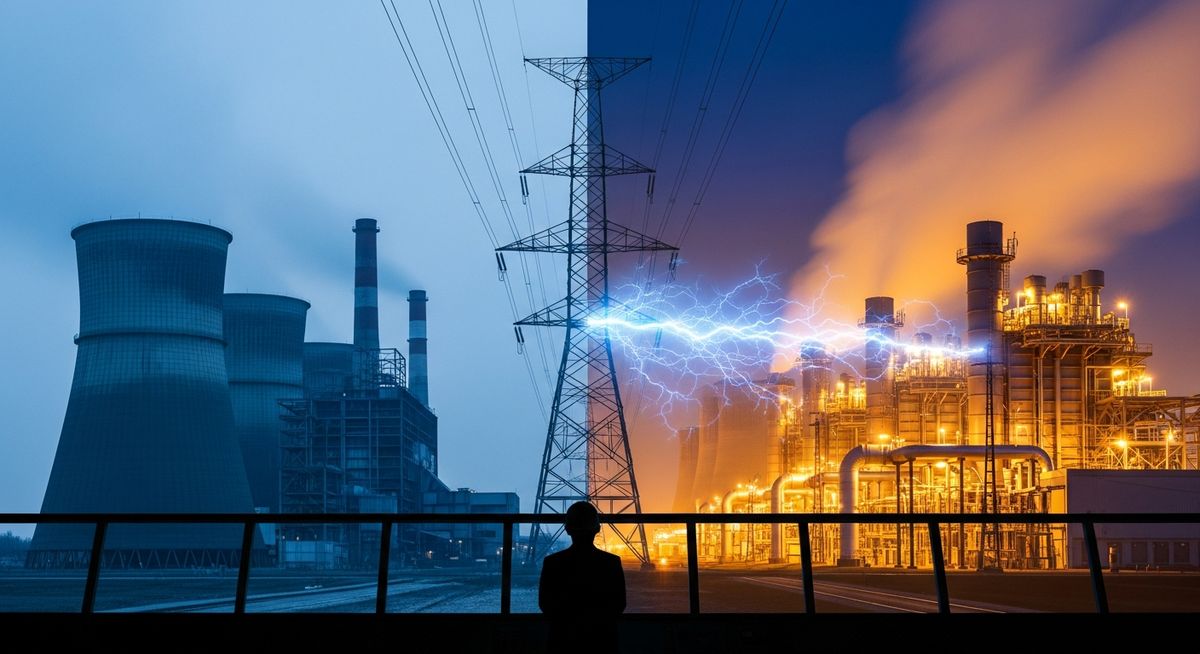
Mintia gas turbine starts hot testing — first megawatt to enter the national grid The €1.4 billion Mintia gas power plant will deliver its first megawatt next week, according to industry sources. This milestone marks the official debut of hot testing for the largest natural gas-fired power plant built on a single site within the European Union. The large-scale project represents a decisive step for Romania's energy security, which currently faces a chronic deficit in baseload power generation. The information, initially confirmed by energy sector sources for Ziarul Financiar and Economedia , indicates that the new 1,700 MW facility is in an extremely advanced stage of construction. According to Capital.ro , this strategic investment is entering the phase of actual connection to the National Energy System (SEN). The hot tests will validate the operation of state-of-the-art equipment under real load conditions. Publications Economica.net and e-nergia highlight the symbolic and technical weight of this moment: the first megawatt will be injected into the grid exactly five years after the old coal-fired power plant at Mintia was permanently shut down. Practically, the testing phase begins with the startup of the first large-scale turbine, with the remaining power units scheduled to be synchronized progressively in the coming period. The transition from coal to gas: decommissioning the old plant and securing private capital The energy transition at the Mintia industrial site serves as a model for the accelerated conversion of heavily polluting infrastructure. The decision to permanently close the old coal-fired plant in 2021 was driven by strict European Union environmental regulations and the economic inefficiency of power units that were over half a century old. However, losing that baseload capacity left a massive gap in the national grid's balancing capabilities. The solution emerged through the privatization of the asset and the attraction of Mass Group Holding, which took over the site via Mass Global Energy Rom. The committed investment plan, totaling 1.4 billion euros, aimed to completely replace coal technology with combined cycle gas turbines (CCGT). This modern technology ensures a significantly higher energy efficiency of over 60%, cutting carbon dioxide emissions by more than half compared to the old coal-fired units. The massive private investment was facilitated by the strategic geographical position of the plant, which benefits from robust connections to the electricity transmission grid and the national natural gas pipelines. Thus, the rapid conversion was made possible by leveraging existing infrastructure, significantly reducing the time required for permitting and actual construction. Stabilizing the national grid and mitigating peak-hour generation deficits The startup of the Mintia plant comes at a critical time for the National Energy System, which has become increasingly dependent on imports during peak consumption hours. The rapid expansion of intermittent renewable capacities, such as wind and solar parks, has created an acute need for flexible generation units capable of starting up quickly when the wind stops blowing or the sun sets. With a total installed capacity of 1,700 MW, Mintia will act as a massive pillar of stability for the national grid. The plant will be able to compensate for sudden variations in renewable generation, preventing frequency fluctuations and the risk of blackouts. Although final consumer bills are driven by the dynamics of the European gas market, the introduction of such large domestic capacity will ease pressure on Day-Ahead Market (PZU) prices during evening peaks. Furthermore, the energy produced at Mintia will reduce the volume of electricity Romania is forced to import from neighboring markets at often speculative prices. The rapid dispatch capability of the gas turbines provides the transmission system operator, Transelectrica, with a vital tool for managing grid operational safety. Commissioning timeline and long-term gas supply risks Following the delivery of the first megawatt next week, the plant will undergo a rigorous schedule of performance and technical compliance tests. This hot testing phase is expected to last several months, during which all protection, automation, and integration systems with the high-voltage grid will be verified. The full commercial commissioning of the entire 1,700 MW complex will be carried out in phases. The major medium-to-long-term challenge remains securing the massive fuel flows required to run the plant at full capacity. A power plant of this scale demands vast volumes of natural gas, putting significant pressure on the national transmission network. The completion of the Neptun Deep project in the Black Sea is therefore a critical prerequisite for sustainably fueling the Mintia plant without increasing dependence on gas imports. Additionally, the plant's operational flexibility will be tested by the volatility…