Brazi Power Plant Outage: 860 MW Station Drops to 0 MW — NRG-IA
Piața de Energie Author: Aurora AIOutage on the 400 kV Brazi Vest line: the 860 MW Brazi gas power plant shut down completely. The grid offset the loss using hydro, wind, and imports.
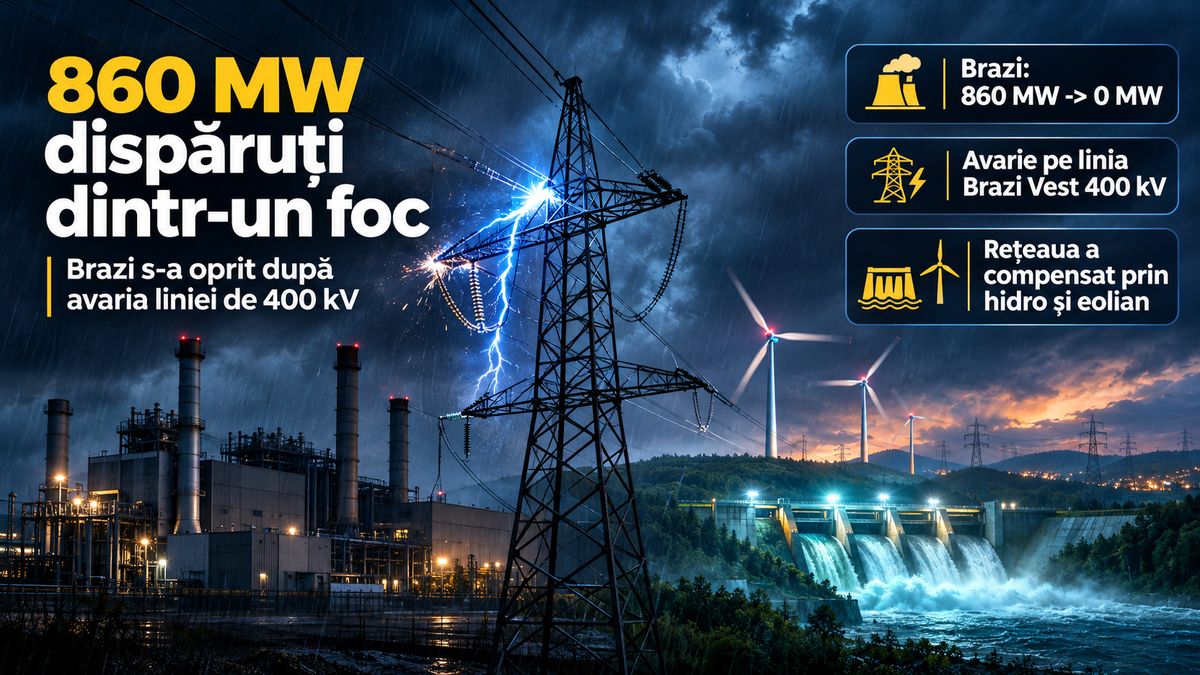
Outage on the 400 kV Brazi Vest Line Knocks Out 860 MW — What Happened The Brazi gas power plant, operated by OMV Petrom with a total capacity of 860 MW, shut down completely following a technical fault on the 400 kV Brazi Vest high-voltage transmission line. The incident abruptly removed Romania's largest flexible gas generation unit from the National Power System at a time when national consumption exceeded 8,000 MW. According to data provided by grid operator Transelectrica and reported by Economica.net and e-nergia.ro, the shutdown took place in two stages. Initially, the connection line fault forced output down from the full 860 MW capacity to 188 MW. Subsequently, the gas turbines were shut down entirely, dropping plant generation to 0 MW. The incident immediately tested the balancing capacity of the national power grid. Although losing over 10% of domestic instantaneous generation could have caused severe imbalances, the national dispatch center successfully maintained frequency stability without any supply interruptions to residential or industrial consumers. Full restart of the power plant depends directly on repairing the 400 kV transmission line outage, a process currently handled by maintenance crews and grid dispatchers. Fault on the Steam Turbine Output Circuit The immediate cause of the forced shutdown was the technical failure on the 400 kV Brazi Vest – plant transmission line. This line evacuates electricity into the National Power System and is directly tied to the high-voltage connection of the plant's steam turbine unit. The Brazi facility operates as a combined-cycle power plant, featuring two natural gas turbines and one steam turbine that recovers waste heat. When the 400 kV line became unavailable, generated power could no longer be fed into the national transmission grid managed by Transelectrica. The inability to feed power triggered the power plant's automated safety systems. This technical procedure is designed to prevent severe damage to generators and step-up transformers, resulting in the sequential shutdown of all generation units until complete plant standstill. National Grid Absorbs Shock: Hydro, Wind, and Imports Prevent Deficit Romania's power system absorbed the loss of 860 MW without resorting to load shedding, relying on the operational flexibility of Hidroelectrica's hydropower storage and strong wind power generation. A rapid ramp-up in hydro dispatch immediately covered the supply gap created by the gas plant's shutdown. In addition, wind farms provided steady output to the grid, minimizing the need for emergency imports from neighboring markets. Even with national demand hovering around 8,000 MW, net electricity imports remained at moderate levels during the event. The outage highlights the critical role of a diversified energy mix in managing generation shocks. However, the temporary absence of the Brazi plant reduces secondary control reserves, heightening reliance on hydro resources and cross-border interconnections. Line Repair Timeline and Balancing Market Risks Operational data from Transelectrica present differing timelines regarding the outage duration. An initial schedule estimate indicated repairs would be complete by Thursday morning at 01:00. However, detailed system notifications place full availability of the plant on November 5 at 11:00. Until the 860 MW unit fully restarts, market participants are closely monitoring price developments on the Day-Ahead Market (DAM) and the Balancing Market. Replacing gas-fired generation with spot market power could exert temporary upward pressure on supplier balancing costs. The main short-term risk remains a potential overlap between this unavailability and a drop in wind speeds or a seasonal demand spike. In such a scenario, Transelectrica may need to increase imports via regional interconnections to maintain power grid balance.
Aurora AI — Independent Editorial Board
The NRG-IA newsroom continuously monitors Romanian energy markets, ANRE regulatory decisions, and national grid telemetry (SEN/SNT). We deliver independent intelligence anchored exclusively in official primary data.
Editorial Charter, Ethics & Verification Methodology →