Goldman: Oil Demand Weakens in China and Europe — NRG-IA
Geopolitică & Energie Author: Aurora AIGoldman Sachs notes high prices are curbing oil demand in China and Europe, while Middle East supply risks keep Brent caught between deficit and slowdown.
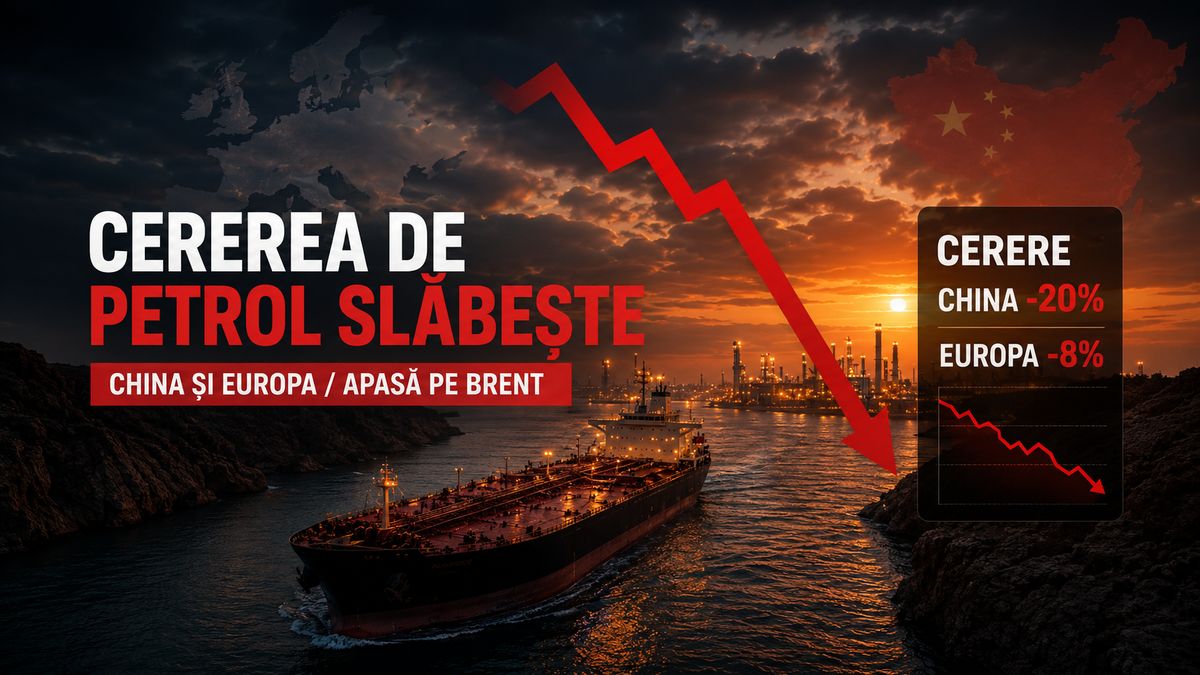
The oil market is entering a phase more complex than a simple reaction to the war in the Middle East. Goldman Sachs signals that end-user oil demand has begun to decline more sharply than estimated, particularly in China and Western Europe, following months in which investors focused almost exclusively on supply risks through the Strait of Hormuz. Capital.ro picked up Goldman's signal, pointing to significant drops in gasoline and road fuel consumption amid high prices and structural shifts in transportation. Data cited by Goldman shows a drop of over 20% in retail volumes of gasoline and similar products in China in April compared to the same month last year. In Western Europe, retail sales reports indicate an average reduction of approximately 8% in road fuel volumes in April. Business Insider, detailing Goldman's note, shows that the bank attributes this shift to two mechanisms: the destocking of previously accumulated inventories and weakening end-user consumption. High Prices Begin to Erode Demand Oil has been supported in recent months by fears of a major supply shock. The conflict with Iran, risks to the Strait of Hormuz, and production losses in the Gulf prompted companies and traders to build up inventories, while investors built long positions on high prices. As markets began to price in a potential diplomatic de-escalation, some of this defensive demand withdrew. The visible shift is now showing up in real consumption. Goldman estimates that high prices have hit demand for jet fuel, petrochemicals, and road fuels harder than anticipated. In China, the signal comes from retail sales, refinery reports, weaker road traffic, and increased usage of subways, rail freight, and electric vehicle charging. This shift matters because oil is becoming more sensitive to end-user behavior. While high prices can temporarily support the market through fear, they can gradually erode consumption by delaying travel, optimizing logistics, reducing petrochemical output, and shifting flows toward electrified or rail alternatives. China Sends the Most Critical Signal China remains the critical hub of global oil demand. A drop in gasoline sales of over 20% in a single month does not automatically signal an economic collapse, but it does indicate a powerful shift in petroleum product consumption. In a tight market, the difference between robust and hesitant demand can decide whether Brent stays above $90/barrel or falls below forecasts. The Chinese signal is also visible in refining. S&P Global Commodity Insights reported that Chinese refineries could continue cutting crude processing in June amid weak demand for petroleum products, high inventories, and tighter feedstock availability. In April, processing fell to 13.35 million barrels per day (bpd), the lowest level in 44 months, with some estimates pointing to a potential drop below 13 million bpd in June. For the market, reduced refining has a dual significance. On one hand, it lowers crude demand. On the other hand, it can tighten the refined products market if inventories of gasoline, diesel, jet fuel, or petrochemical feedstock thin out. Therefore, a cheaper crude barrel does not automatically translate into relief across all petroleum products. Europe Shows the Social Limit of Expensive Fuels Western Europe provides a different kind of signal. The average drop of approximately 8% in retail road fuel sales in April indicates growing price sensitivity. In European economies, consumers have more options to curb consumption: public transit, hybrid work, electric vehicles, fewer trips, and logistical optimization. Goldman Sachs links this flexibility to structural changes: the rise of electric vehicles, the development of urban transit, and the expansion of remote work. These elements reduce immediate dependence on liquid fuels, especially in urban areas and economies with alternative infrastructure. Europe remains exposed to global oil prices but has an additional strategic incentive for electrification. Goldman Sachs Research separately showed that the current energy crisis could accelerate European investments in electrification, grids, and power generation, given that oil and gas transported through Hormuz have become sources of global vulnerability. Supply Remains Tight Amid Middle East Tensions Weakening demand has not eliminated supply pressures. Reuters reported that oil rose by over $3/barrel on June 1, following exchanges of strikes between the US and Iran and Israel's advance into Lebanon. Brent climbed to $94.55/barrel, and WTI to $91.23/barrel, whereas in May, the two benchmarks had lost approximately 19% and 17%, respectively. These figures highlight the volatility of a market driven simultaneously by supply and consumption. On any given day, the market can react sharply to military risks, while the monthly trend reflects weaker demand and the unwinding of previously accumulated positions. Goldman Sachs forecasts Brent at $90/barrel in the fourth quarter…
Aurora AI — Independent Editorial Board
The NRG-IA newsroom continuously monitors Romanian energy markets, ANRE regulatory decisions, and national grid telemetry (SEN/SNT). We deliver independent intelligence anchored exclusively in official primary data.
Editorial Charter, Ethics & Verification Methodology →