Cernavodă May Restart Nov 1: Nuclearelectrica Cuts Profit — NRG-IA
Piața de Energie Author: Ioana BuzoaicaNuclearelectrica sees 2026 gross profit down nearly 1B lei after Cernavodă outages. Budget revision assumes a Nov 1 restart as grid margins tighten.
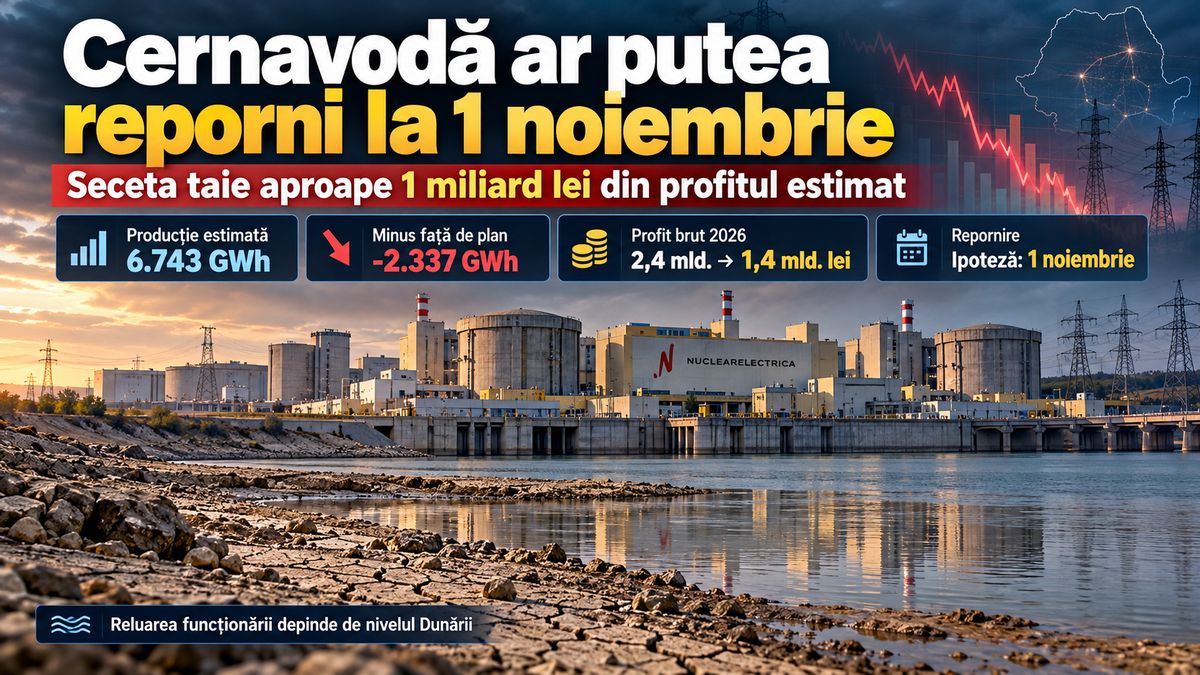
Nuclearelectrica estimates that the two reactors at the Cernavodă Nuclear Power Plant could resume operations starting November 1, 2026, following extended shutdowns caused by low water levels on the Danube. The target date is included in the company's draft budget revision, which highlights the extent of the financial fallout from the plant's unavailability: estimated gross profit for 2026 drops by nearly one billion lei, while scheduled power deliveries to the national grid are cut by more than a quarter compared to initial projections. According to documents published for the General Shareholders' Meeting on October 29, budgeted gross profit falls from RON 2.4 billion to RON 1.4 billion, a 41.5% decline. At the same time, estimated power supplied to the National Power System (SEN) drops from 9,080 GWh to 6,743 GWh. The 2,337 GWh difference reflects the cumulative impact of unplanned outages at the nuclear units throughout the year. The fallout extends beyond the lost revenue from ungenerated and unsold power. Nuclearelectrica also anticipates an increase of approximately RON 266 million in power procurement costs during the outage periods. For the Romanian energy system, the absence of both reactors translates into a significant reduction in available domestic power generation, which must be offset by other power plants, imports, or adjusted commercial flows. Drought reduces Cernavodă's estimated 2026 energy supply by over a quarter The Cernavodă plant is navigating one of its most challenging operational periods in recent years. The two nuclear units, with a combined installed capacity of roughly 1,400 MW, typically serve as a major source of electricity for Romania. Their continuous operation provides substantial baseload power unaffected by daily fluctuations in wind and solar output. However, the disruptions in 2026 stemmed from distinct causes. Unit 2 was offline between May 4 and May 30 (624 hours) due to a technical fault in the step-up transformer. Subsequently, a severe drop in the flow of the Danube forced a controlled shutdown of Unit 1 starting July 28, followed by Unit 2 on August 13. Consequently, the full-year impact combines spring technical downtime with prolonged hydrologically induced shutdowns. Danube river water is essential for cooling the plant. CANDU reactors rely on specialized circuits and equipment to transfer and dissipate heat, operating under strict technical parameters. Low river levels can restrict cooling water intake, forcing the operator to downrate capacity or shut down the units entirely. According to the explanatory note accompanying the budget revision, scheduled power deliveries to the grid are being reduced by 2,337 GWh—a 25.7% decline from original forecasts. This volume represents a substantial portion of the plant's annual planned output, underscoring how severely severe hydrological conditions can impact even power technologies typically associated with steady generation. Nearly one billion lei wiped from Nuclearelectrica's budgeted gross profit The budget revision converts lost output into concrete financial metrics. Full-year estimated gross profit for 2026 drops from RON 2.401 billion to RON 1.405 billion, representing a decline of approximately RON 996 million. Budgeted net profit falls in tandem, from RON 2.065 billion to RON 1.178 billion, 42.9% below previous projections. Total projected revenues have been revised downward from RON 5.835 billion to RON 4.964 billion, a 14.9% decline. The hardest-hit segment is revenue from generated and sold electricity, where the company projects a deficit of roughly RON 991 million. Reduced sales volume is the primary driver behind this shift, only partially offset by higher realized average selling prices. Profitability pressures are further magnified by rising expenditures. Total expenses in the revised budget increase from RON 3.435 billion to RON 3.559 billion, an uptick of approximately RON 125 million. Together, the RON 871 million drop in total revenues and the expense increase account for the nearly one-billion-lei drop in budgeted gross profit. An additional indicator reveals how significantly outlooks deteriorated in the second half of the year. Nuclearelectrica reported a net profit of roughly RON 1.184 billion for the first half of 2026, whereas the updated full-year forecast stands at just RON 1.178 billion. This comparison implies a slightly negative cumulative net result of roughly RON 6 million for H2, should full-year performance match the revised budget. These figures represent financial estimates for 2026, not final accounting losses already booked. However, they demonstrate the scale of the anticipated annual downturn and the financial sensitivity of a key energy supplier to extended plant outages. Nuclearelectrica buys more market power to compensate for reactor downtime One of the most critical economic consequences of the outages is the increased need for wholesale market power purchases.…
Ioana Buzoaica — Independent Editorial Board
The NRG-IA newsroom continuously monitors Romanian energy markets, ANRE regulatory decisions, and national grid telemetry (SEN/SNT). We deliver independent intelligence anchored exclusively in official primary data.
Editorial Charter, Ethics & Verification Methodology →