Cernavodă Shutdown: 900 MW Hit, Suppliers Face Losses — NRG-IA
Piața de Energie Author: Aurora AIThe Cernavodă nuclear shutdown forces suppliers to replace 900 MW of contracted power at high market prices, triggering insolvency and market risks.
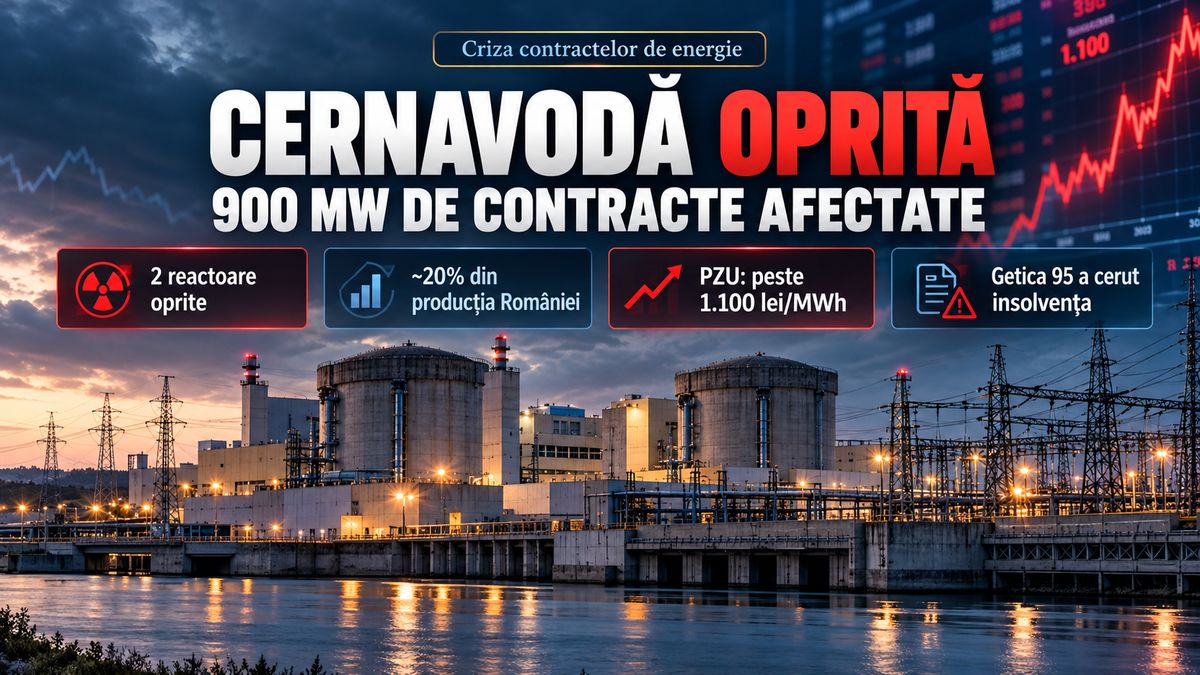
Romania is facing an unusual situation in its electricity market: the Cernavodă nuclear power plant is offline, approximately 900 MW of contracted power must be replaced, and suppliers relying on this output are now purchasing electricity at significantly higher prices. The issue has escalated beyond power generation into commercial contracts. Nuclearelectrica, the state-owned utility operating the plant, has invoked force majeure due to severe drought, while suppliers remain obligated to supply the consumers to whom they sold the energy. The first major financial impact became visible in early October: Getica 95 Com, one of Romania's largest suppliers, filed for insolvency. According to market reports, other companies are also facing difficulties stemming from the need to replace power contracted from Cernavodă. The situation calls into question not only immediate commercial losses but also trust in long-term contracts and suppliers' ability to maintain agreed-upon prices with their clients. Both Cernavodă Reactors Offline Due to Low Danube Water Levels Under normal operating conditions, the Cernavodă nuclear power plant provides approximately one-fifth of Romania's electricity generation. The two units have a combined installed capacity of around 1,400 MW and represent one of the most critical sources of baseload generation in the national energy system. The severe hydrological drought in the summer of 2026 reduced the Danube's flow and water levels, affecting the availability of water required to cool the reactors under nuclear safety conditions. Unit 1 underwent a controlled shutdown in late July, and Unit 2 was shut down on August 13. The shutdowns were preventive measures dictated by hydrological conditions, not the result of a nuclear incident. As of October 8, both units remain offline, and their return to service depends on the restoration of the conditions required for safe operation. Restart estimates have been repeatedly pushed back, with no firm date announced for the full resumption of production. The absence of nuclear power impacts a system already grappling with drought-reduced hydropower generation and significant fluctuations in renewable energy output. Under these conditions, the electricity needed to meet demand must be sourced from other available power plants and imports. Approximately 900 MW of Contracted Power Must Be Sourced Elsewhere The plant's shutdown has an additional impact beyond the loss of nuclear generation: Nuclearelectrica had previously signed contracts to sell power to suppliers and other market participants. According to a statement by State Secretary in the Ministry of Energy, Cristian Bușoi, cited by the publication e-nergia, bilateral contracts for approximately 900 MW are affected. This figure represents the capacity corresponding to contracted deliveries, not the plant's total installed capacity. For the volumes that are no longer being delivered, buyers must find replacement power. For a constant delivery of 900 MW, the corresponding volume would be 21,600 MWh per day. The cost of purchasing this power depends on the price at which it can be bought and the actual duration for which deliveries must be replaced. For suppliers, the difficulty lies in the fact that the energy had been contracted in advance, at prices set before the current price surge. While some contracts with Nuclearelectrica were signed at prices of around 500–650 RON/MWh, replacement purchases can exceed 1,000 RON/MWh on high-price days. The difference becomes an additional expense that suppliers cannot automatically recover from consumers on fixed-price contracts. Electricity Prices Exceeded 1,100 RON/MWh in Early October Market data presented by e-nergia shows a significant increase in the average price of electricity traded for next-day delivery. In August, the average price was approximately 793 RON/MWh, and in September it rose to 927 RON/MWh. In early October, the daily average exceeded 1,100 RON/MWh for three consecutive days, according to the publication. At these levels, replacing previously contracted power can generate substantial commercial losses. For example, if a supplier must permanently replace 100 MW contracted at 600 RON/MWh with power purchased at 1,100 RON/MWh, the difference is 500 RON per MWh. For an entire day, the resulting additional cost is 1.2 million RON. Over 30 days, if the same conditions were to persist, the total would reach 36 million RON. This calculation is illustrative and does not represent the actual loss reported by any specific company. The real cost depends on the undelivered volumes, contract prices, and the actual transactions through which the supplier covers its requirements. However, the pressure is clear: the longer the plant shutdown continues, the greater the financial exposure of buyers who must replace the nuclear power. The price increase also has other causes, including reduced hydropower generation, demand trends, and the availability of…
Aurora AI — Independent Editorial Board
The NRG-IA newsroom continuously monitors Romanian energy markets, ANRE regulatory decisions, and national grid telemetry (SEN/SNT). We deliver independent intelligence anchored exclusively in official primary data.
Editorial Charter, Ethics & Verification Methodology →