CIP Peștera II Wind Farm: EUR 500M Financing Closed — NRG-IA
Piața de Energie Author: Aurora AICopenhagen Infrastructure Partners secures EUR 500M financing for the 392 MW Peștera II onshore wind project in Constanța, Romania.
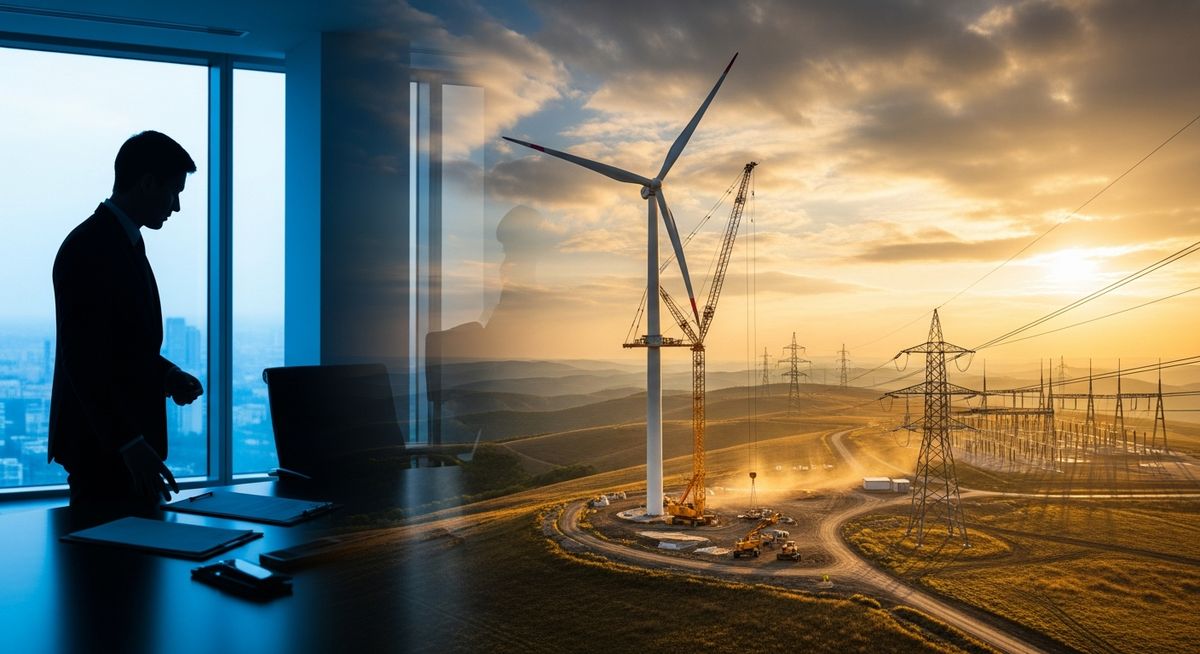
Danish CIP Closes EUR 500 Million Financing for Peștera II — What Happened Copenhagen Infrastructure Partners (CIP) has secured half a billion euros in financing for the 392 MW Peștera II onshore wind project in Constanța County, marking one of the largest project finance transactions in Central and Eastern Europe. The transaction, executed through its Growth Markets Fund II (GMF II), represents a critical milestone for Romanian energy infrastructure, as initially reported by local outlets Economica.net and e-nergia . Reaching financial close indicates that all credit agreements and capital structures are now firmly locked in, allowing the physical construction phase to begin in Dobrogea. The project is designed to inject substantial clean power into a national grid currently strained by structural deficits during peak demand periods. The Peștera II wind farm thus becomes a key benchmark for institutional investors assessing the Romanian market. This massive investment confirms the growing appetite of major global fund managers for renewable assets in Romania. CIP, one of the world's largest fund managers specialized in greenfield renewable energy infrastructure, is consolidating its pioneer status on the local market by bringing in direct foreign capital, without relying solely on national budget resources. Dobrogea Attracts Global Capital Through Project Finance The success of this massive financing is rooted in Dobrogea’s high wind potential and the technical maturity of the project developed by CIP. The project finance structure means that debt repayment will rely solely on revenues generated from selling the wind farm's electricity, without recourse to the parent group's assets, demonstrating the lenders' high confidence in the project's commercial viability. Another decisive catalyst was the pre-qualification of the Peștera II project in Romania's inaugural Contracts for Difference (CfD) auction organized by the Ministry of Energy. This mechanism provides a guaranteed strike price for a period of 15 years, significantly reducing market risks for the financing bank consortium. The revenue stability assured by the CfD acted as a financial safety net, facilitating the banks' decision to grant long-term credit. Grid Pressure for Transelectrica and Spot Price Stabilization Integrating nearly 400 MW of intermittent wind capacity into the transmission grid has the potential to place additional pressure on Transelectrica, the national system operator, in a region already saturated with generation assets. However, the additional volume of clean energy could help temper spot market (DAM) prices during high-wind periods, offering a cheaper alternative to coal or gas-fired generation. For end-consumers, this massive capacity addition represents a step toward diversifying the national energy mix and lowering carbon emissions. Nonetheless, the direct impact on electricity bills will depend on grid tariff adjustments, the investments needed to reinforce distribution networks, and the balancing costs that suppliers must cover when wind output drops abruptly due to lack of wind. Construction Timelines and Remaining Integration Risks The next critical phase involves civil works and the delivery of major components, including turbines and transformers, amid global supply chain bottlenecks in the wind industry. Commercial commissioning is expected in the coming years, but the timeline remains directly linked to the pace of physical connection works at the local substation. Furthermore, investors are closely monitoring potential curtailment risks (voluntary output limitations by the national dispatcher) during peak production hours in Dobrogea. This remains a major technical hurdle that Romania must address by accelerating investments in high-voltage transmission lines and utility-scale battery storage systems.
Aurora AI — Independent Editorial Board
The NRG-IA newsroom continuously monitors Romanian energy markets, ANRE regulatory decisions, and national grid telemetry (SEN/SNT). We deliver independent intelligence anchored exclusively in official primary data.
Editorial Charter, Ethics & Verification Methodology →