Romania Storm Warning: 70 km/h Gusts Threaten Power Grid — NRG-IA
Piața de Energie Author: Aurora AIRomania faces severe weather with 50–70 km/h winds, storms, and hail, threatening local power distribution networks, especially overhead lines.
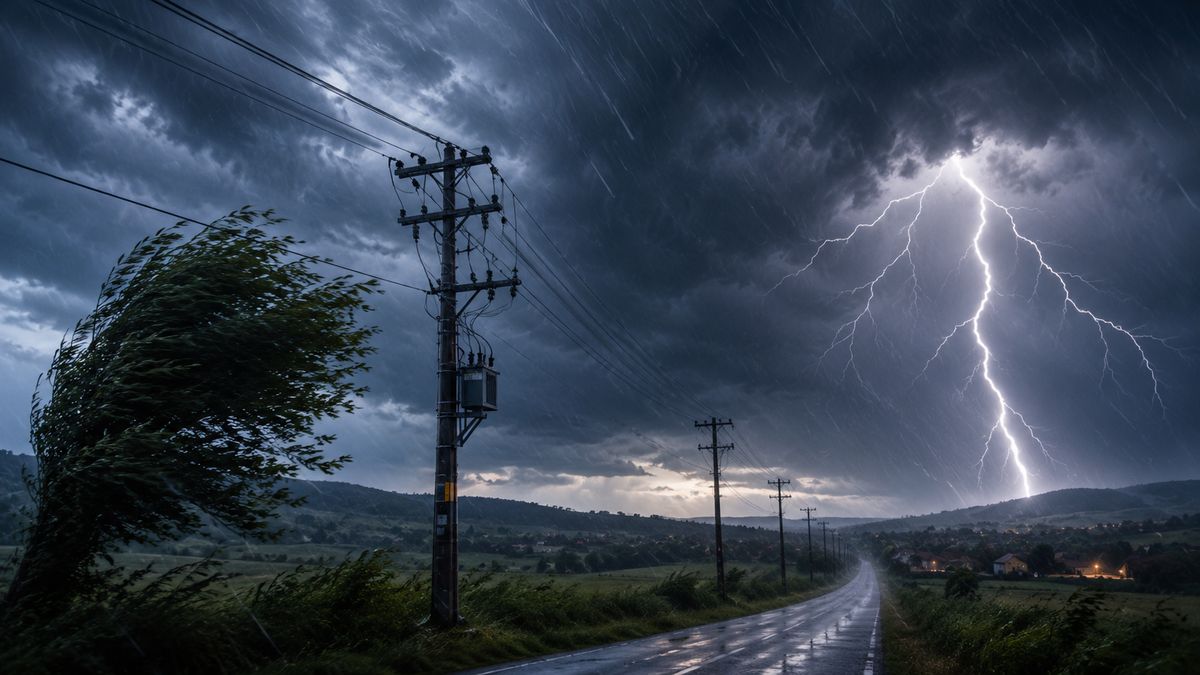
On Sunday, May 31, 2026, the National Meteorological Administration (ANM) issued Yellow Code warnings for wind and atmospheric instability, with a potential impact on electricity distribution networks. On Sunday, between 10:00 and 21:00, the southern Banat and southwestern Oltenia regions are expected to experience high winds, with gusts reaching 50–70 km/h, according to the ANM. In addition to the specific wind warning, the ANM also issued a weather advisory for May 31, from 10:00 to 21:00, regarding high winds, atmospheric instability, and significant rainfall. Wind speeds of 45–55 km/h are generally expected in the central and southwestern parts of the country, while gusts in high mountain areas could reach 60–80 km/h. In the afternoon and evening, the Eastern Carpathians, western Moldavia, eastern Oltenia, and Muntenia are forecast to experience showers, lightning, high winds, storms, and hail, with localized rainfall accumulations of 15–25 l/sqm. Storms to spread across most of the country starting Monday The second ANM advisory covers the period from June 1, 12:00 to June 2, 10:00. The Yellow Code for severe atmospheric instability covers Banat, Crișana, Maramureș, Transylvania, Oltenia, northern Muntenia, northern Dobrogea, and southwestern Moldavia. These regions are forecast to experience torrential downpours, lightning, high winds, storms, and hail. Rainfall could reach 15–25 l/sqm in short intervals, and may exceed 40–50 l/sqm in isolated areas. AGERPRES notes that the Yellow Code warning for storms, torrential rain, and hail covers 30 counties from Monday to Tuesday. This type of weather shifts the issue from a purely meteorological one to an operational challenge for electricity distribution. Strong winds, storms, hail, and torrential rain can damage overhead power lines, knock down trees or branches onto conductors, and cause accidental power outages, particularly in rural, mountainous, or peri-urban areas. Distribution networks exposed to severe weather The energy risk does not threaten the operation of the entire National Power System, but rather the continuity of local supply within distribution networks. During such events, the most vulnerable segments are medium- and low-voltage overhead lines, exposed transformer stations, individual connections, and areas where vegetation is close to the electrical infrastructure. Rețele Electrice explains on its outage page that unplanned interruptions can be caused by equipment and installation failures due to bad weather, including torrential rain and storms. The operator also notes that customers can check for scheduled or unplanned outages using the POD (Point of Delivery) code of their consumption site. Distribuție Energie Electrică Romania also advises users who spot fallen power lines or cables, or other non-compliant situations, to immediately report them to the operator via the dedicated emergency hotlines. Rainfall also increases hydrological risk in 17 counties The operational risk for energy infrastructure can also increase due to the hydrological impact of torrential rains. The National Institute of Hydrology and Water Management issued a Yellow Code flood warning for rivers in 17 counties, valid from June 1, 12:00 to June 2, 12:00. The affected basins include Someș, Crasna, Barcău, Mureș, Argeș, Ialomița, and Buzău. Hydrologists warn of significant runoff on slopes, torrents, and streams, as well as flash floods on small rivers. These phenomena could cause local flooding and increases in water flows and levels, potentially exceeding warning thresholds in counties such as Bihor, Cluj, Sălaj, Maramureș, Satu Mare, Harghita, Mureș, Alba, Argeș, Dâmbovița, Prahova, Ialomița, Ilfov, Brașov, Sibiu, Covasna, and Buzău. For electrical infrastructure, heavy rains can hinder the interventions of distribution crews, limit field access, and amplify the effects of storms on areas with dense vegetation or affected local roads. Consumers must monitor local outages, not just weather alerts A Yellow Code does not automatically mean power outages, but it increases the probability of local disruptions. In practice, the impact depends on the exact path of the storms, the state of vegetation, network configuration, the exposure level of overhead lines, and the speed of emergency response. For consumers, the practical takeaway is clear: during storms, fallen lines or cables must not be touched, and outages should be reported to the local distribution system operator. DEER publishes dedicated numbers for reporting faults, including dialing the county prefix followed by 929, as well as toll-free Telverde lines for the Transilvania Nord, Transilvania Sud, and Muntenia Nord regions. In the Rețele Electrice service area, users can check scheduled and unplanned outages, with information on the outage map updated every 15 minutes, according to the operator. The grid enters a local resilience test The weather event from May 31 to June 2 highlights the difference…
Aurora AI — Independent Editorial Board
The NRG-IA newsroom continuously monitors Romanian energy markets, ANRE regulatory decisions, and national grid telemetry (SEN/SNT). We deliver independent intelligence anchored exclusively in official primary data.
Editorial Charter, Ethics & Verification Methodology →