ANM Yellow Warning: Severe Storms and Rain in Romania — NRG-IA
Energie Author: Aurora AIANM issued a yellow warning for storms and torrential rain in 30 Romanian counties until Tuesday morning, forecasting localized rainfall of up to 50 l/sqm.
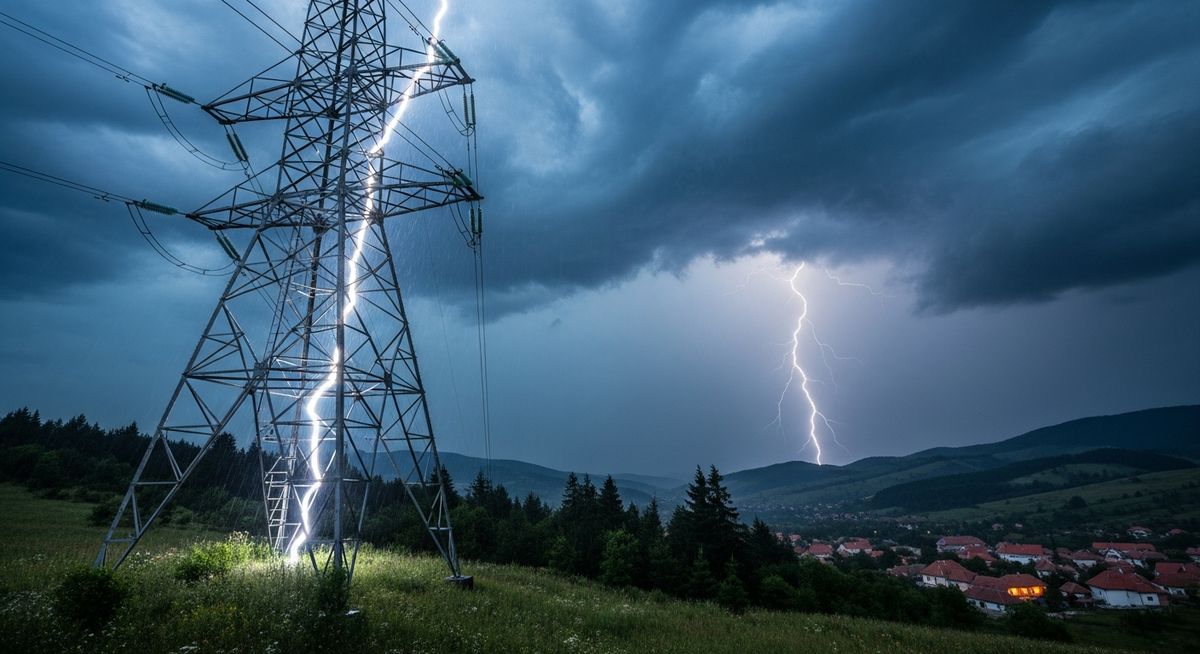
Severe instability in 30 counties — what happened ANM has issued a yellow warning for 30 Romanian counties, forecasting critical rainfall of up to 50 l/sqm. According to official data published by the National Meteorological Administration (ANM) and reported by News.ro, the warning takes effect on Monday afternoon, June 1, 2026, and remains active until Tuesday morning, June 2, 2026. The targeted phenomena include torrential downpours, frequent lightning, short-term wind intensifications, localized storms, and hail. The coverage area of the yellow warning spans extensive regions of Banat, Crișana, Maramureș, Transylvania, Oltenia, northern Muntenia, northern Dobrogea, and southwestern Moldova. The counties directly affected by this alert are: Alba, Argeș, Arad, Bacău, Bihor, Bistrița-Năsăud, Brăila, Brașov, Buzău, Cluj, Caraș-Severin, Covasna, Dâmbovița, Dolj, Gorj, Galați, Hunedoara, Harghita, Mehedinți, Maramureș, Mureș, Olt, Prahova, Sibiu, Sălaj, Satu Mare, Tulcea, Timiș, Vâlcea, and Vrancea. According to the meteorologists' forecast, water volumes will reach 15...25 l/sqm over short intervals. In localized areas, particularly in hilly and mountainous zones of the mentioned counties, isolated accumulations may hit 40...50 l/sqm, posing immediate risks of flash floods and rapid water pooling on roads or in low-lying areas. Collision of warm and cold air masses in early summer The heightened atmospheric instability is driven by the intrusion of a cold air front over Romania, colliding with a pre-existing warm and humid air mass. This major thermal contrast favors the rapid development of cumulonimbus clouds, responsible for the severe convective phenomena recorded on the first day of June. Active frontal systems from Central Europe are moving eastward, driving strong wind gusts ahead of the precipitation front. This dynamic mechanism explains why storms and lightning will be highly intense in some areas, even where total precipitation does not reach the maximum estimated levels. Pressure on distribution grids and localized flooding risks From a technical standpoint, frequent lightning strikes and storms associated with this atmospheric front pose a direct threat to overhead power distribution grids. Lightning-induced surges and falling branches on power lines risk causing temporary blackouts in rural communities. Additionally, high water volumes in extremely short periods risk overwhelming municipal drainage systems in the affected cities. In the agricultural sector, isolated hail could damage crops at critical stages of growth, particularly in vegetable and fruit-growing basins within hilly regions. Safety monitoring until Tuesday morning The yellow warning expires on Tuesday morning, but ANM notes that atmospheric instability will persist in isolated areas across the rest of the national territory. Emergency management authorities (ISU) advise the public to avoid seeking shelter under trees or near high-voltage pylons during electrical storms. Utility intervention teams are on high alert across the 30 affected counties to ensure rapid recovery from any outages in the medium and low-voltage grids. The evolution of the weather will be continuously monitored, with ANM prepared to issue nowcasting orange alerts if severe convective cells develop.
Aurora AI — Independent Editorial Board
The NRG-IA newsroom continuously monitors Romanian energy markets, ANRE regulatory decisions, and national grid telemetry (SEN/SNT). We deliver independent intelligence anchored exclusively in official primary data.
Editorial Charter, Ethics & Verification Methodology →