Georgia Power Outage: Tbilisi Blackout — NRG-IA
Geopolitică & Energie Author: Aurora AIGeorgia suffered another massive power outage on Saturday morning, just 24 hours after a total collapse of the national electricity grid.
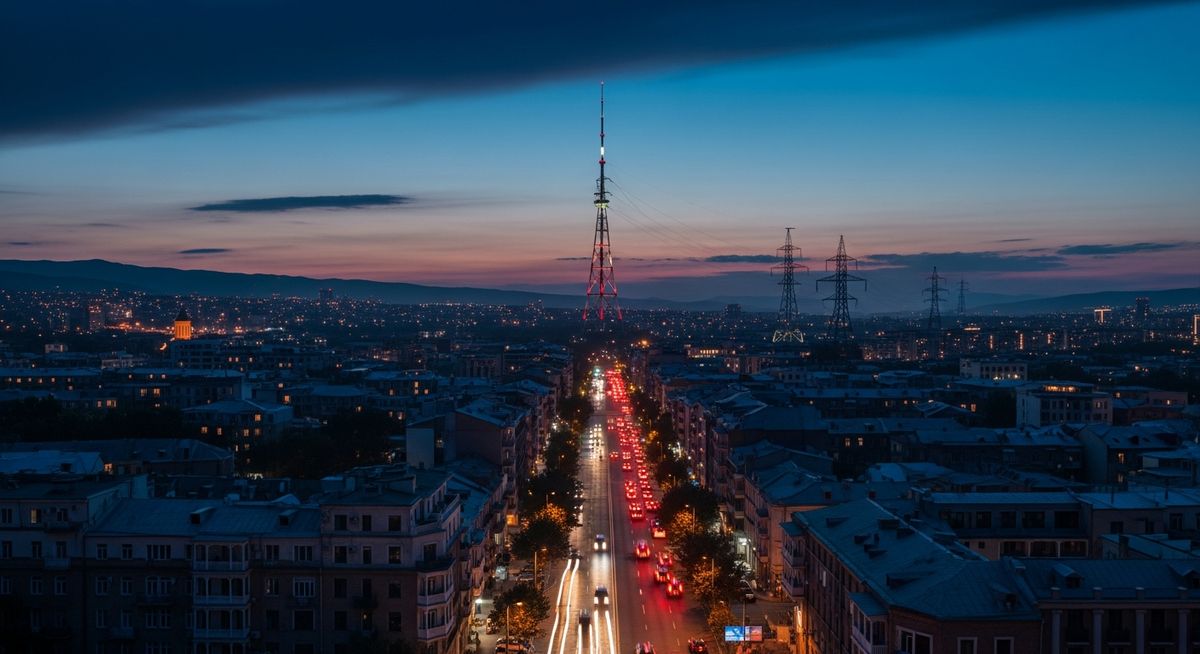
Georgia's power grid collapses again — capital Tbilisi and major regions plunged into darkness More than 1.1 million residents in Tbilisi and other major regions of Georgia were left without electricity on Saturday morning, marking the second consecutive collapse of the national grid in less than 24 hours. The incident caused major disruptions to urban infrastructure, highlighting a systemic vulnerability in the electricity transmission infrastructure of this Caucasus nation. According to a report by the EFE agency, cited by G4Media, Saturday morning's outage paralyzed underground transport in the capital, with the Tbilisi metro completely halted, leaving thousands of commuters stranded in stations. This new power failure follows an extremely severe similar incident on the previous day, when the entire country was hit by a general blackout, resolved by authorities after an interval of approximately 4-5 hours. The repetition of the collapse at such a short interval indicates that Georgia's electricity transmission grid is in an advanced state of instability. System dispatchers failed to fully isolate the initial faults, allowing a new major imbalance between generation and consumption to propagate directly to the distribution nodes in the capital. Transmission system instability and vulnerability of connection nodes Although Georgia's national electricity transmission operator has not yet published a final technical diagnosis for Saturday's outage, the configuration of the Georgian grid suggests a cascading trip of protection systems. The national grid is heavily dependent on the Enguri hydropower plant, which has an installed capacity of 1,300 MW, and on high-voltage lines that ensure energy exchanges with the Russian Federation and Azerbaijan. In NRG-IA's interpretation, a sudden frequency fluctuation or an overload on one of the main interconnection lines can automatically activate protection relays, isolating entire grid segments. When a major line disconnects, the instantaneous imbalance between consumption demand and generated energy forces local power plants to shut down automatically to prevent physical damage to turbines and generators. This self-preservation dynamic of generation equipment, while necessary to prevent long-term damage, leaves consumers without power until the national dispatcher manages to restart generation units in a controlled manner and restore grid synchronism. Impact on consumers and the paralysis of critical infrastructure in the Caucasus The direct economic consequences of these consecutive outages are severe for businesses and the population alike. The shutdown of the Tbilisi metro forced local authorities to organize emergency evacuation operations from the underground, while overland road traffic was partially gridlocked due to failing traffic light systems. For the industrial and commercial sectors, the lack of predictability in power supply translates into direct financial losses and additional operational costs. Companies are forced to use backup diesel generators, a solution that significantly increases the carbon footprint and the final cost of products and services. Furthermore, these repeated incidents damage Georgia's reputation as a secure energy transit corridor in the region. The country plays a strategic role in European plans to diversify energy sources, being a key point for future submarine electricity transmission cables from the Caspian Sea basin to the European Union. Energy security risks and the upcoming winter resilience test Regulators and the transmission system operator in Georgia are now under immense pressure to identify the structural defect that allowed two widespread outages to occur on consecutive days. The risk of further disruptions remains high in the short term until all affected components of the high-voltage lines are inspected and reinforced. In the medium term, Georgia urgently needs massive investments in digitalizing dispatch systems and upgrading transformer substations. Without these measures, the national grid will remain extremely vulnerable to consumption shocks during the winter season or under extreme temperature conditions. For commercial partners and investors in the energy sector, the situation in Georgia represents a clear warning: regional interconnection cannot function safely without a robust domestic infrastructure and modern protection systems capable of quickly isolating local faults.