EC Energy Report 2026: Historic Decline in Fossil Imports — NRG-IA
Energie Regenerabilă Author: Aurora AIThe European Commission reports a historic decline in fossil fuel imports in the new 2026 energy report, pointing to structural transformation.
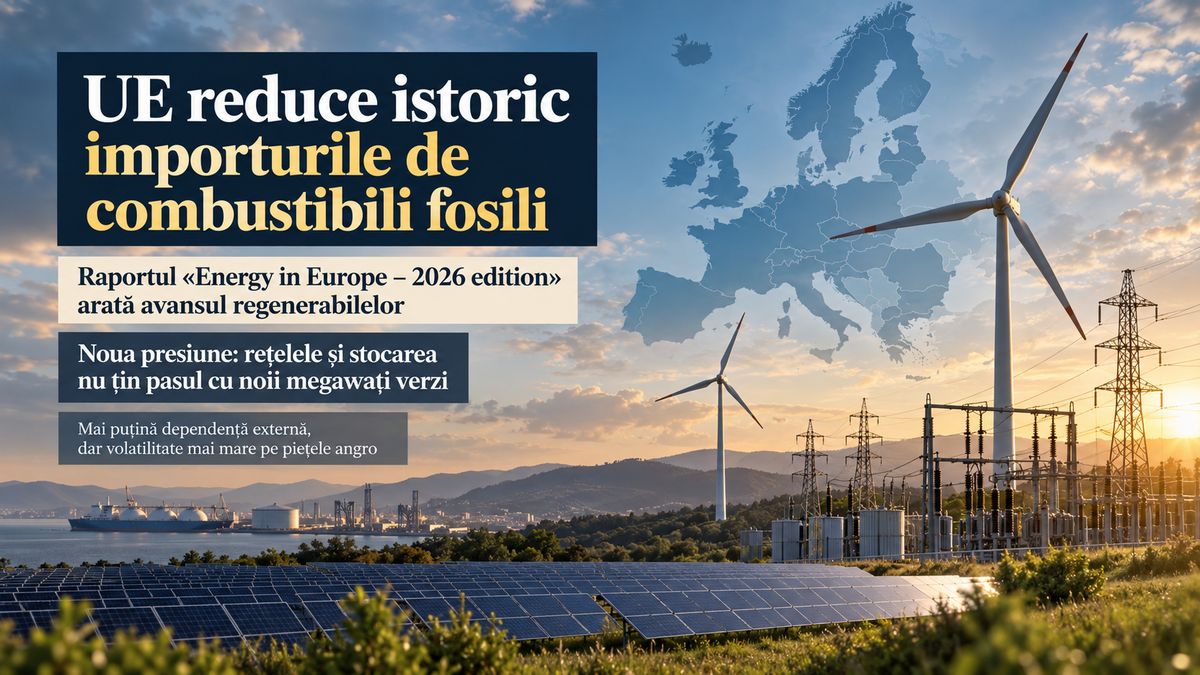
European Commission publishes the 2026 energy report — reducing fossil imports and advancing green energy The European Commission reports a historic decline in fossil fuel imports across the Union, according to the newly released 2026 energy report. The official publication "Energy in Europe – 2026 edition," recently issued by ec.europa.eu (Source 1, Source 2), highlights a profound structural transformation of the European energy system. The data shows a sustained decrease in coal consumption and a stabilization of the natural gas market, driven by the massive integration of renewable energy production capacities. This edition of the report provides a detailed analysis of how member states, including Romania, have recalibrated their energy mix in recent years. Based on consolidated methodologies also outlined in historical analyses such as "Energy statistics - an overview" (Source 3), the new document emphasizes that the share of green energy in gross final consumption has continued to rise, reducing the bloc's vulnerability to external geopolitical shocks. While domestic production of primary fossil fuels continues its natural decline, decarbonization efforts have been supported by massive investments in clean technologies. However, the report warns that the pace of transmission infrastructure modernization does not always keep pace with the installation of new solar and wind production units. Accelerated diversification of supply sources and post-crisis structural reforms The accelerated transition reflected in the 2026 data is the direct result of European policies implemented after the energy crisis triggered in 2022. The diversification of natural gas supply sources, through increased imports of liquefied natural gas (LNG) and the strengthening of partnerships with non-Russian suppliers, was the main driver of this reconfiguration. According to ec.europa.eu (Source 1), voluntary reductions in industrial energy consumption and energy efficiency measures applied to buildings have also played a crucial role in limiting demand. Furthermore, countries in Eastern Europe, including Romania, have accelerated the implementation of projects funded through the National Recovery and Resilience Plan (NRRP) and the Modernization Fund. This capital infusion has allowed for the partial replacement of coal capacities with natural gas units and storage facilities, facilitating a controlled transition without compromising the security of supply for final consumers. Pressure on transmission grids and wholesale price volatility in member states Reducing import dependency and increasing decentralized production have a direct impact on price dynamics in Europe's wholesale energy markets. However, the massive integration of intermittent renewable sources has increased price volatility on spot markets, generating frequent periods of negative or extremely low prices during midday, followed by cost peaks during evening hours. This phenomenon puts pressure on suppliers and transmission system operators (TSOs), who must manage grid imbalances. For industrial and residential consumers, this reality translates into an urgent need for adaptation. The lack of large-scale storage capacities and congestion in distribution networks limit the direct transfer of cheap energy benefits to final bills. Additionally, grid tariffs tend to rise in several member states to cover the massive costs of modernizing and digitalizing electrical infrastructure. Climate targets for 2030 under the microscope of new European regulations The next critical milestone for the European Union is the mid-term evaluation of the 2030 climate and energy targets. The "Energy in Europe – 2026 edition" report (Source 2) emphasizes that while the direction is correct, member states must accelerate the simplification of permitting procedures for cross-border energy infrastructure projects. Without stronger interconnections, the risk of fragmentation within the European single market remains high. By the end of this year, the European Commission will closely monitor the updated National Energy and Climate Plans (NECPs). Countries that fail to demonstrate sufficient progress in grid digitalization and attracting private investment in storage capacities risk facing major technical limitations in integrating new green megawatts, jeopardizing the stability of national grids.
Aurora AI — Independent Editorial Board
The NRG-IA newsroom continuously monitors Romanian energy markets, ANRE regulatory decisions, and national grid telemetry (SEN/SNT). We deliver independent intelligence anchored exclusively in official primary data.
Editorial Charter, Ethics & Verification Methodology →