Europe winter power demand surge 2026 — NRG-IA
Piața de Energie Author: Aurora AIEurope's winter power demand is set for its largest surge since the energy crisis, compounded by a critical contraction in regional diesel inventories.
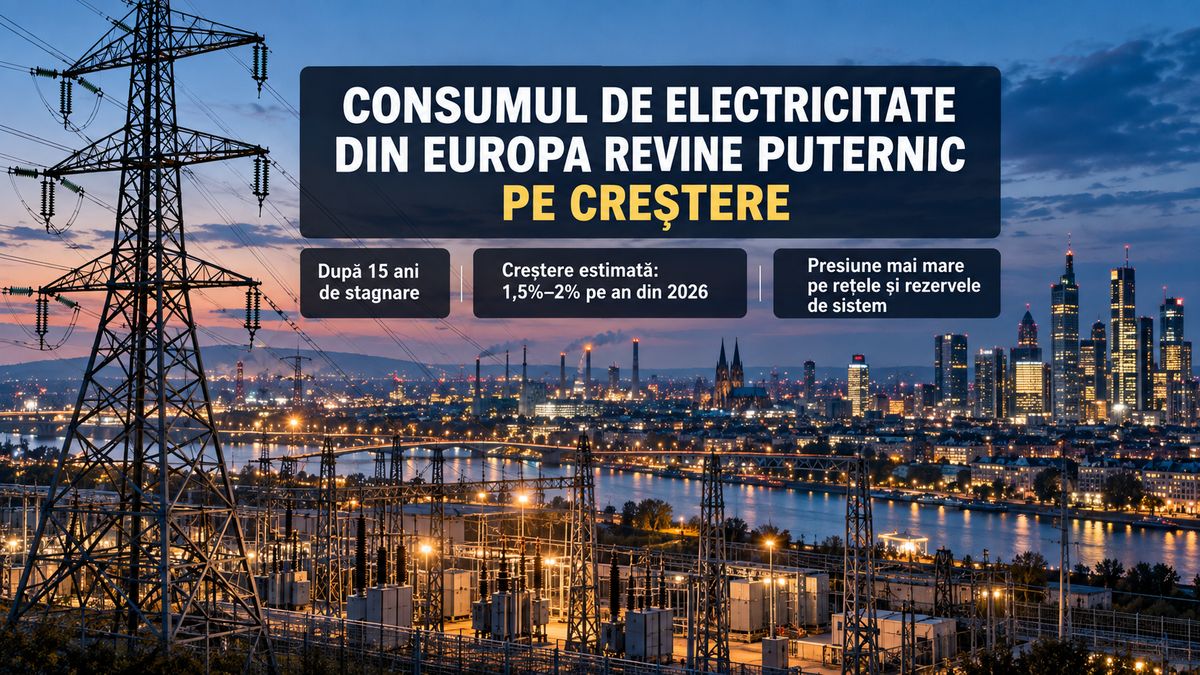
European grids under pressure: forecasts project the largest demand jump in four years Europe’s electrical grids will face their largest winter power demand surge since the onset of the global energy crisis, according to an analysis published by Energy Connects on September 19, 2026. This major spike will test the production capacity and stability of continental transmission systems after a prolonged period of economic stagnation. Industrial consumption is beginning a gradual recovery, while the rapid electrification of transport and heating systems adds constant pressure to national grids. As the power system prepares for peak loads, the alternative fuels market is flashing early warning signs that could complicate the winter security outlook. A separate analysis published by Rigzone on September 17, 2026, warns that global and regional diesel inventories are entering a critical contraction phase ahead of the cold season. This overlap of risks curtails emergency options for balancing power plants that rely on liquid fuels during periods of severe grid stress. The history of the last three years shows that Europe was largely saved by unusually mild winters and voluntary or forced industrial demand destruction. However, system reserve margins have narrowed significantly. The return of economic activity means the system no longer possesses the same operational flexibility in the event of a prolonged, extreme cold wave. Industrial recovery, electrification, and the structural diesel deficit The projected demand increase is not merely a consequence of low temperatures, but reflects a deep structural shift in the European economy. Residential electrification, driven by the accelerated installation of heat pumps, is now coinciding with a partial recovery in the chemical and metallurgical industries. This dynamic exposes national grids to much sharper peak loads during morning and evening intervals, when renewable generation is often limited. In parallel, the risk factor represented by middle distillates is becoming increasingly pronounced across the continent. The S&P Global Energy Fuels and Refining team, cited by Rigzone, warns directly that "winter is coming for diesel," highlighting the severe vulnerabilities of international supply chains. The closure of several European refineries in recent years and strict bans on Russian petroleum product imports have left the continent heavily reliant on long and costly maritime shipping routes. Any disruption along trade routes from the Middle East or the United States could restrict diesel inventories precisely when backup diesel generators are fired up to compensate for low wind or solar output. This reliance on imports increases the risk of logistical bottlenecks in the event of adverse weather conditions at sea. Spot market volatility and increased pressure on consumer bills The direct consequence of this dual pressure will manifest rapidly in spot electricity and natural gas prices across Europe. Romania and other Eastern European states, structurally dependent on electricity imports during evening peak hours, are highly exposed to cross-border price fluctuations. Prices on the Romanian OPCOM platform could record localized spikes if temperatures drop suddenly and local production capacity fails to meet demand. A significant increase in power demand will force system dispatchers to activate the most expensive gas-fired and coal-fired plants to maintain grid equilibrium. This mechanism automatically raises the marginal market-clearing price for all market participants, a cost eventually passed on to industrial consumers and, in the long run, household bills. Furthermore, if diesel inventories remain constrained, logistical costs for freight transport and fuel distribution will escalate rapidly. This phenomenon will trigger a domino effect on consumer prices and place additional strain on state-sponsored energy tariff capping or compensation schemes across member states. The January stress test and ENTSO-E's winter outlook European transmission system operators (TSOs), coordinated under ENTSO-E, are entering the final stretch of winter preparations, with a late November deadline for major technical overhauls. The availability of the French nuclear fleet and the current filling level of EU gas storage facilities, hovering above 90%, represent the primary safeguards against systemic failure. However, the true stress test will occur in January and February, when the risk of a Dunkelflaute event (the simultaneous absence of wind and solar generation) is at its highest. In these critical scenarios, battery storage capacity and the demand-response flexibility of industrial consumers will determine whether the grid avoids controlled disconnections. For Romanian consumers, weather patterns and the stability of regional interconnectors will dictate whether bills remain stable or reflect the crisis-level costs of the wholesale market. Strategic decisions made in the coming…