Craiova replaces lignite heating with Electrica gas CHP — NRG-IA
Piața de Energie Author: Ioana BuzoaicaCraiova and Electrica signed a contract to replace the city's lignite district heating with a two-stage gas system, following a failed 295 MW project.
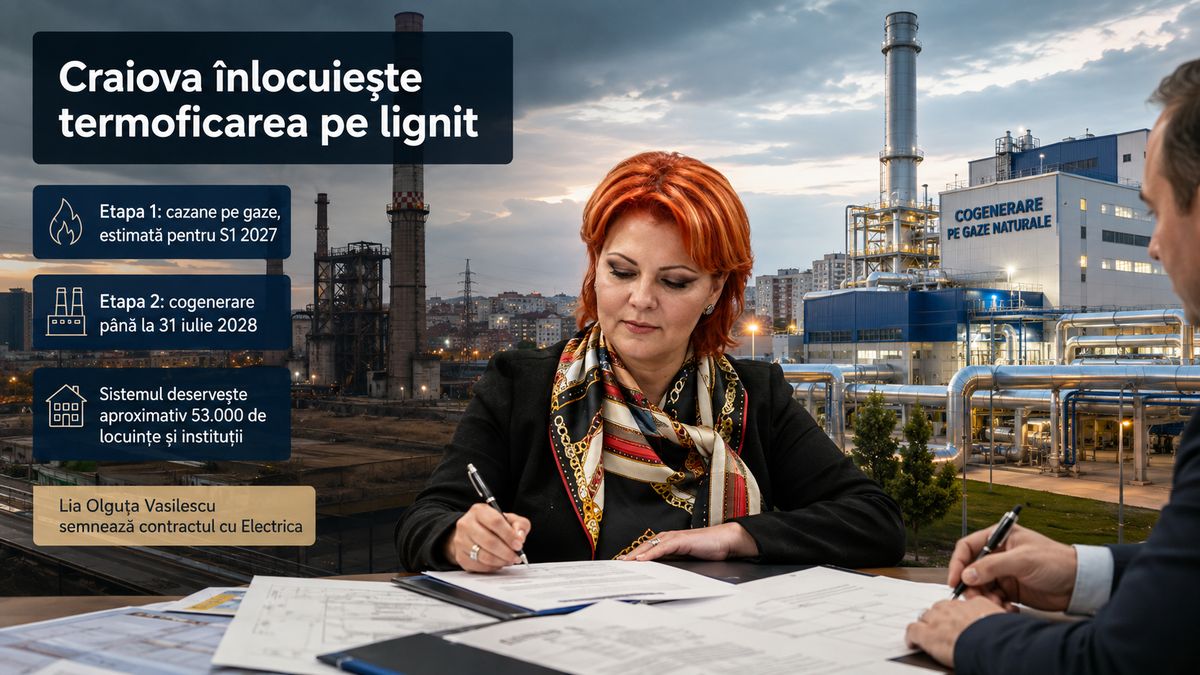
The Municipality of Craiova and Electrica have signed a contract to replace the current lignite-based district heating source with a new natural gas system built in two stages. The investment follows the failure of a previous 295 MW power plant project and a winter marked by outages at Electrocentrale Craiova. Article content: The Municipality of Craiova and Electrica have signed the contract for the new system, which will provide heating for approximately 53,000 homes and public institutions, replacing the current lignite-based district heating source. The project will be implemented in two phases: first, natural gas hot water boilers will be installed, followed by a cogeneration plant that will simultaneously produce thermal energy for the city and electricity for the National Power Grid. In June, Electrica won the tender organized by the municipality for the concession of heat and electricity generation. The signing of the contract turns the procurement procedure into a concrete investment schedule, after several years in which Craiova sought a solution to replace the aging capacities of Electrocentrale Craiova. The current power units use lignite as their primary fuel , with natural gas used for combustion support. The main equipment was commissioned in 1987 and 1989. Gas-fired heating to come online first, cogeneration by 2028 The transition will not happen by commissioning the entire plant all at once. The first phase involves installing natural gas hot water boilers, which will take over heat generation for the district heating system. The Mayor of Craiova, Lia Olguța Vasilescu, estimates that this phase can be completed in the first half of 2027 . The second phase adds cogeneration engines, facilities that produce electricity and heat in the same process. The contract documentation sets a maximum duration of 24 months from the signing of the contract for the investment phase, not to exceed July 31, 2028 . Following the completion of the investment, the operation period begins, with the contract providing for a ten-year delegation. Electrica will thus not only be the developer of the facility but also the operator of the thermal energy production throughout the concession period. The new plant will have around 82 MWe and 208 MWt Electrica indicates an installed electrical capacity of approximately 82 MW and a thermal capacity of around 179 Gcal/h for the new system, equivalent to approximately 208 MW thermal . The contract requires a minimum overall efficiency of 85% for the new production system. Cogeneration utilizes the same amount of fuel to simultaneously produce electricity and heat, reducing the amount of primary energy required compared to the separate generation of the two forms of energy. The technical requirements also establish a system availability of at least 97.26% , with limits on scheduled and unscheduled outages. For a district heating system, this feature is essential because heat consumption cannot be shifted in time as easily as electricity production. The new facility will also include thermal storage . The heat produced can be stored and delivered later to the city network, allowing the cogeneration engines to operate more flexibly in relation to electricity demand and thermal energy requirements. The plant will feature black-start capability and will be hydrogen-ready Electrica has included two features in the project that go beyond the classic function of a district heating plant. The first is black-start capability, meaning the facility can start up without initially receiving electricity from the external grid. Such capability can be used in the process of restoring the power system after a major blackout. The second is preparing the engines for the future use of a hydrogen and natural gas blend. The plant will initially run on natural gas, and the "hydrogen-ready" feature creates the technical possibility of introducing hydrogen once it becomes industrially and commercially available. However, gas remains a fossil fuel. The project replaces lignite with a more efficient and less emission-intensive source, but it does not represent the final stage of district heating decarbonization. The European framework allows high-efficiency cogeneration and the use of natural gas during this transition period, while the criteria for efficient district heating systems will become progressively stricter after 2030 and 2035. The EUR 235 million approved by Electrica covers two projects in Craiova Electrica has approved investments of up to EUR 235 million plus VAT for the "Craiova Project," but this amount does not exclusively represent the cost of the new municipal district heating plant. The program comprises two distinct objectives. The first is the capacity destined for Craiova's Centralized Thermal Energy Supply System. The second targets the production of thermal energy required for the heating and technological processes of Ford Otosan Romania . Electrica's shareholders have also…