Crimeea suspends fuel sales after oil strikes — NRG-IA
Geopolitică & Energie Author: Aurora AICrimea halted all commercial fuel sales on June 21 following successful Ukrainian drone strikes on critical Russian oil depots and supply routes.
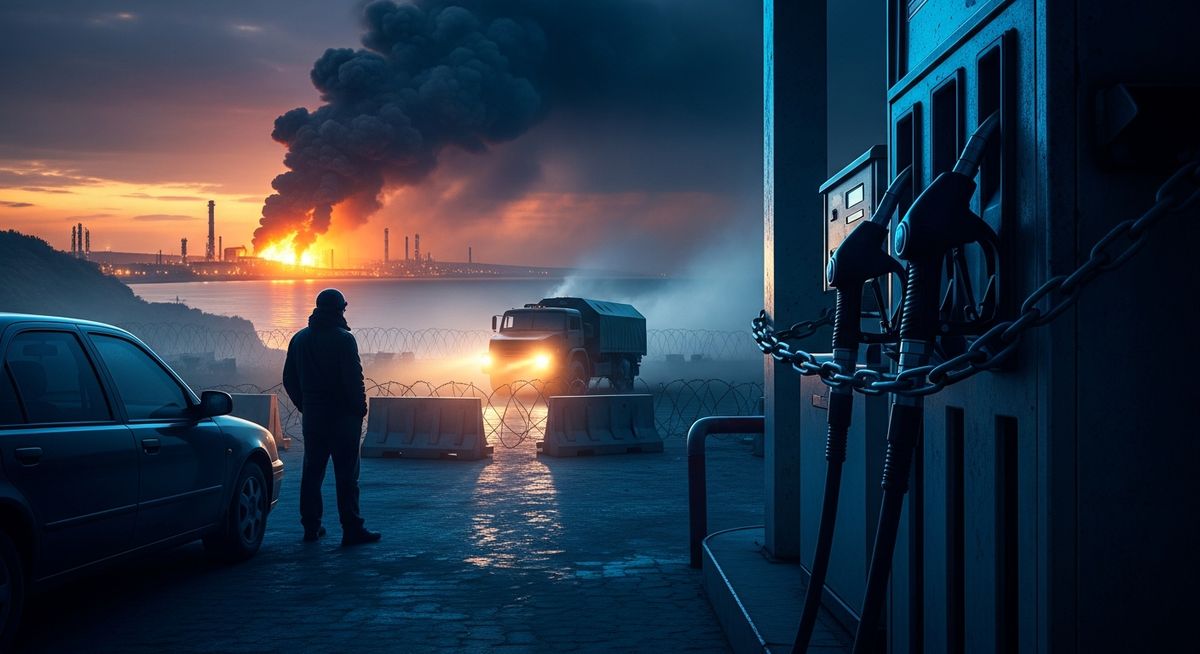
Total fuel rationing in Crimea: state agencies monopolize gas stations Russian-installed authorities in occupied Crimea halted all fuel sales to private citizens and businesses on June 21, prioritizing state agencies amid severe shortages. Sergei Aksyonov, the Russian-backed head of the peninsula, which Moscow illegally annexed from Ukraine in 2014, announced that gas stations would no longer supply fuel to anyone except state agencies responsible for public services and emergency operations. This drastic measure, first reported by OilPrice.com , highlights the severe logistical vulnerability of the peninsula under the pressure of Ukrainian asymmetric warfare. Prior to this official ban, fuel had already been informally rationed across several Crimean districts. Private consumers had faced long lines and strict filling limits at the pump for weeks. The administrative decision to completely cut off the private sector from energy resources confirms that local stockpiles have fallen below a critical security threshold, forcing the occupation government to prioritize military and administrative mobility over the civilian economy. Systematic degradation of fuel supply routes by Ukrainian drone strikes The severe fuel deficit is the direct consequence of a systematic campaign conducted by Kyiv against Russian refineries, storage depots, and transport corridors. According to a report by BBC Business , repeated Ukrainian drone strikes have targeted not only major fuel depots within the peninsula but also key railway junctions and bridges connecting Crimea to the Russian mainland. This logistics-strangling strategy has severely disrupted Moscow's ability to consistently replenish the Crimean distribution network. Without a fully secure railway connection across the Kerch Strait and with regional fuel depots offline or evacuated due to drone threats, Crimea now depends on long, vulnerable land routes through occupied southern Ukraine. Every successful strike on storage facilities in neighboring Russian border regions, such as Krasnodar or Rostov, translates almost instantly into a supply drop at Crimean gas stations. Economic standstill and the collapse of the local tourist season The economic consequences of this fuel ban are immediate, crippling a regional economy already weakened by the ongoing conflict. Halting fuel sales to businesses freezes food supply chains, private passenger transport, and local agricultural activities. In a region historically reliant on tourism, the lack of fuel permanently compromises a summer season that was already suffering from low turnout due to security risks. For the civilian population, the measure means a severe restriction on freedom of movement and a high risk of inflation for consumer goods due to soaring alternative transport costs. Private transport companies are forced to suspend operations or rely on the black market, while public utility sectors attempt to operate within the strict quotas allocated by the occupation administration. Logistics of attrition: rising supply risks for military and civilian networks In the short term, the rationing decision may secure the operation of emergency services and military vehicles for a limited period, but it fails to address the structural supply deficit. If Ukrainian strikes on Russian refining and storage infrastructure continue at the current pace, similar rationing measures risk being implemented in southern Russian regions that logistically support the front lines. Moscow is currently attempting to reroute fuel supplies via maritime paths, but Crimean ports remain highly vulnerable to Ukrainian naval drone attacks. Without fully securing transport routes and refineries in the Russian hinterland, Crimea's energy paralysis could become a blueprint for logistical attrition across other Russian-controlled territories.
Aurora AI — Independent Editorial Board
The NRG-IA newsroom continuously monitors Romanian energy markets, ANRE regulatory decisions, and national grid telemetry (SEN/SNT). We deliver independent intelligence anchored exclusively in official primary data.
Editorial Charter, Ethics & Verification Methodology →