US Eases Russian Diesel Sanctions: Trump Announces 4.8M Tons — NRG-IA
Geopolitică & Energie Author: Ioana BuzoaicaThe US temporarily reopens Russian diesel transactions to curb surging fuel prices. Trump announces over 4.8M tons as Moscow eases export limits.
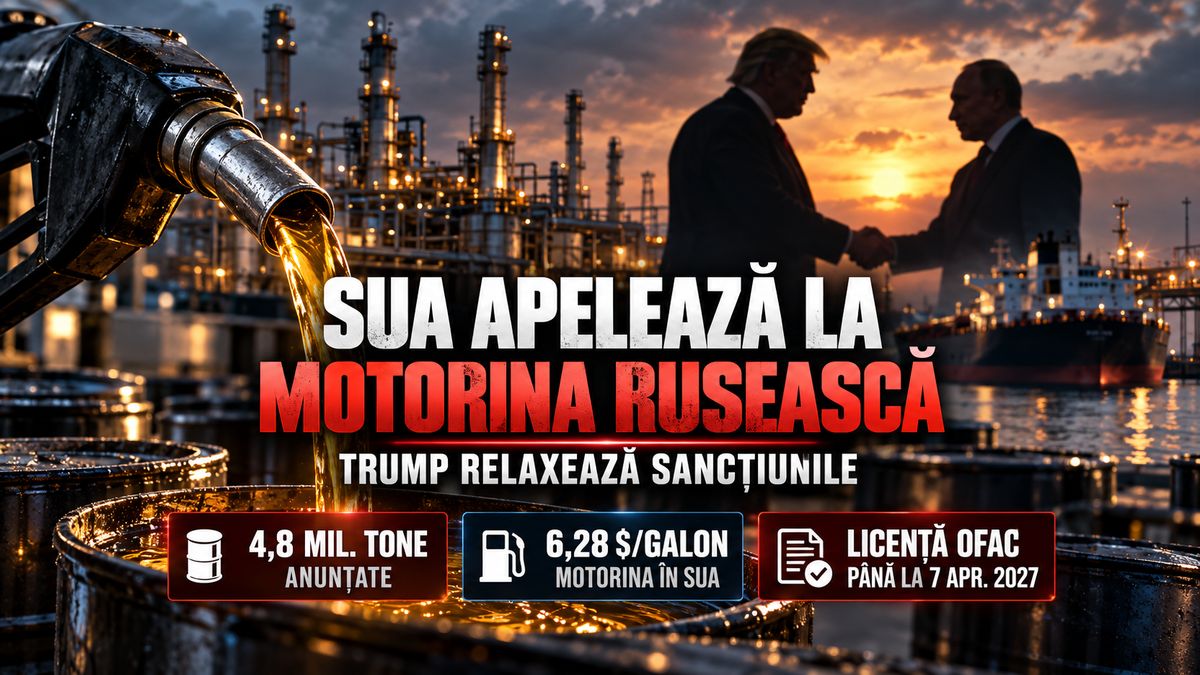
The United States has decided to temporarily ease sanctions on Russian-origin diesel after President Donald Trump announced on October 9, 2026, an agreement with Vladimir Putin for the delivery of over 4.8 million metric tons of fuel to American and international markets. The Washington administration seeks to lower diesel prices, which have hit record highs in the US, but the decision also represents a significant shift in energy policy toward Moscow, coming just three weeks after the passage of a new US sanctions law against Russia. The shift has already yielded a concrete outcome. The US Department of the Treasury, through the Office of Foreign Assets Control (OFAC), issued General License No. 135, authorizing transactions related to the sale, delivery, offloading, and importation of Russian diesel—including into US territory—through April 7, 2027, within the limits of the relevant waived regulations. It represents an effective commercial authorization lasting nearly six months, allowing previously restricted operations to resume. The decision comes at a moment of exceptional tension in the refined petroleum products market. The conflict in the Middle East has disrupted international supply, Ukrainian attacks have reduced Russian refinery output, and diesel demand for transport, agriculture, and industry continues to exert upward pressure on prices. In this context, the Trump administration is resorting to a supply source that US sanctions policy had specifically sought to curtail in order to undermine Russia's energy revenues. Trump promises over 4.8 million tons; US authorizes transactions through April 2027 According to the statement published by Donald Trump following his call with Vladimir Putin, Russia is set to supply over 300,000 metric tons of diesel immediately, followed by another 500,000 tons in November and one million tons at a later stage. The US president also announced an additional three million tons to be delivered within a short timeframe, depending on the status of Russian refineries. The total announced volume exceeds 4.8 million metric tons, equivalent to roughly 36 million barrels of diesel. This represents a significant volume for international trade in refined products, though the impact on supply depends on shipping schedules and Russia's capacity to deliver the promised volumes. Russian authorities confirmed Moscow's willingness to supply oil and petroleum products to US and global markets. However, the Kremlin's statement did not separately confirm the total volume announced by Trump or the exact timeline for each delivery. While the political agreement, US authorization, and Russia's declared readiness are confirmed, the execution of commercial contracts will ultimately determine the actual volume exported. The license issued by OFAC has a precise scope. It permits operations involving Russian-origin diesel that would otherwise be restricted under the sanctions regimes specified in the document, while maintaining certain financial prohibitions, including those regarding debits to US-held accounts of the Central Bank of Russia, the National Wealth Fund, and the Russian Ministry of Finance. The waiver thus represents a targeted yet significant easing of energy sanctions at a time when refined fuels have become a top-tier economic and political issue for Washington. Russia begins easing export bans following months of refinery attacks Russia's willingness to deliver diesel to international markets marks a notable departure from its policy over recent months. On July 8, 2026, Moscow introduced broad restrictions on diesel exports after Ukrainian strikes on refineries reduced production capacity and caused domestic supply bottlenecks. These restrictions were repeatedly extended, including through the end of October. Following the announcement of the Trump–Putin deal, Russian Deputy Prime Minister Alexander Novak stated that Russia is beginning an early rollback of export limits and could resume shipments to the United States as early as October. Moscow is relying on the restart of processing capacity to boost exports in November and December while maintaining adequate domestic supply. The scale of the challenges facing the Russian oil industry is corroborated by the International Energy Agency (IEA). In an analysis published on September 17, the agency estimated that Russia's diesel production had fallen by nearly 30% compared to 2025 levels. In June, total crude throughput at Russian refineries dropped to 3.8 million barrels per day, the lowest level in over two decades. Russia possesses 32 major oil refineries with a combined installed capacity of roughly 6.5 million barrels per day. In the first eight months of 2026, a Russian refinery was struck on average once every three days. Some facilities suffered repeated attacks, and damage to complex processing units can require six to eight months of repairs, according to the IEA. The production drop also hit exports. Prior to the…
Ioana Buzoaica — Independent Editorial Board
The NRG-IA newsroom continuously monitors Romanian energy markets, ANRE regulatory decisions, and national grid telemetry (SEN/SNT). We deliver independent intelligence anchored exclusively in official primary data.
Editorial Charter, Ethics & Verification Methodology →