Biofuels: Gulf crisis to boost global output by 70% — NRG-IA
Piața de Energie Author: Aurora AIThe Gulf crisis could boost global biofuel output by 70% by 2030, pressuring food prices and impacting Romania's agricultural sector.
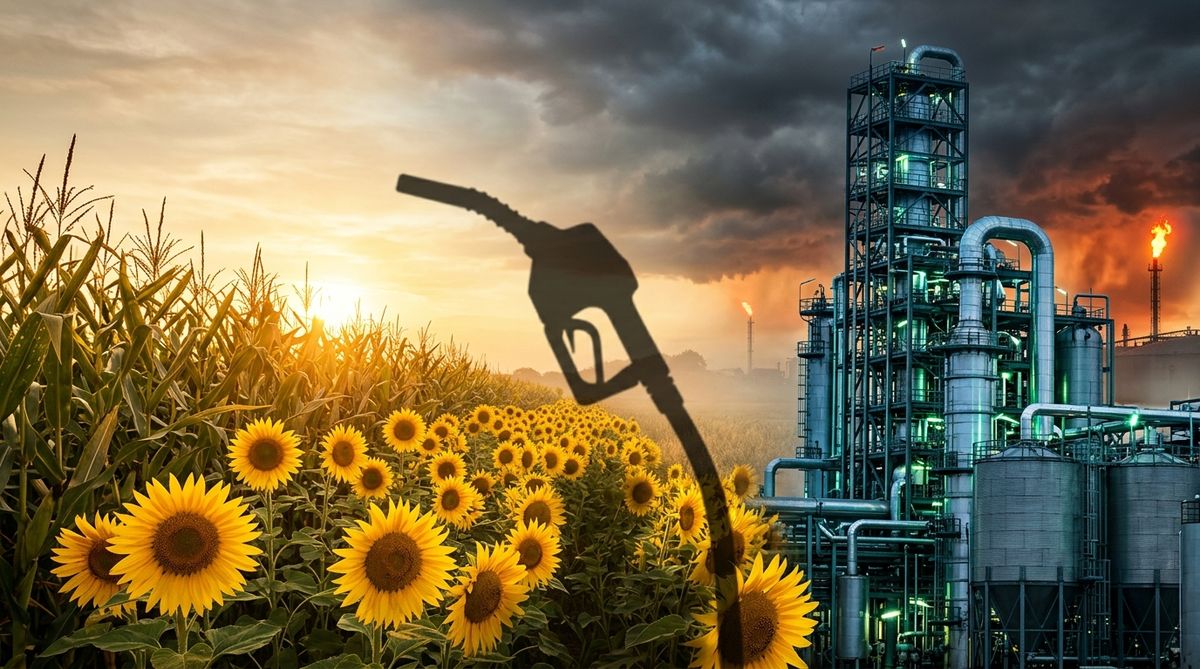
Energy security forces doubling of biofuel crops — Chatham House study Geopolitical tensions in the Gulf region could propel global biofuel production by nearly 70% by 2030, as major economies accelerate the use of alternatives to crude oil. According to a joint study by London-based think tank Chatham House and the Forest Stewardship Council (FSC), reported by Reuters and Agerpres, the decision to raise mandatory blending mandates is a direct response to the global energy crisis. This rapid acceleration, however, places immense pressure on global agricultural resources. The analysis published by e-nergia and Economica.net shows that biofuels, such as ethanol made from corn or sugarcane, become highly competitive as fossil fuel prices rise. Normally, ethanol is blended directly into gasoline and diesel to reduce emissions and import dependency. However, the massive expansion of these crops risks triggering fierce competition between food and energy production. The study's authors warn that prioritizing short-term energy security through hasty political decisions could lead to increased food insecurity in the medium term. Furthermore, any additional shock, such as extreme weather events, could severely impact global food prices. The speed at which these measures are being adopted outpaces the institutional capacity to protect the environment. The crude oil price surge and the fueling of the Gulf crisis The onset of bottlenecks and geopolitical tensions in the Gulf since late February has led to an almost 40% increase in crude oil prices. This massive price spike forced governments in the European Union, the United States, Brazil, India, China, and Indonesia to seek rapid alternatives. Consequently, these major economies have proposed or already adopted higher mandatory blending quotas for biofuels in conventional fuels. However, the domino effect quickly rippled into agriculture, directly affecting the consumer basket. Chatham House data indicates that sugar and corn prices have already risen by approximately 20% over the same period. The pressure on agricultural markets is twofold: production costs are rising due to fertilizers and diesel, while the demand for raw materials for energy cannibalizes food stocks. This direct correlation between the price of oil and basic food items demonstrates the vulnerability of the current system. When crude oil becomes prohibitive, crops destined for food are redirected to refineries to produce ethanol and biodiesel. The result is an inflationary spiral that is difficult for central banks to control. Romania caught between EU decarbonization targets and food price inflation For Romania, the fifth-largest corn producer in the European Union, this accelerated transition brings major economic opportunities but also severe inflationary risks. On one hand, Romanian farmers could benefit from massive external demand and high prices for corn and sunflower crops. On the other hand, processing these crops into first-generation biofuels will directly increase the cost of cooking oil, cornmeal, and animal feed. Furthermore, Romania must transpose strict European directives on the use of renewable energy in transport (RED III). Increasing mandatory blending quotas at the pump will put direct pressure on local refineries, such as OMV Petrom or Rompetrol, to purchase large volumes of ethanol and biodiesel. If domestic production does not keep pace, importing biofuels will further increase fuel prices at the pump for Romanian consumers. Another major issue for Romania is the lack of production capacity for second-generation biofuels, which are obtained from agricultural waste or residues. Without massive investments in advanced technologies, our country will remain dependent on using food crops for energy, amplifying the conflict between food security and energy security. Doubling agricultural land by 2030 and environmental risks The study's authors warn that if all proposed global quotas are fully implemented, the land area required for biofuels could double by 2030 compared to 2023. This maximum scenario would require an additional 36 million hectares globally. This vast area is equivalent to the entire territory of Germany, raising severe risks of deforestation and soil degradation. The speed of implementing these policies outpaces regulatory and environmental protection capacities. "The speed at which mandatory quotas are being increased generates significant risks, as demand for raw materials grows faster than enforcement mechanisms," the Chatham House and FSC report highlights. Romania and other EU states must quickly decide how to balance energy security with food security before shelf prices become unsustainable. In the short term, pressure on supply chains will remain high. Political decisions in the coming months regarding the revision of green transport targets will be crucial. If tensions in the Gulf persist, governments will be forced to choose between keeping fuels cheap…