Romania hits 1.1 GWh storage milestone and solar record — NRG-IA
Piața de Energie Author: Aurora AIThe Middle East energy shock shows gas-dependent grids are exposed, while hydro, nuclear, and renewables buffer volatility. Romania hits key milestones.
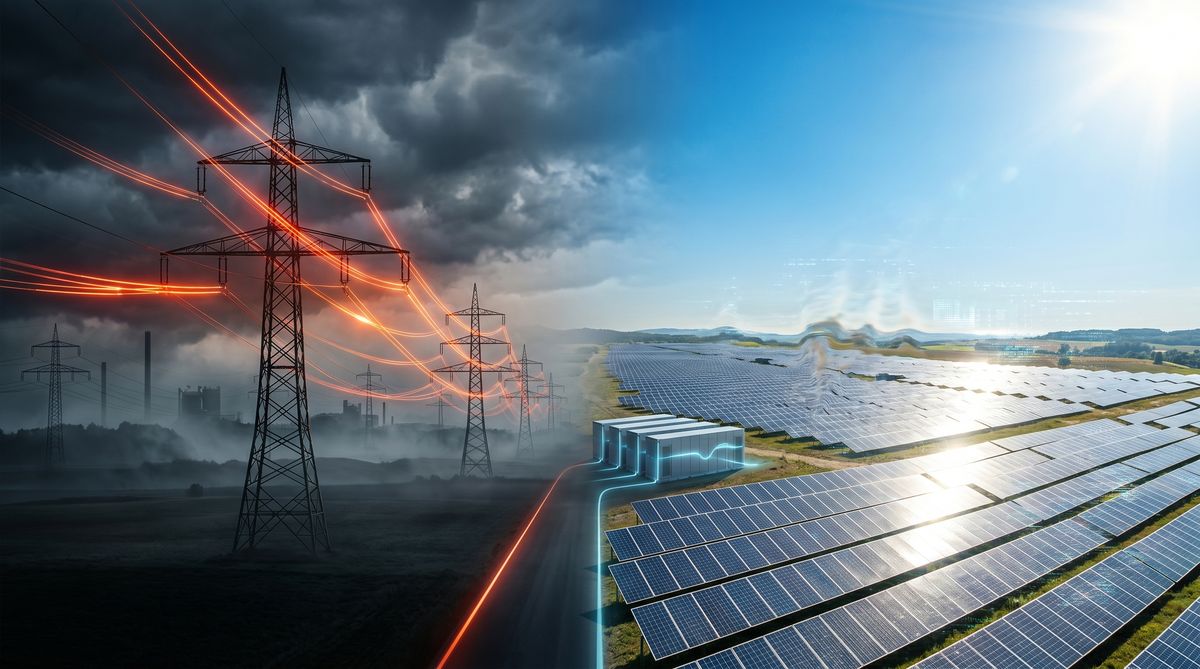
Europe sees the difference between cheap energy and resilient energy The energy crisis triggered by the conflict surrounding Iran has brought back to the forefront a conclusion that the market had avoided during calmer pricing periods: the energy mix is decisive. Reuters reports that gas-dependent European nations were hit harder by rising electricity prices, while countries with a high share of hydro, nuclear, and renewables buffered the shock more effectively. Italy and Germany saw significant increases in benchmark electricity prices, whereas systems like Albania, Spain, or France benefited from more robust hydro, renewable, or nuclear generation. This is the real stake of the moment: not all installed capacities offer the same protection during a crisis. Gas remains essential for balancing, but when fuel prices spike brutally, dependent systems immediately import that volatility into the final bill. In contrast, hydro, nuclear, and renewables reduce exposure to imported fuels and vulnerable geopolitical routes. The difference is not just technological, but strategic. Renewables protect, but they do not solve the system's problems alone The advantage of renewables does not mean an absence of risks. Reuters notes that systems with high solar penetration can also generate specific volatility, including the "duck curve" effect, where high daytime production depresses prices while the grid remains strained during other intervals. In other words, clean energy reduces fuel dependency but demands more flexibility, storage, and demand-side management. This is where the new European equation lies. It is no longer enough to simply install renewable megawatts. You must be able to absorb energy when it is produced, store it when there is a surplus, deliver it when demand rises, and prevent negative prices from turning generation success into an operational headache. Romania passes the 1,100 MWh storage threshold: the most important signal of market maturation In this European context, Romania has reached a relevant milestone: operational electricity storage capacity has surpassed 1,100 MWh. According to Transelectrica data cited by e-nergia and Economica.net , storage installations with a capacity of approximately 599–600 MW and 1,130 MWh are functional in the system. This milestone is not merely statistical. It indicates the Romanian market's transition from a phase where storage was discussed primarily as a future project to one where it is starting to become operational infrastructure. For a grid with rapidly growing solar capacity, storage is the difference between energy available only when the sun shines and energy usable when the system actually needs it. However, the current scale must be interpreted correctly. While 1,130 MWh is a significant step, it is not enough for a system that is starting to reach solar peaks of over 2,300 MW. Storage has entered the game, but it has not yet reached the scale required to absorb the large, recurring surpluses on days with high photovoltaic generation. New solar record shows the power of photovoltaics, but also the grid's limits Romania has hit a new record for instantaneous solar generation: 2,339 MW at midday, according to e-nergia. At that moment, solar energy accounted for over 40% of national generation, confirming the speed at which photovoltaics have become a major source in the National Power System (SEN). The critical part comes immediately after the record. The same source notes that solar farms abruptly curtailed their output afterward due to negative prices. The explanation is structural: when solar generation is extremely high, demand does not rise enough, the grid cannot absorb it all, and storage remains insufficient, forcing some capacities to curtail production for economic or technical reasons. This is the point where Romania enters a more sophisticated stage of its transition. Solar records are positive, but they can no longer be analyzed in isolation from negative prices, congestion, balancing, flexible consumption, and batteries. Generation success creates a new obligation: integration. Negative prices are changing investment logic Negative prices are not an exotic anomaly. They are becoming increasingly frequent in Europe as solar capacity expands rapidly while demand and storage fail to keep pace. In Western Europe, Digi24 reported extreme drops in spot electricity prices, including negative values exceeding €400/MWh during certain intervals, driven by high solar output. For Romania, the message is simple: the market will increasingly discount raw generation during surplus hours and reward flexibility. Value will no longer reside solely in the solar farm itself, but in the combination of the farm, battery storage, delivery profile, contracting, controllable consumption, and price responsiveness. This shift will separate robust projects from speculative ones. A solar megawatt without storage, without good grid access, and without a sales strategy…