Russia Seeks Kazakh Gasoline as Domestic Output Drops 25% — NRG-IA
Geopolitică & Energie Author: Ioana BuzoaicaRussia is in talks to import 50,000 tons of gasoline from Kazakhstan as domestic output falls 25%, exposing a paradox of rising crude exports.
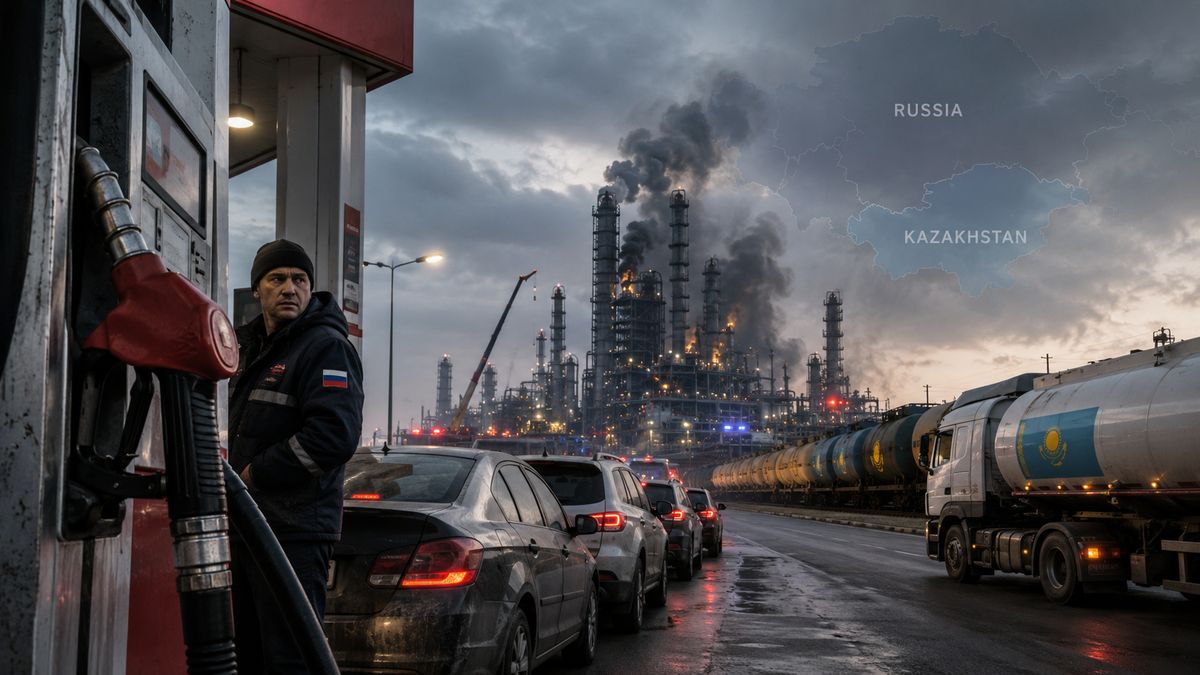
Russia is negotiating with Kazakhstan to import around 50,000 tons of AI-92 gasoline , after Ukrainian drone attacks and unplanned refinery outages reduced domestic fuel production. The information comes from industry sources cited by Reuters, while Kazakhstan's Energy Minister noted that Astana had not yet received an official request from Moscow. The figure is significant not only for the volume discussed, but for what it reveals about the Russian market. Russia is one of the world's largest producers and exporters of oil and refined products. However, the current issue is not a shortage of crude oil, but the capacity to refine it into gasoline, diesel, and jet fuel for the domestic market. In June, Russia's gasoline production fell approximately 25% below the level of the same month in 2025 , amid shutdowns at major refineries in the center of the country. Reuters reported that production reached about 90,000 tons per day , while several regions introduced sales restrictions, fueling limits, and measures against panic buying. Refineries are the problem, not the lack of crude oil The attacks on refineries have created a rift between the domestic fuel market and crude oil exports. When refining capacity drops, Russia cannot process the same amount of crude oil into finished products. Some of the oil that should have been processed is redirected for export, leaving the domestic market with less gasoline and diesel. This dynamic is already visible in ports. Russian crude oil exports from Primorsk, Ust-Luga, and Novorossiysk are estimated at 2.7–2.8 million barrels per day in June , up from approximately 2.5 million barrels per day in May and nearly 1 million barrels per day above preliminary estimates for the month. The increase does not reflect a better-supplied domestic market, but rather the inability of refineries to absorb the same volumes of crude oil. The paradox is straightforward: Russia can export more crude oil precisely at a time when some regions are facing queues, localized shortages, and the rationing of certain fuel grades. Restrictions on AI-92, AI-95, or diesel have been reported in several areas, and in Crimea and Sevastopol, authorities temporarily suspended sales to the public and reduced certain public services to manage the deficit. 50,000 tons can temporarily calm the market, but cannot fix the deficit The volume discussed with Kazakhstan must be put into perspective. With Russian gasoline production at around 90,000 tons per day, the 50,000 tons of AI-92 would equate to approximately 0.56 days of current production . The import can provide targeted help to certain regions, especially if directed toward areas with low stocks or the AI-92 segment, the most widely used type of gasoline in the Russian market. However, it cannot replace the lost refining capacity and does not change the structural problem: if damaged facilities do not return to operation, Russia must either reduce product exports, import more fuel, or accept a tighter domestic market. Kazakhstan has a certain gasoline surplus, but its own delivery capacity is limited. The Atyrau refinery entered maintenance between June 26 and July 20, reducing the reserves available for export. Reuters also points to the Kondensat refinery as a possible source of AI-92, but this unit processes gas condensate linked to flows from Russia, including from Tatneft's TANECO refinery, which was also affected by attacks. The negotiations may also have a trade swap component. Industry sources indicated that Kazakhstan could request Russian jet fuel in exchange for gasoline, at a time when the Kazakh market also faces seasonal pressures on kerosene. The agreement would be facilitated by duty-free trade between the two states within the Eurasian Economic Union, but neither the delivery nor the commercial terms have been officially confirmed. Moscow relaxes rules and prepares for imports The negotiations with Kazakhstan are part of a broader package of emergency measures. Russia has already banned exports of gasoline and jet fuel, is considering additional restrictions on diesel, and is preparing for fuel imports, including by sea. Normally, Russia is a net exporter of refined products; imports are a signal that the domestic deficit can no longer be managed solely by redistributing existing flows. On June 24, the Russian parliament approved tax amendments allowing fuel import subsidies, the temporary relaxation of certain quality requirements, and the postponement of certain refinery upgrades without losing tax benefits. The government is thus trying to increase domestic supply, even if it means using lower-quality blends or delaying modernization works. The measures confirm that Moscow is treating the shortage as an economic and social risk. Fuel prices quickly feed into transport, agriculture, industry, and inflation, and sales restrictions have a direct impact on the population and local businesses. The attack on Orenburg limits even…
Ioana Buzoaica — Independent Editorial Board
The NRG-IA newsroom continuously monitors Romanian energy markets, ANRE regulatory decisions, and national grid telemetry (SEN/SNT). We deliver independent intelligence anchored exclusively in official primary data.
Editorial Charter, Ethics & Verification Methodology →